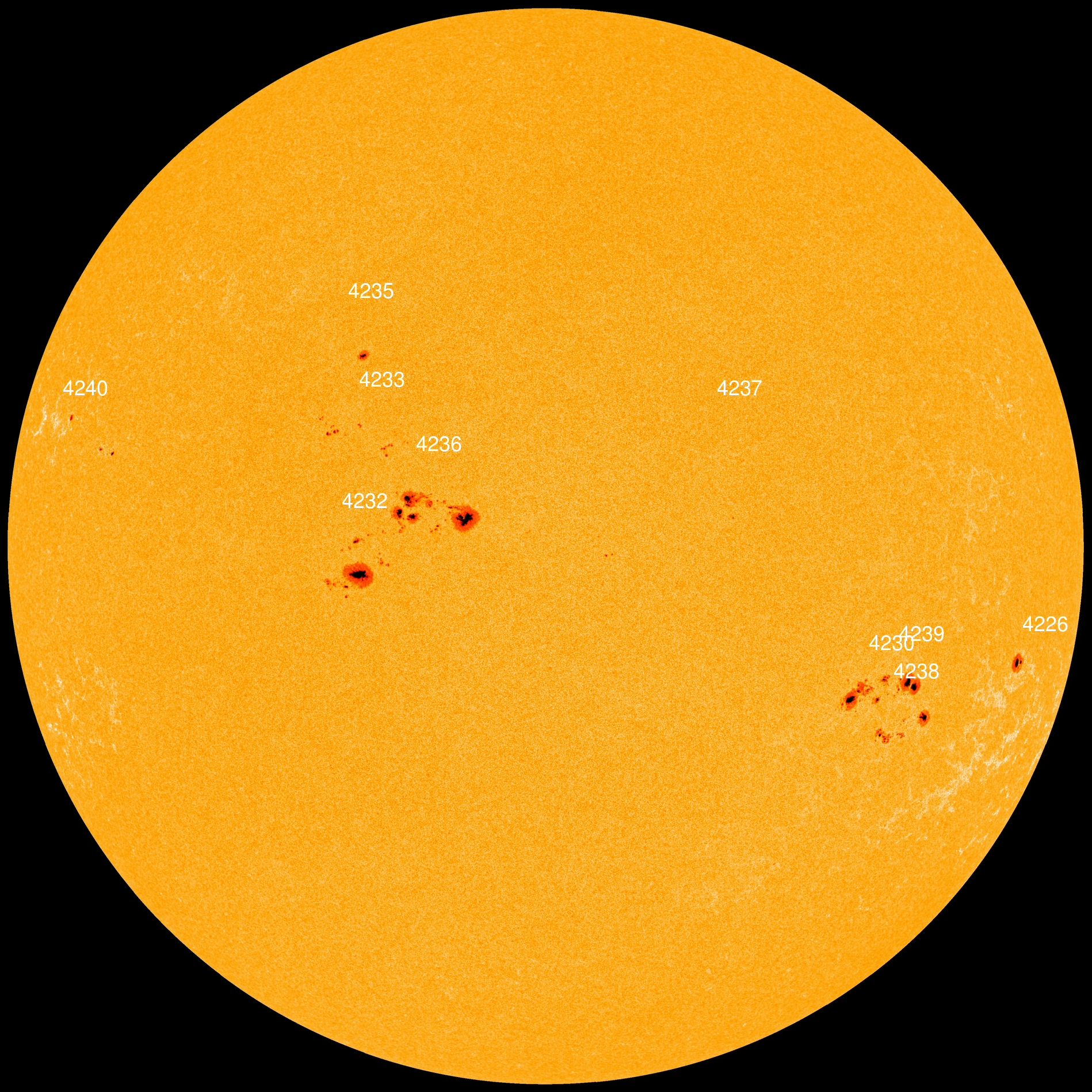
Planet Scenes October 2025
|
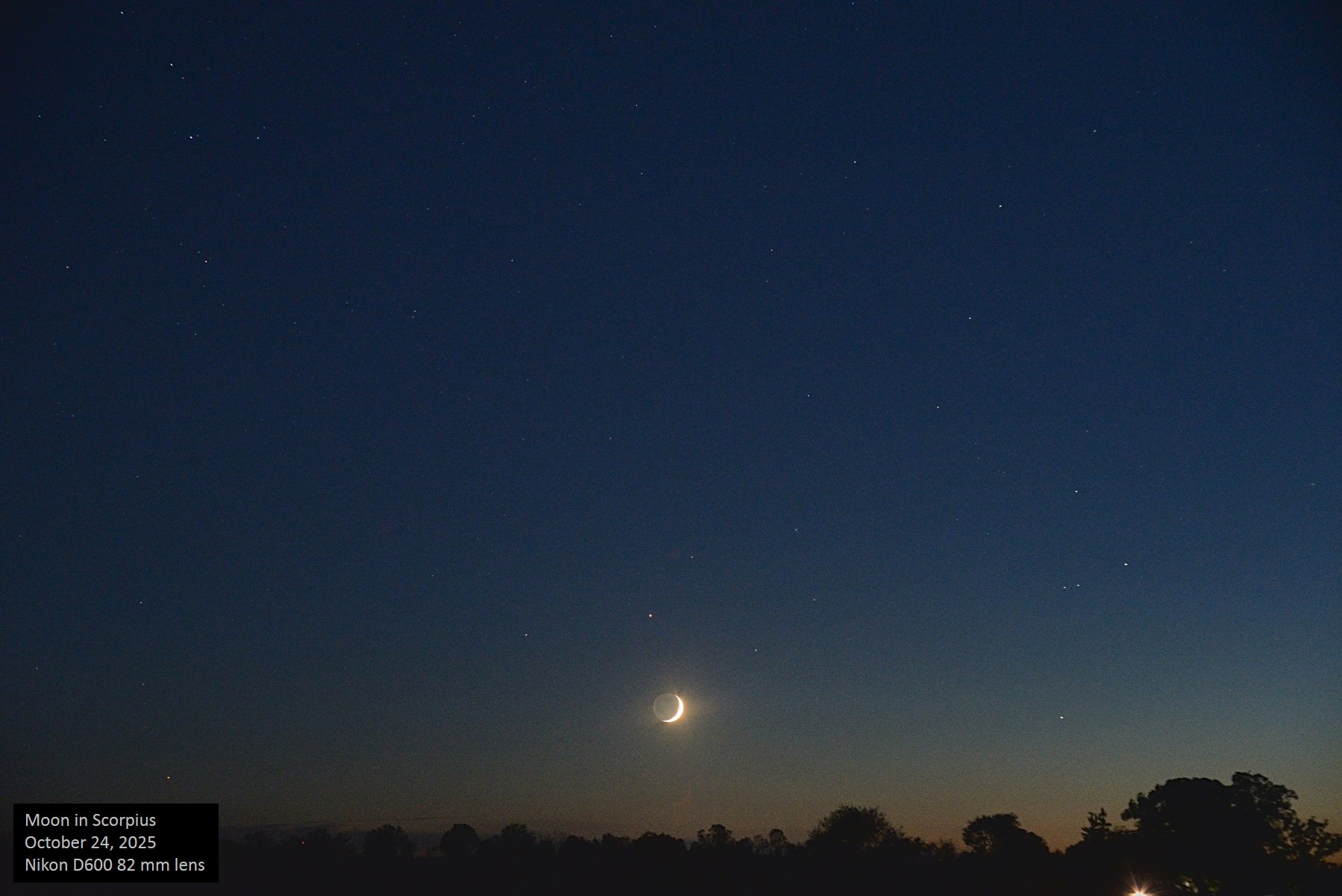
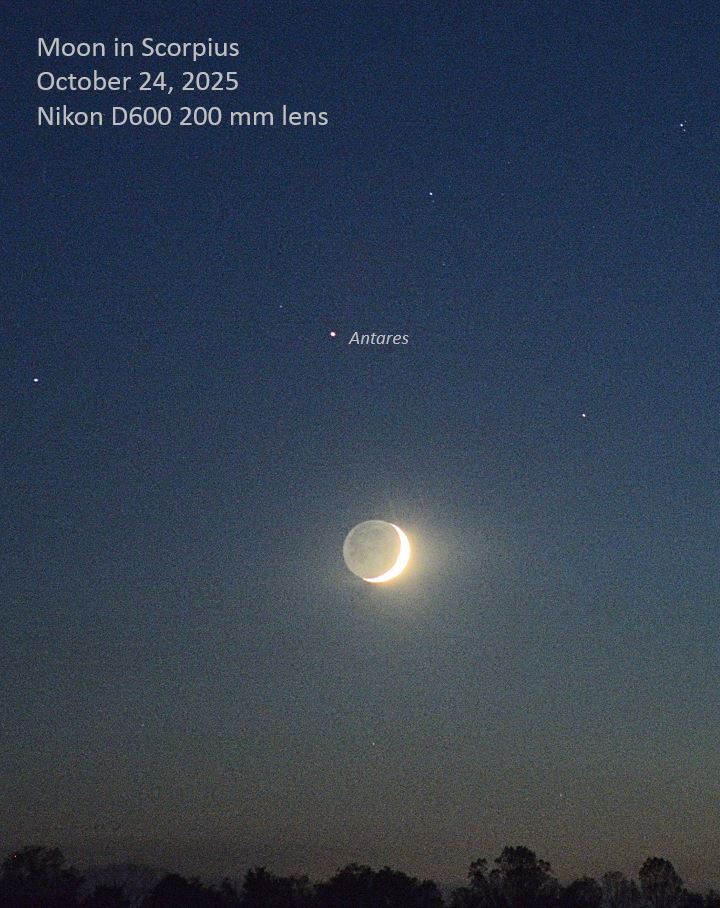
October 24: Moon and Antares The crescent Moon passes well to the south of Antares this evening. This year, just like last year, represents the lunistice, which means the Moon's descending node is at the autumnal equinox point (in Virgo) and its ascending node is in Pisces at the vernal equinox point. Therefore, the track of the Moon through the sky is exaggerated in latitude, being almost 5° farther north than the ecliptic when in the Gemini region, and being a similar distance south of the ecliptic at those times such as today when it is in the Scorpius / Ophiuchus / Sagittarius area of the sky. |
|
|
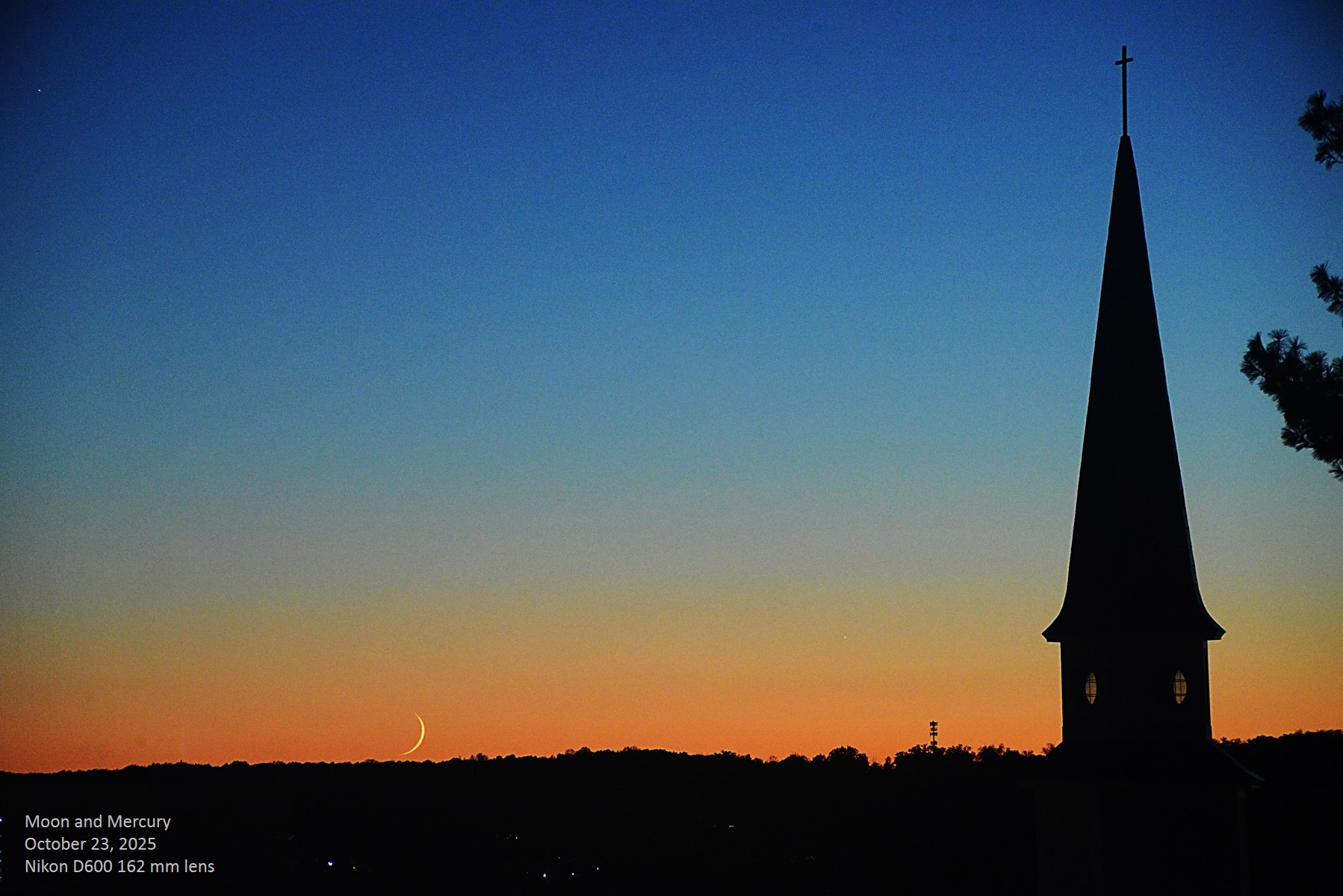
October 23: Moon, Mercury and Mars The crescent Moon, Mercury, and Mars gathered for a nice line-up this evening, viewed from my new favorite spot, the upper parking lot at the Falmouth Baptist Church ~ unfortunately, the spire wasn't illuminated this evening for some reason?!?. |
|
|
|
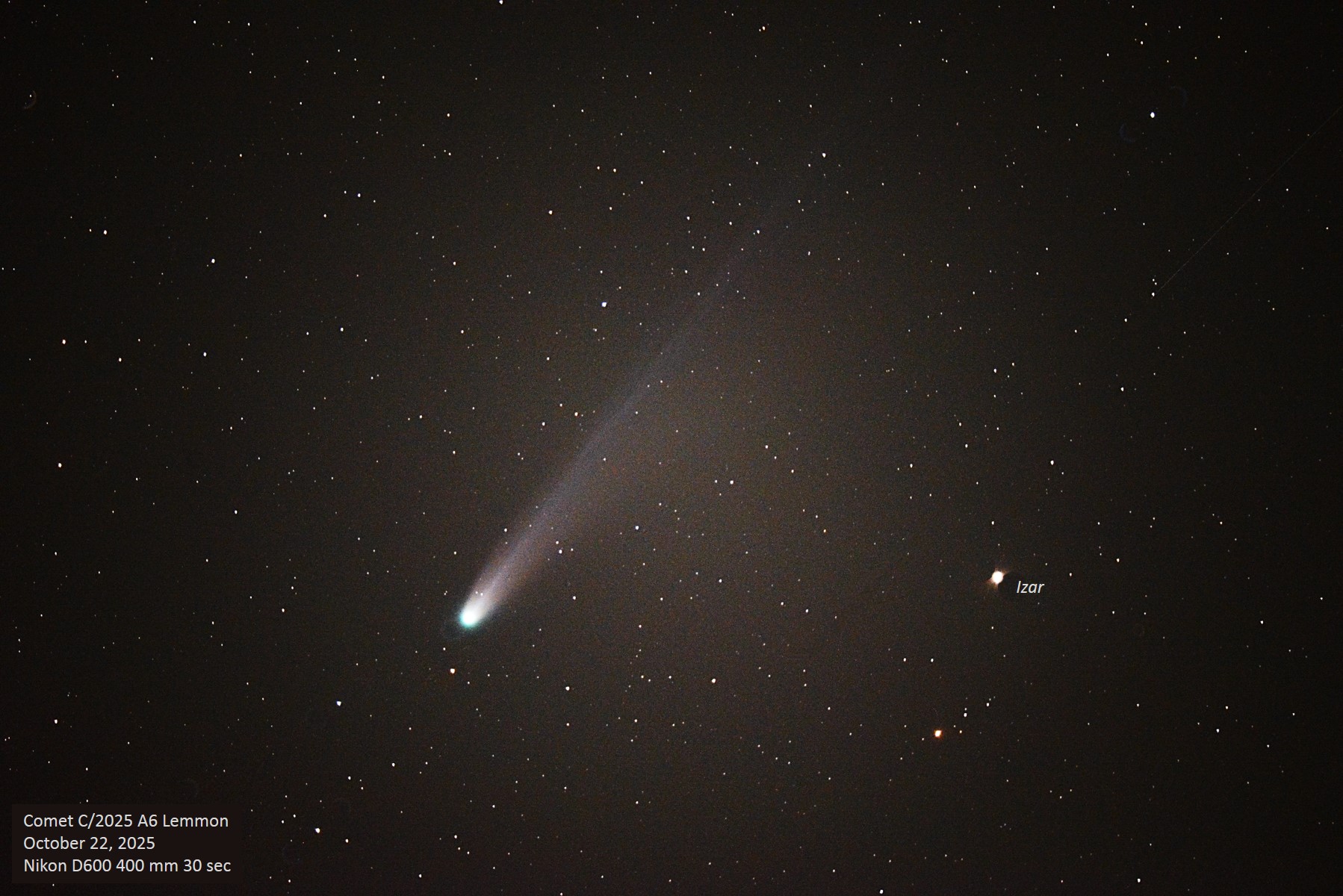
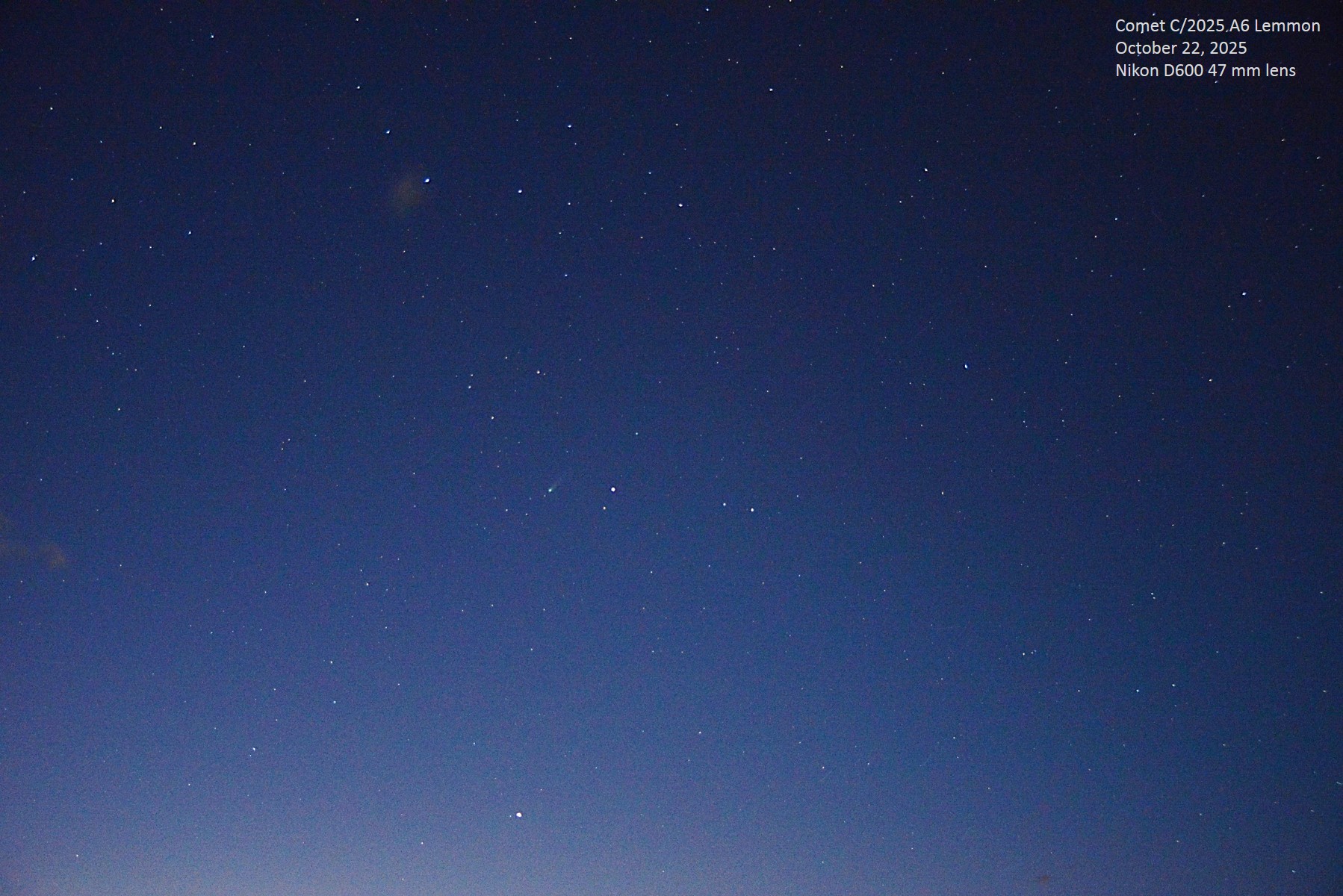
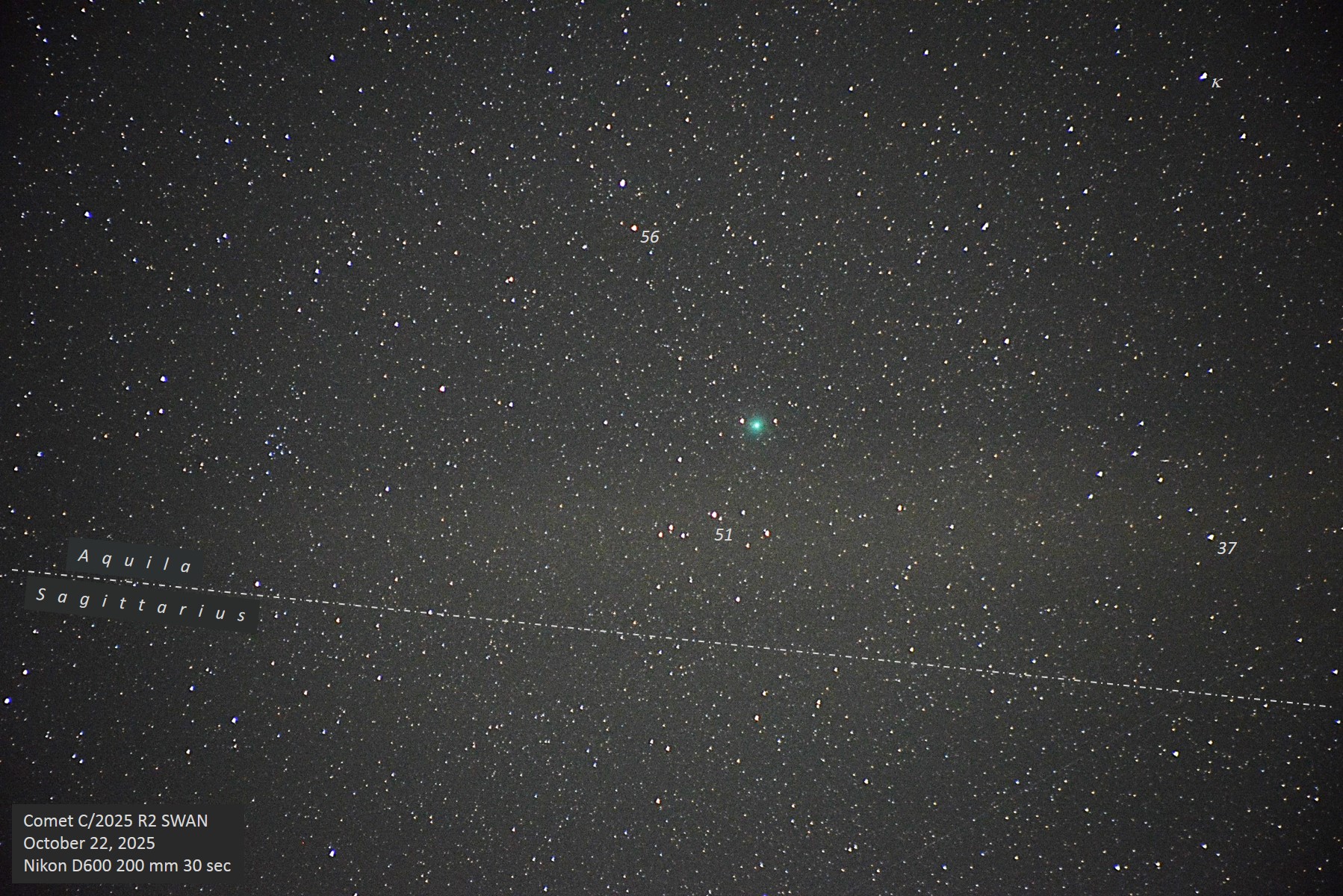
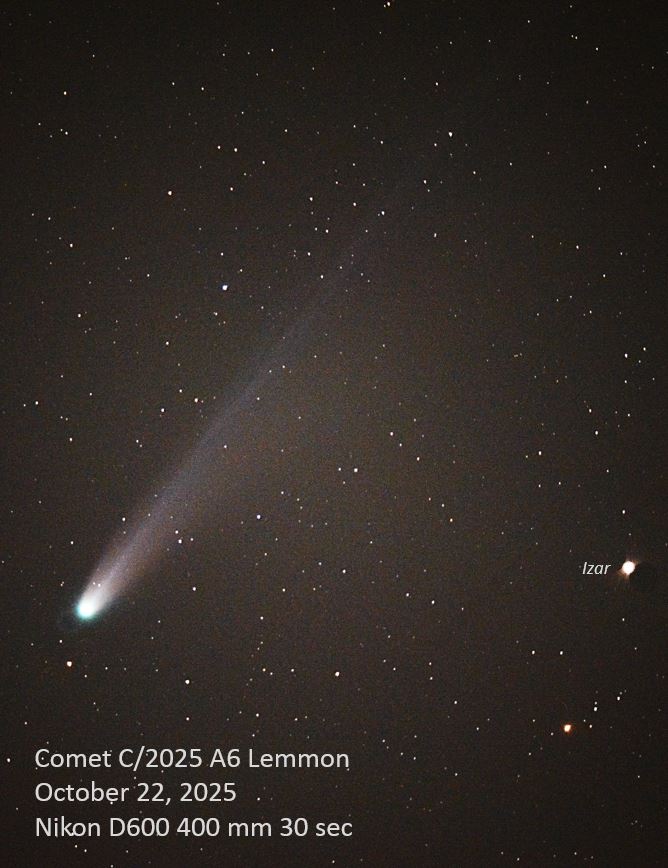
October 22: Comets SWAN and Lemmon Comets C/2025 A6 (Lemmon) and C/2025 R2 (SWAN) were both nicely visible in the evening sky; these images were obtained at Big Spy Mountain Overlook on the Blue Ridge Parkway near mile marker 25. |
|
|
|
|
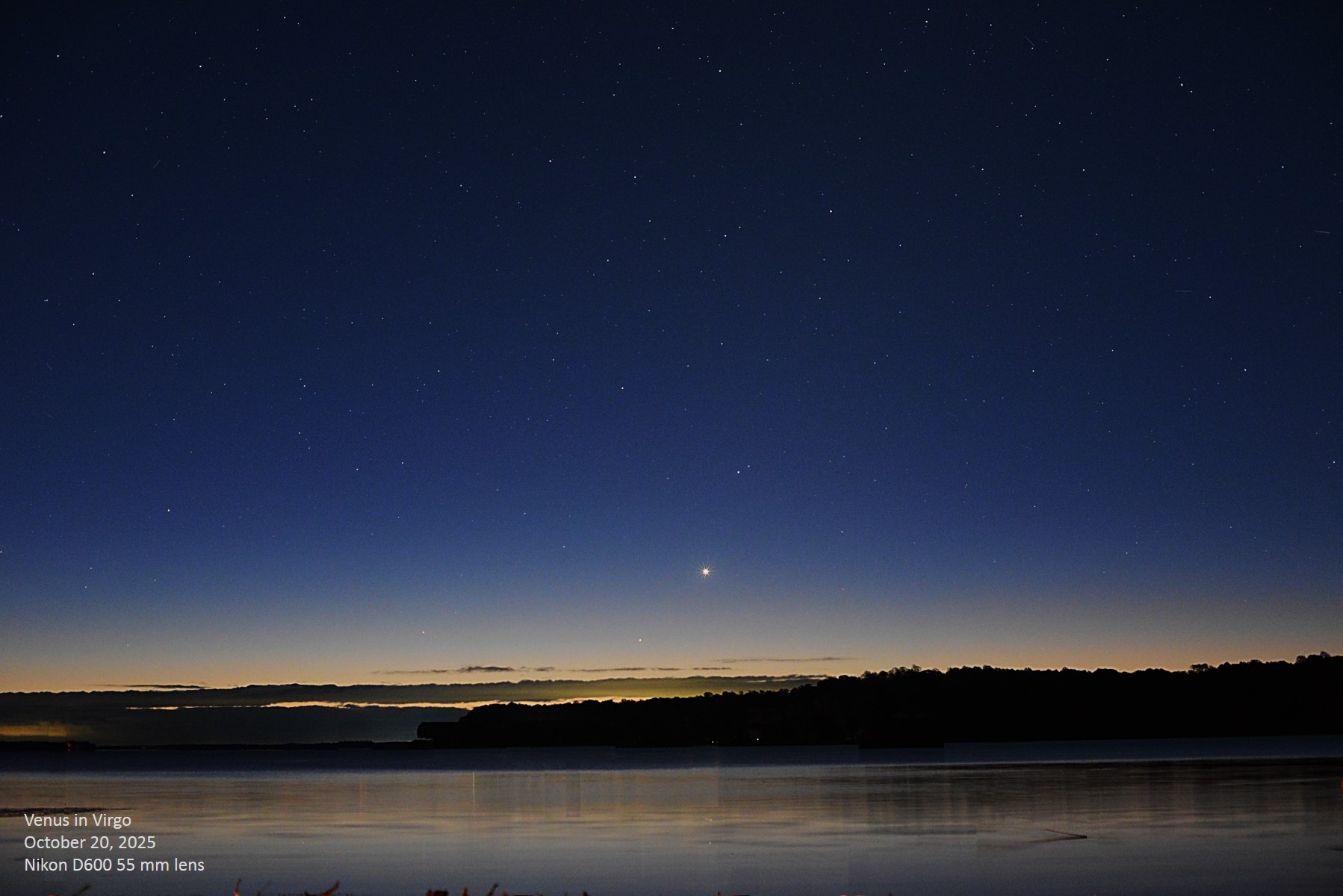
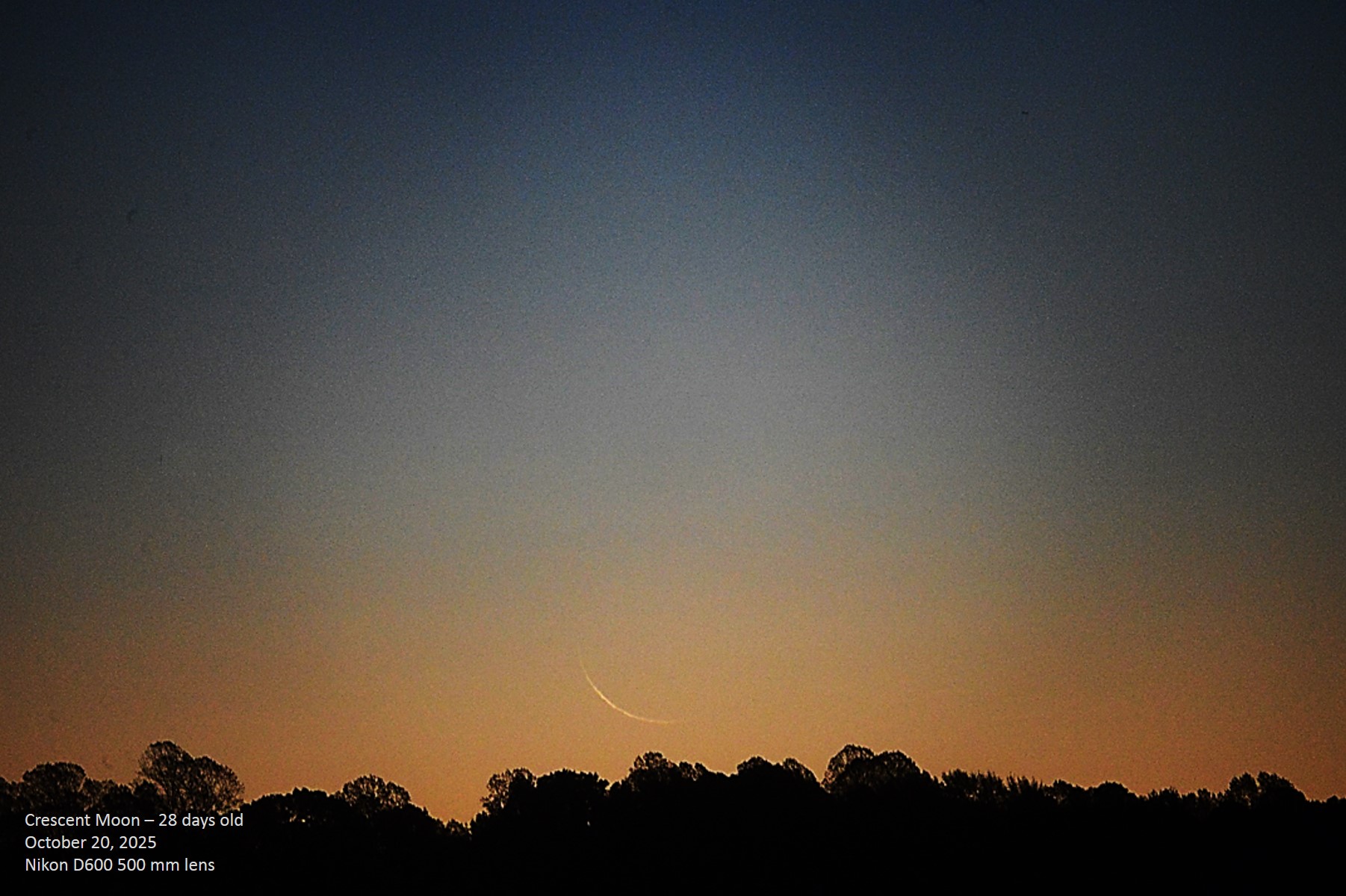
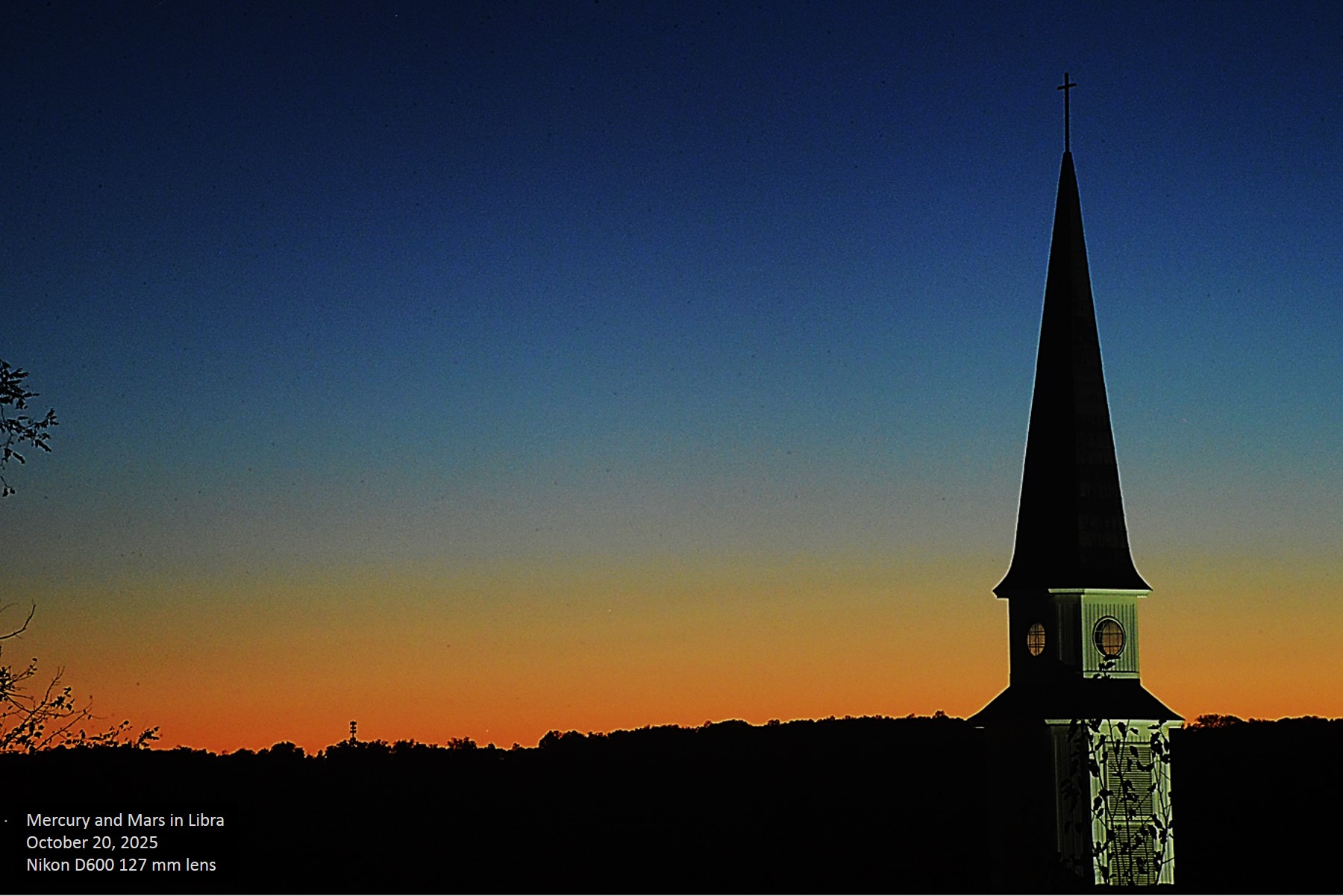
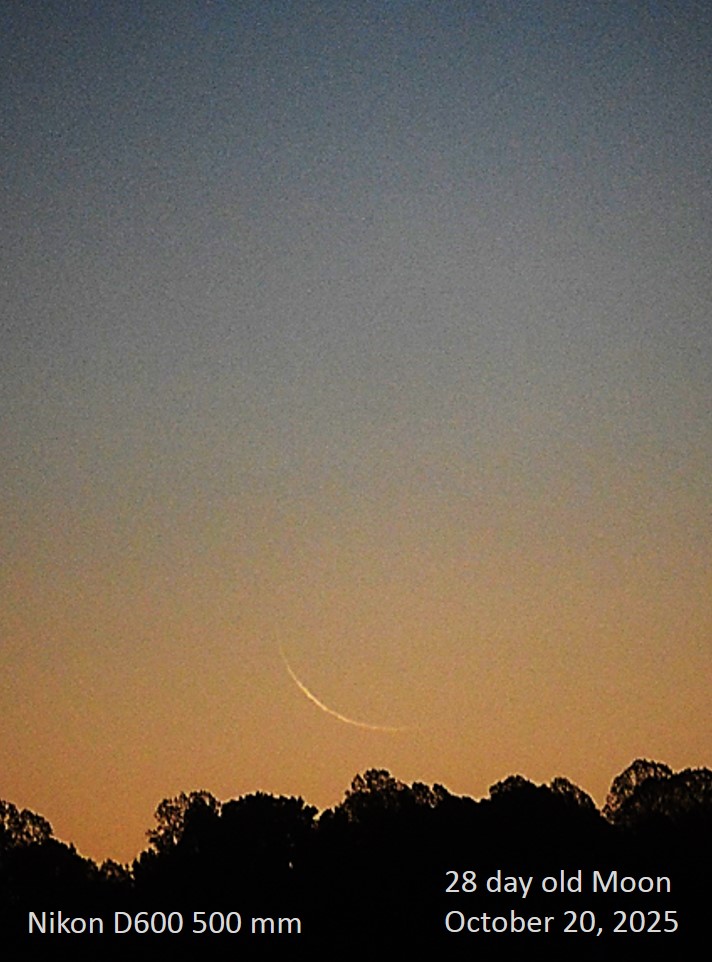
October 20: Venus and Moon I wanted a picture of the thin Moon rising over water, but the Moon was more difficult than I expected. Our view is looking over Potomac Creek toward Japazaws. In the evening, we spied Mercury and Mars in Falmouth. |
|
|
|
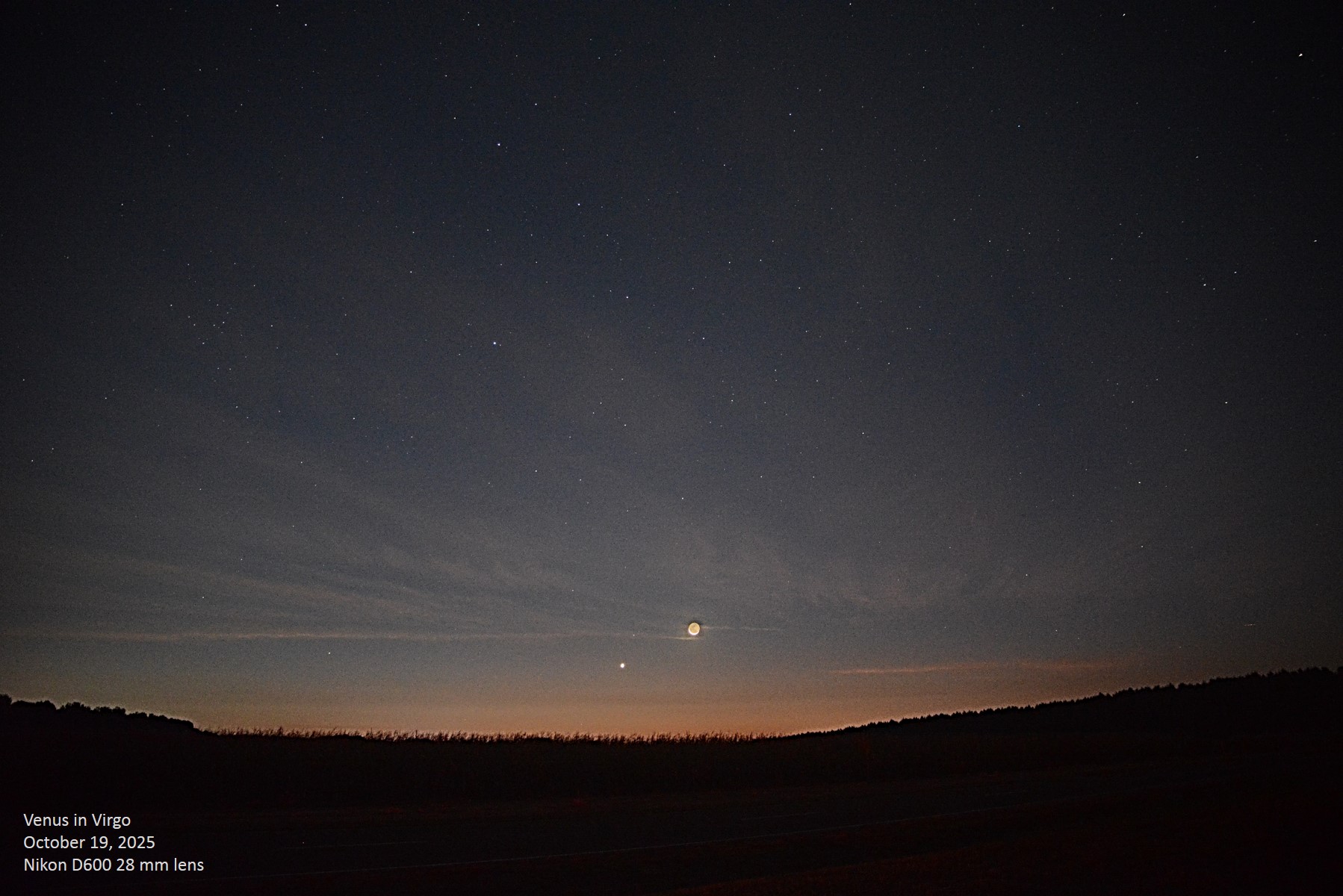
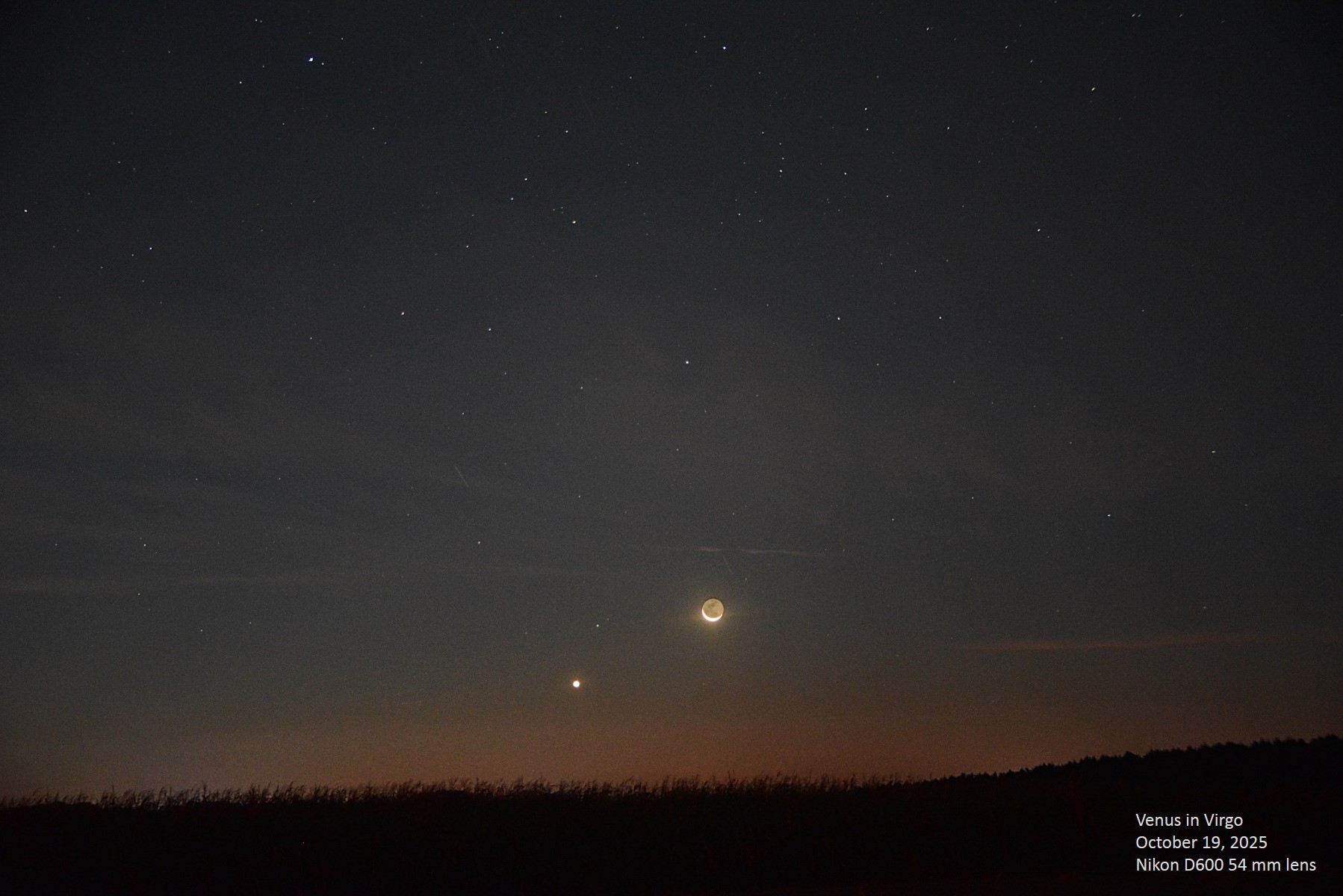
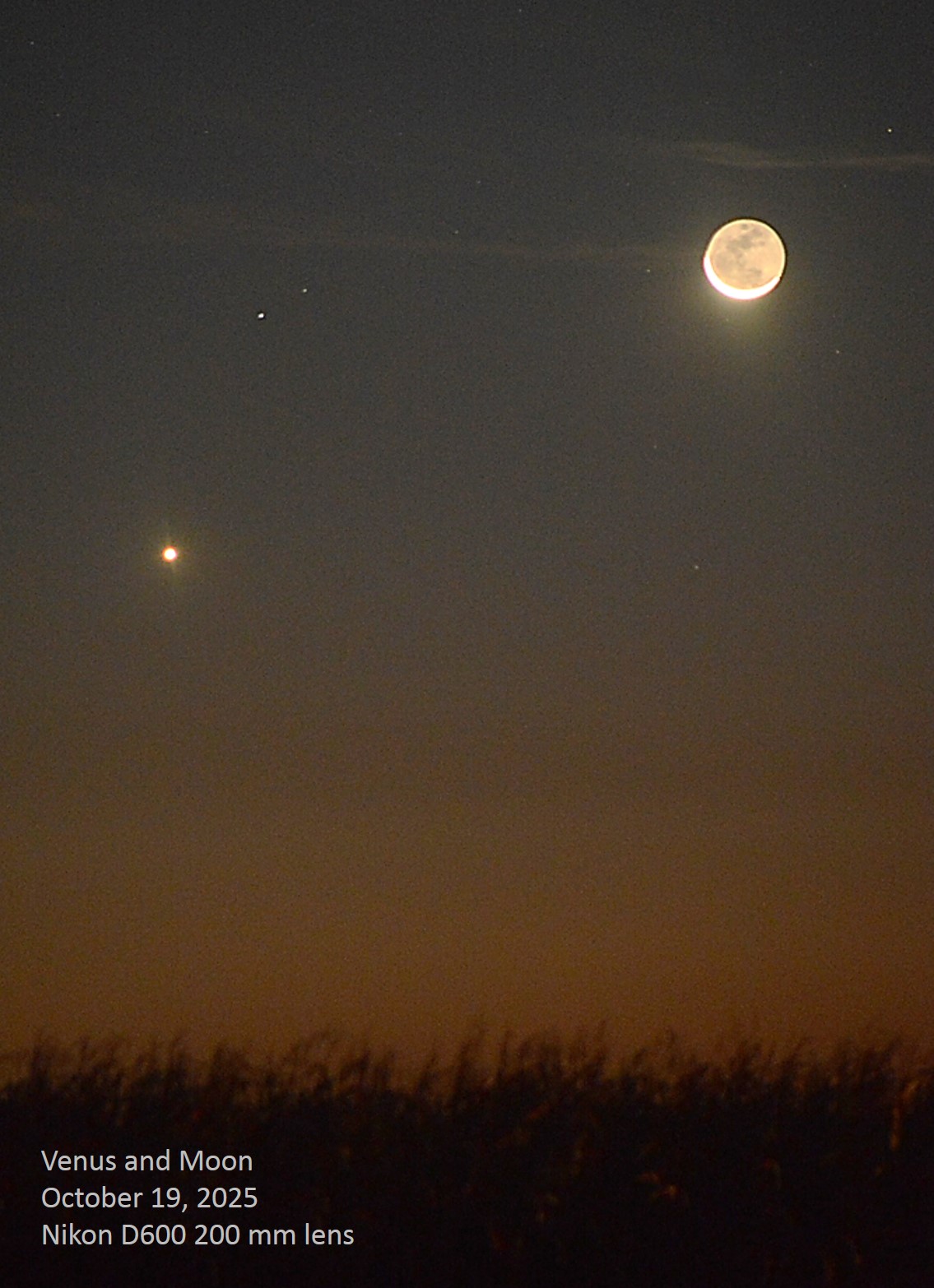
October 19: Venus and Moon Venus and the crescent Moon paired up again, a month after their very close conjunction of September 19th. Why is this conjunction 30 days after the prior one, and not 29 as we would expect? It's because Venus has moved significantly closer to the Sun during that month and therefore the Moon is one day later in its phase than it was during the previous conjunction. |
|
|
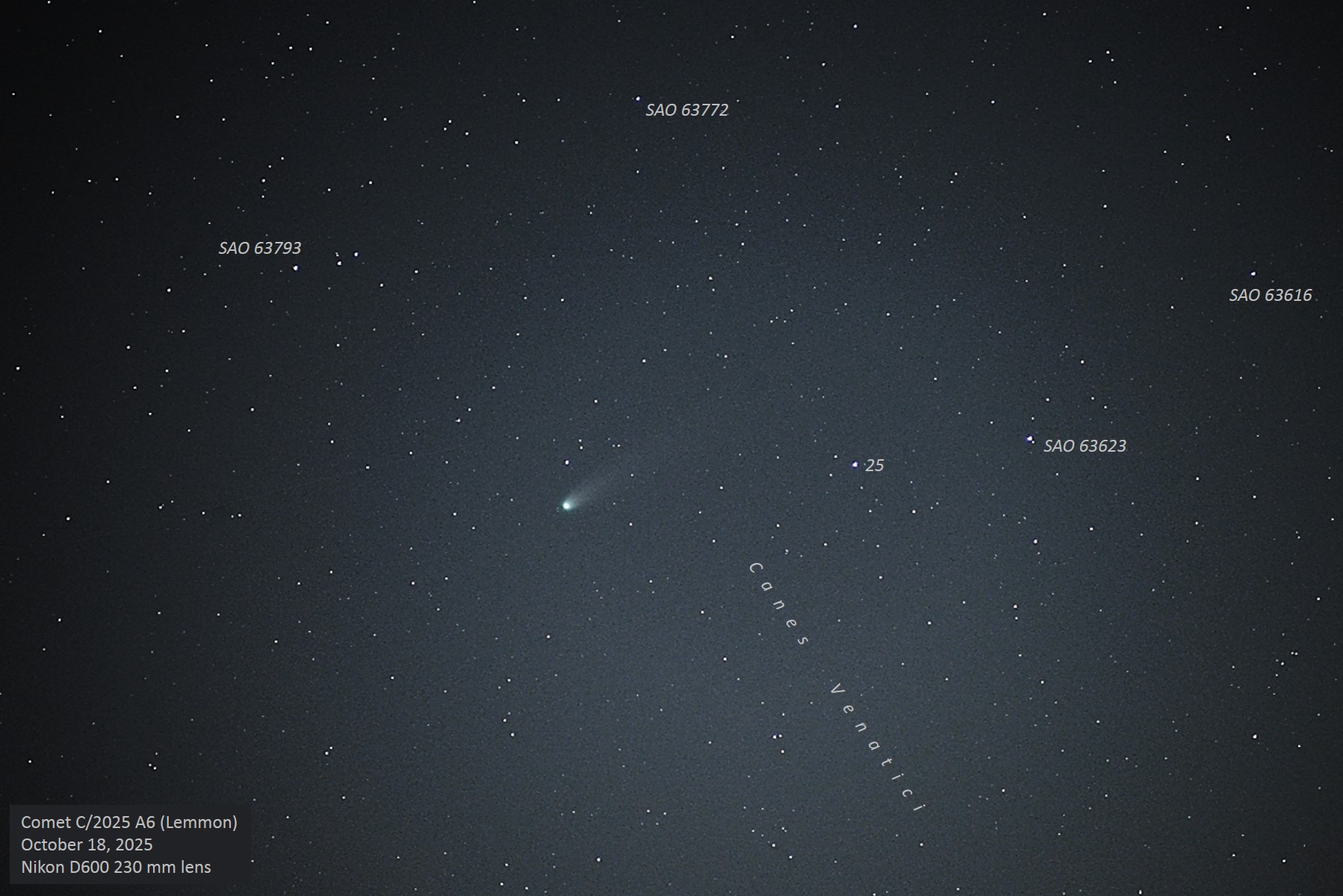
October 18: Comet C/2025 A6 (Lemmon) Comet Lemmon has moved from being a predominantly morning object to one now clearly visible in the evening as well. From a dark location in rural King George county, I was able to see the comet easily with 10x50 binoculars as it stood about 10° above the northwestern horizon. For the next few days it is visible about half-way between Arcturus and the last star in the Big Dipper's handle, Alkaid. |
|
|
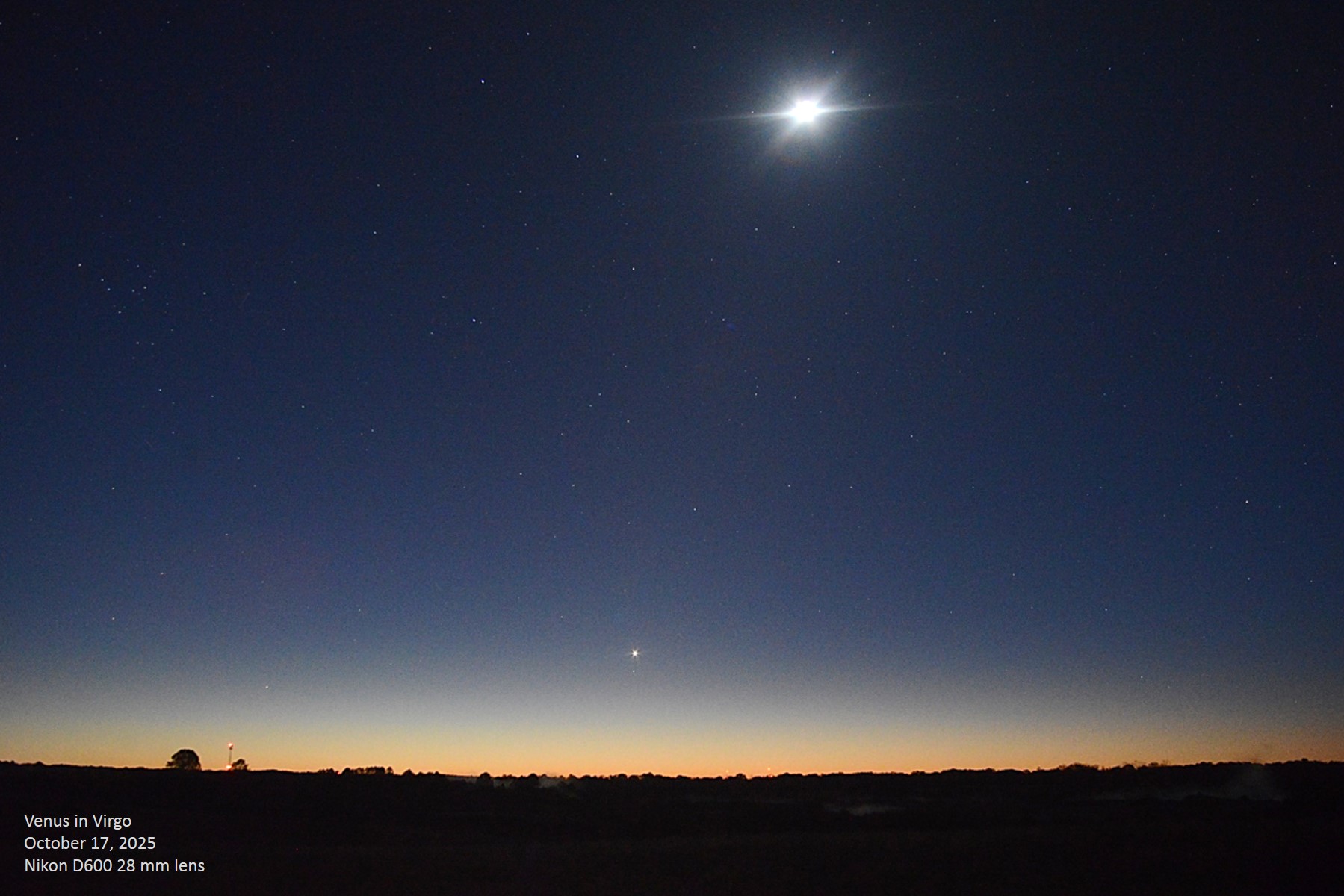
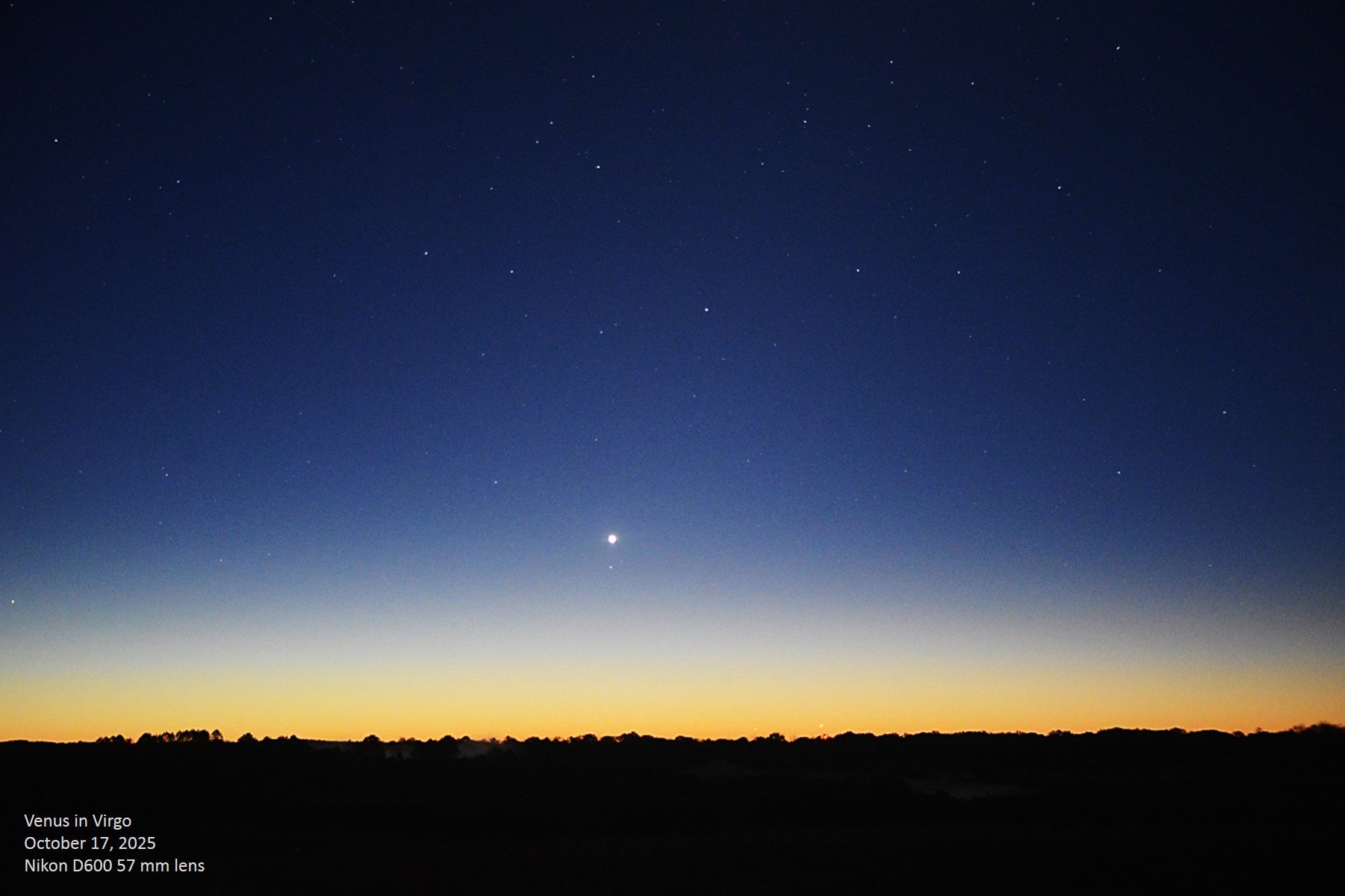
October 17: Venus Venus is now less than 20° from the Sun, so it barely rises before the beginning of astronomical twilight; here we see the brightest planet as it approaches the star η Virginis, while the thick crescent Moon stands high above them, on a course for meeting Venus two days hence. |
|
|
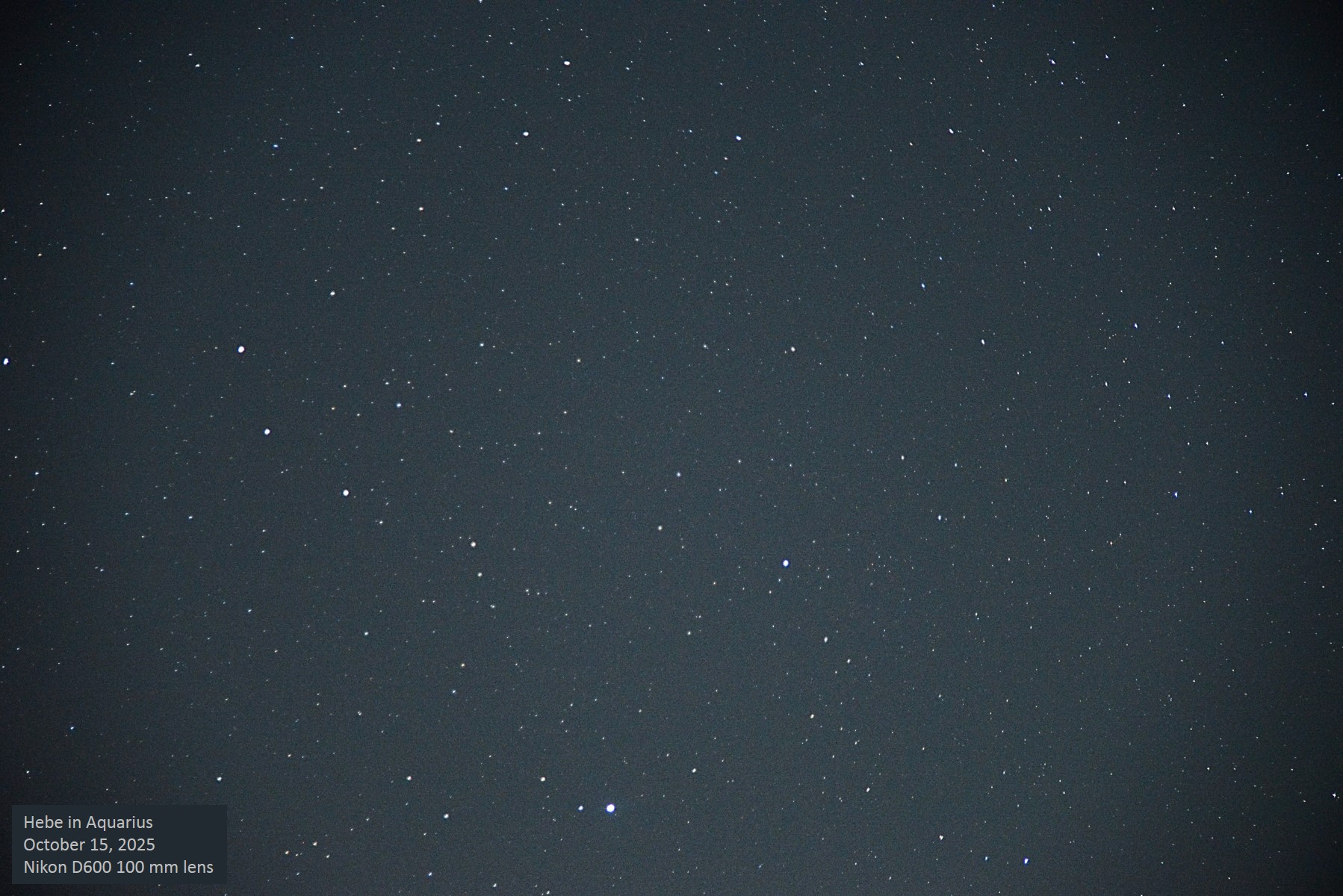
|
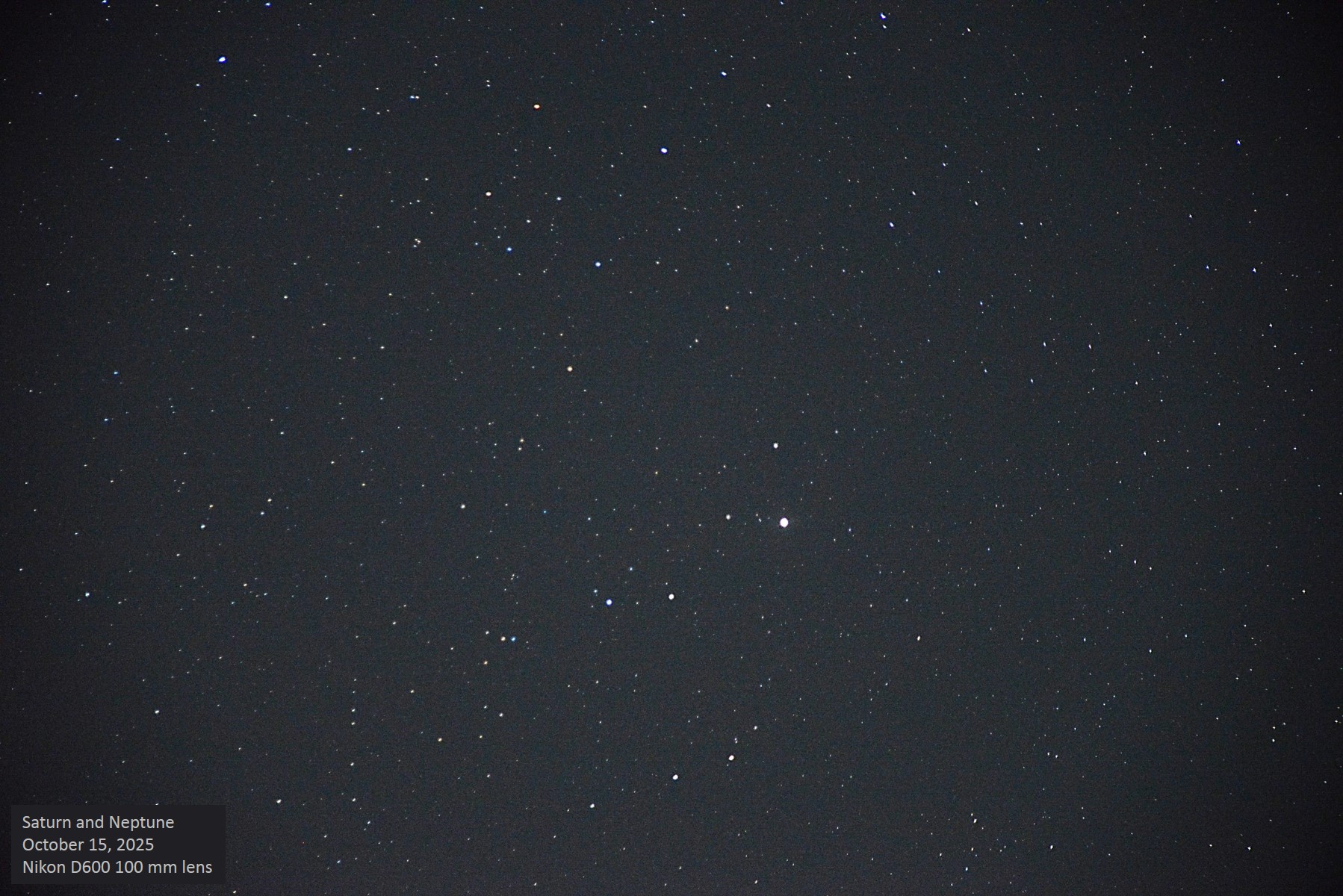
|
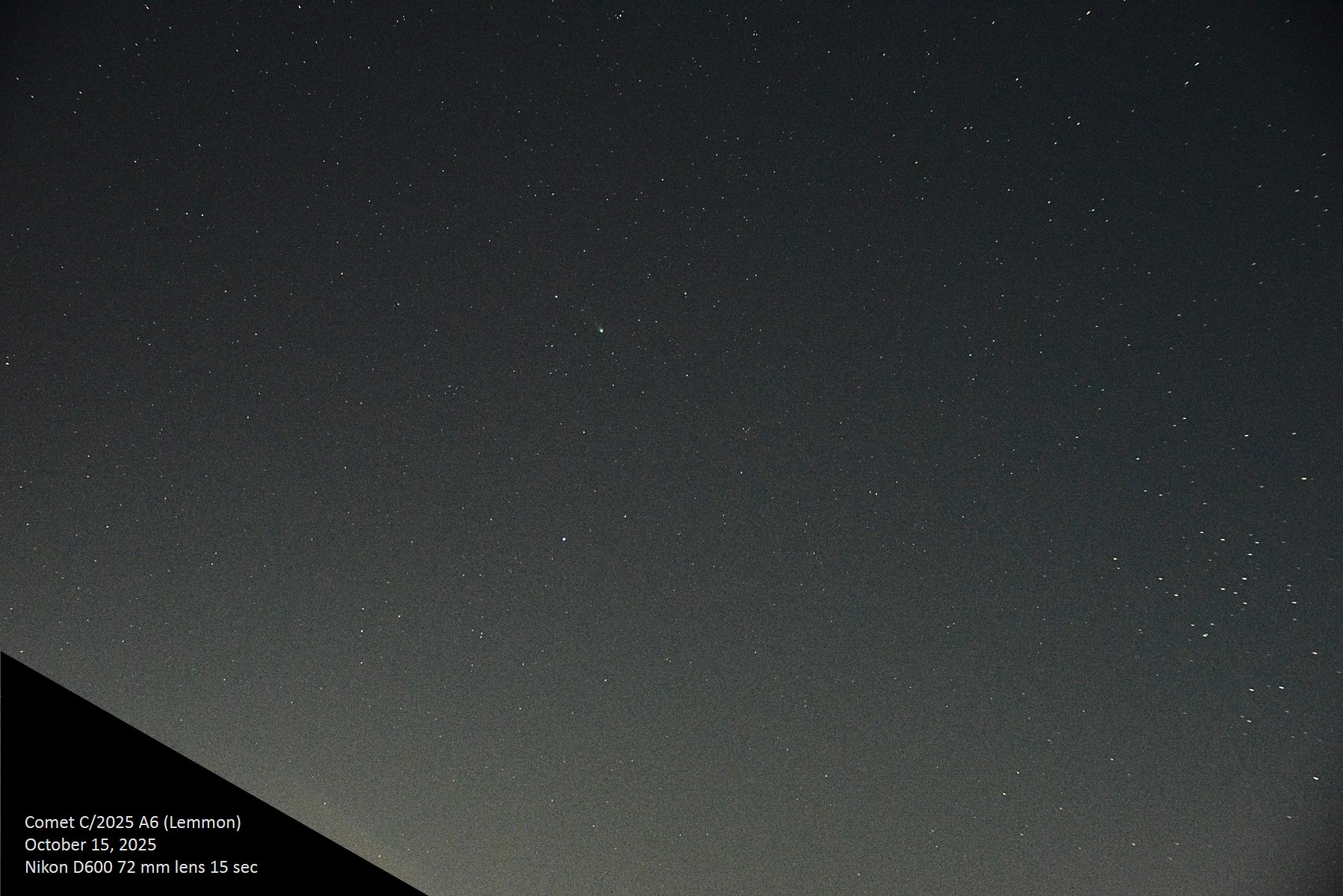
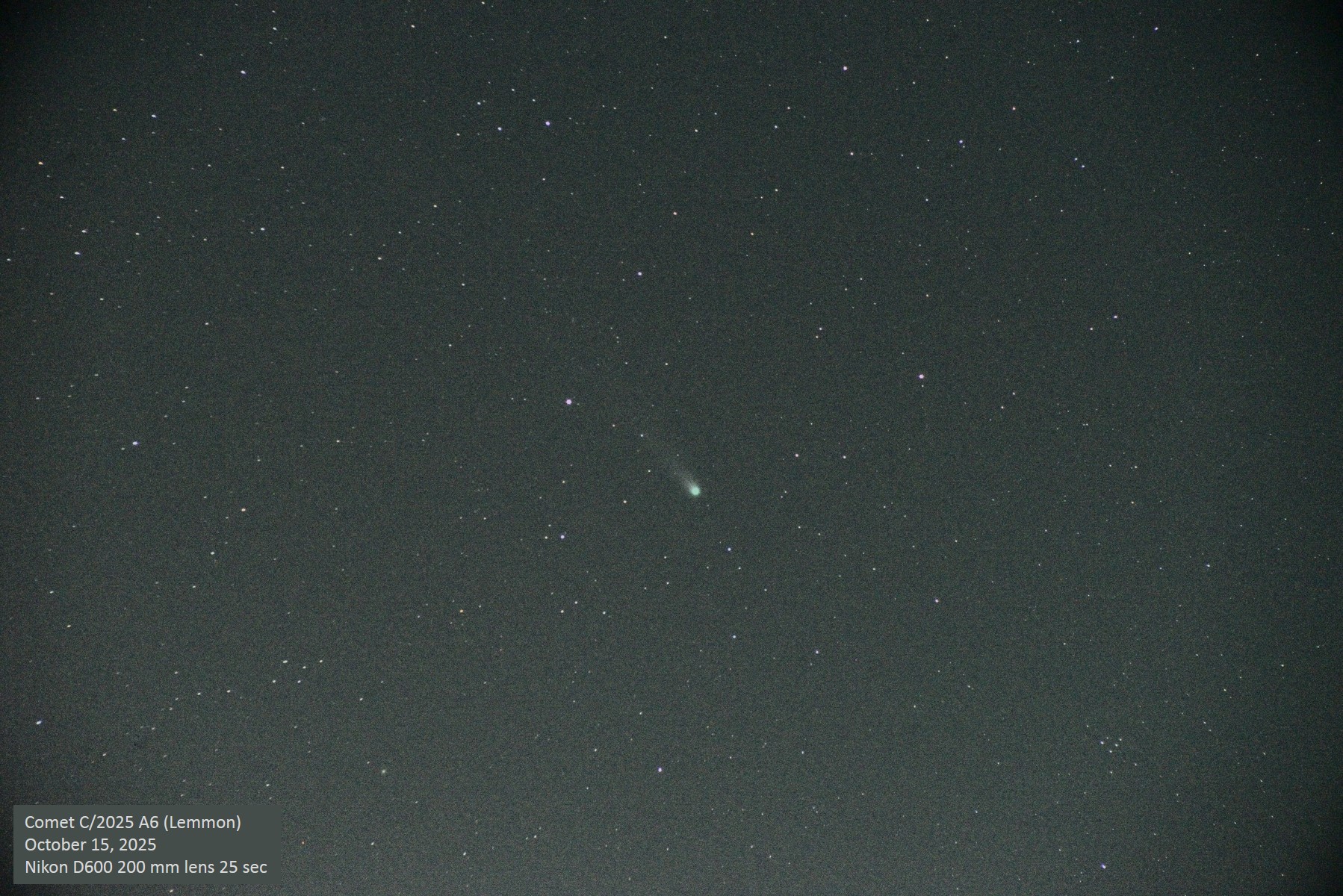
Oct 15: Comet C/2025 A6 (Lemmon), Hebe, Saturn, Neptune Comet C/2025 A6 (Lemmon) is putting on a very nice display in the morning sky from mid-northern latitudes, while the asteroid Hebe, as well as Saturn and Neptune, were visible in the evening. |
|
|
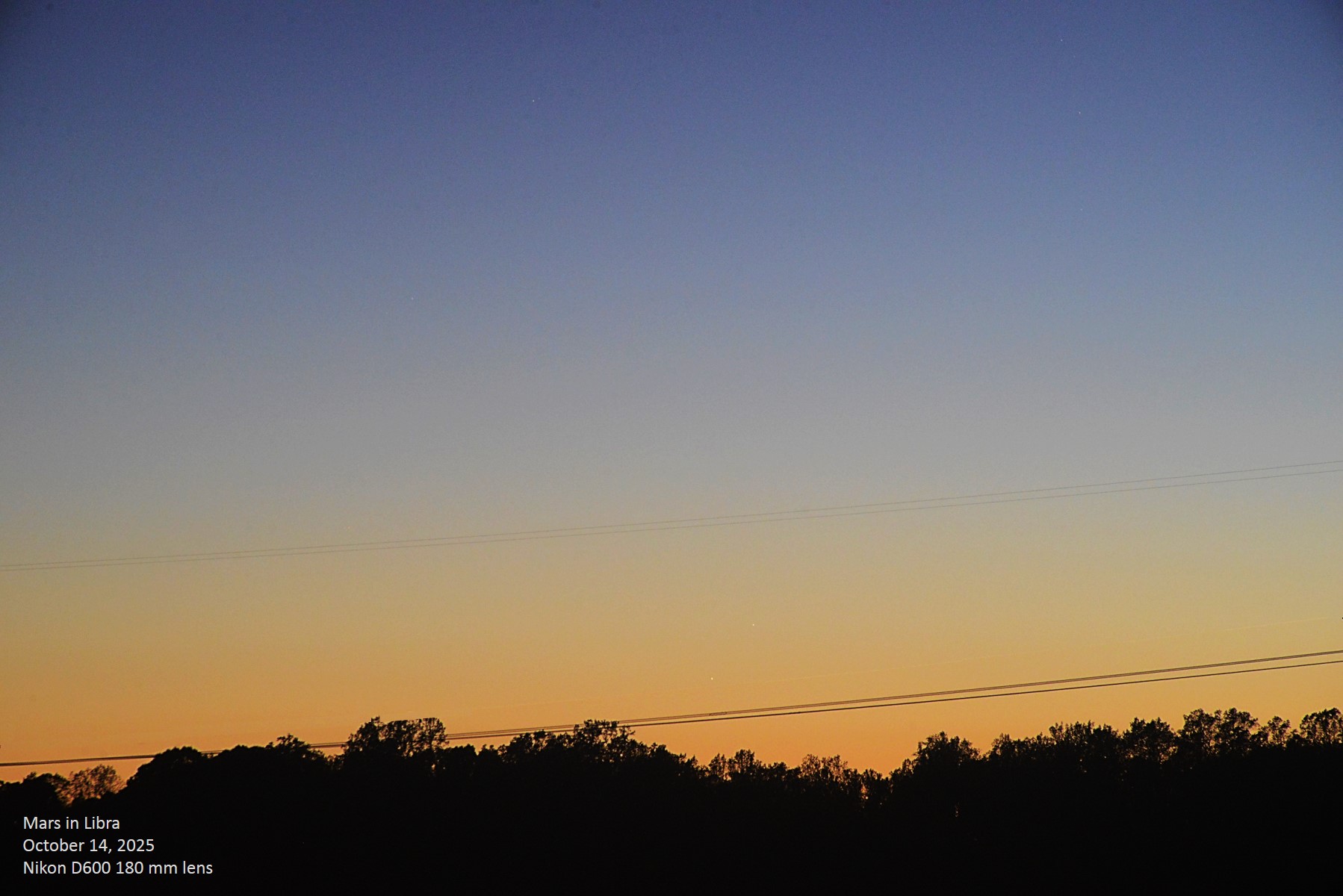
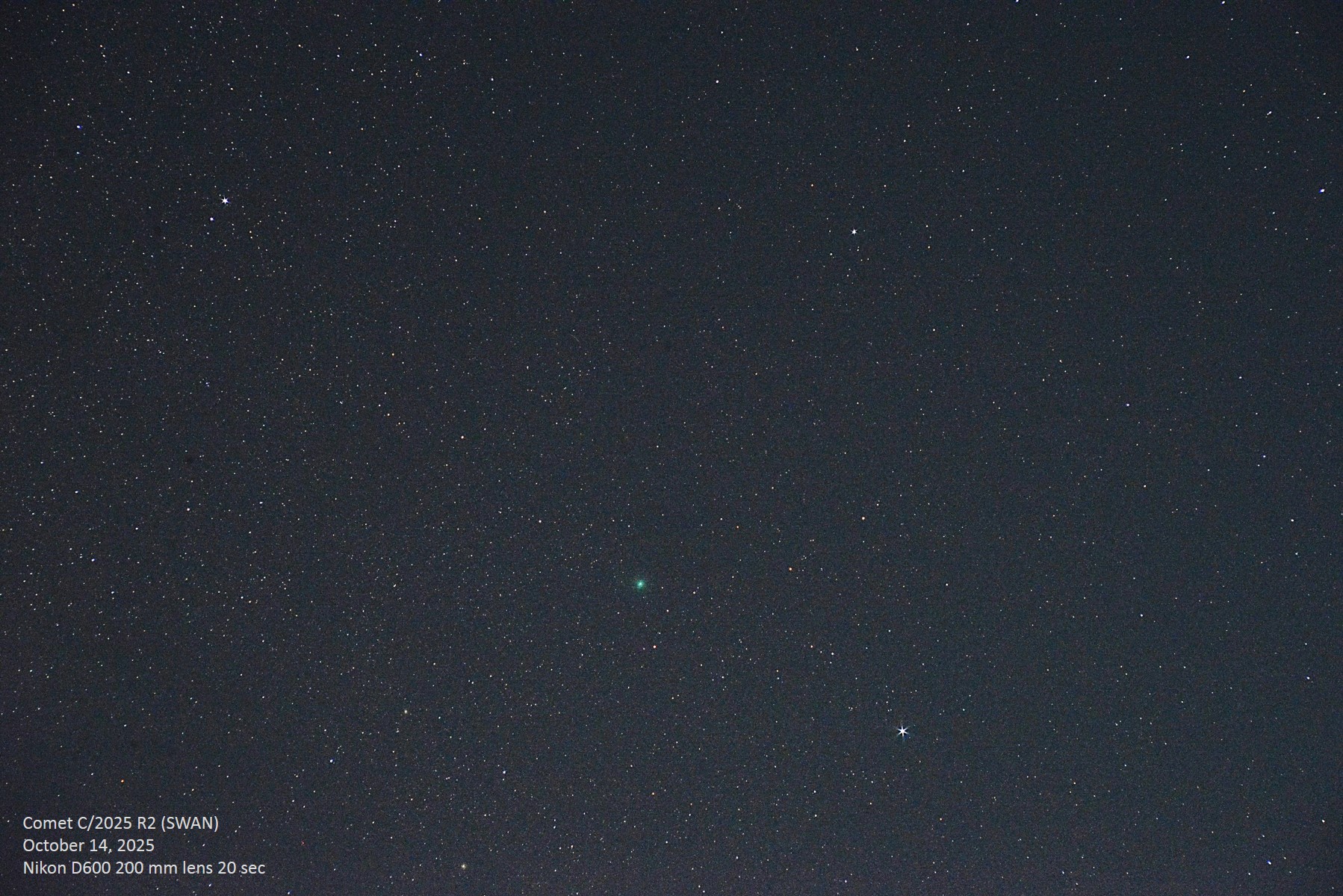
October 14: Mars and Comet C/2025 R2 (SWAN) Mars and Zubenelgenubi are in conjunction this evening, but we had to zoom in with a fairly strong telephoto lens to catch them low in the twilight. After twilight ended, I took some pictures of one of the comets now visible in the evening, this one being C/2025 R2 (SWAN) in the constellation Serpens (Cauda). |
|
|
|
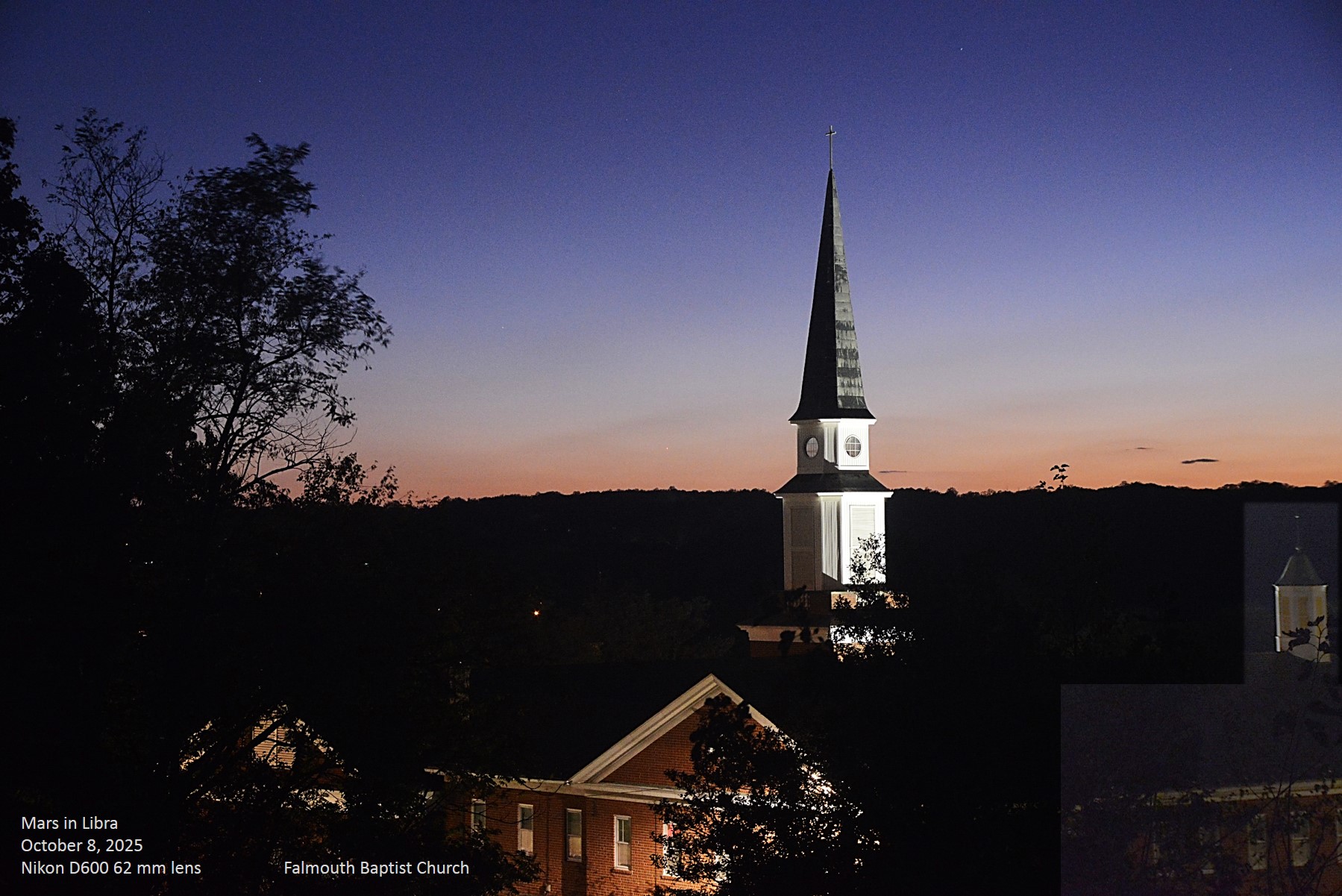
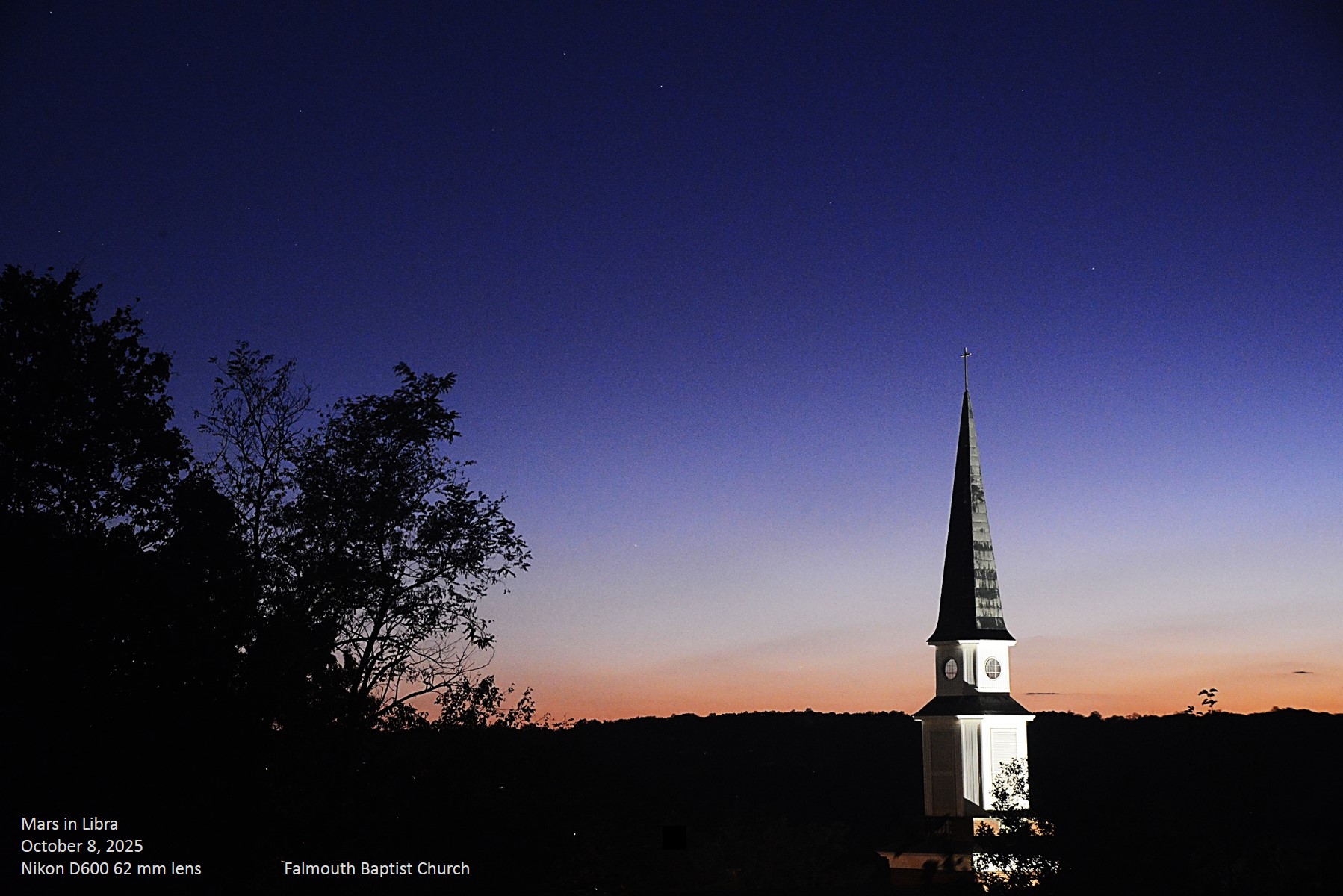
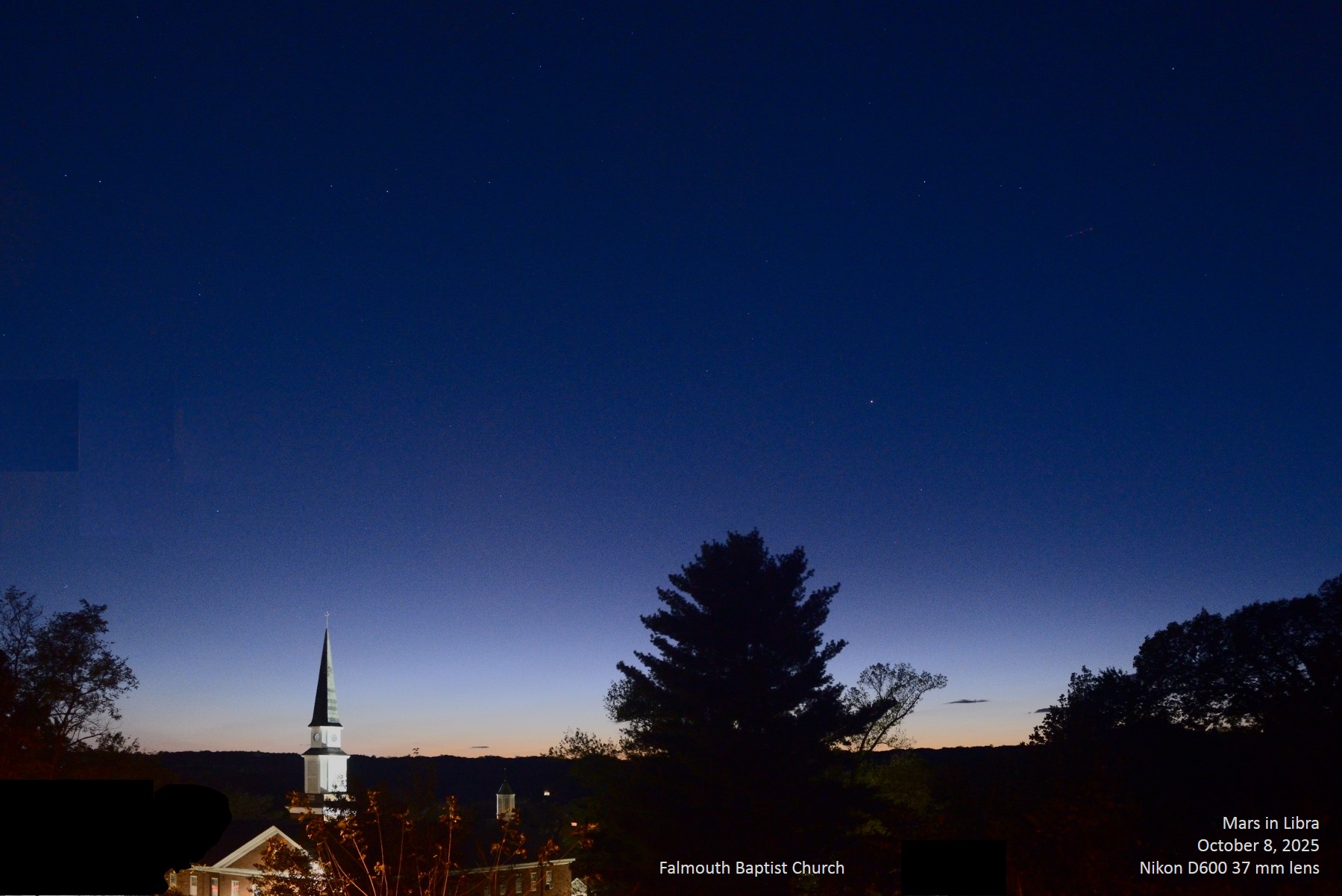
October 8: Mars Mars is slowly creeping up on Zubenelgenubi, the alpha star of Libra, just as it is itself being crept up on by Mercury, which will have a conjunction with Mars later in the month. This view is from the vicinity of the Falmouth Baptist Church north of the Rappahannock River. |
|
|
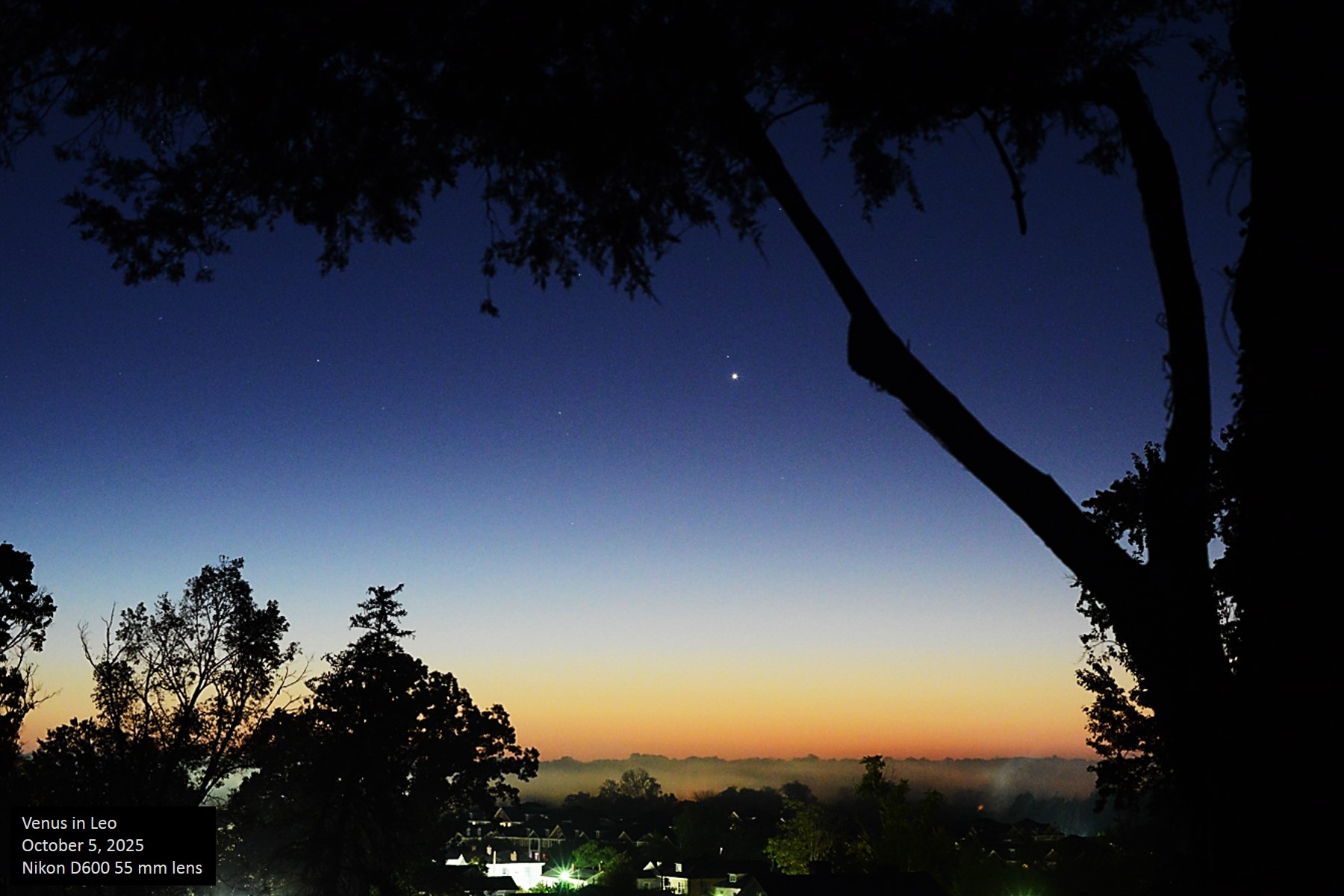
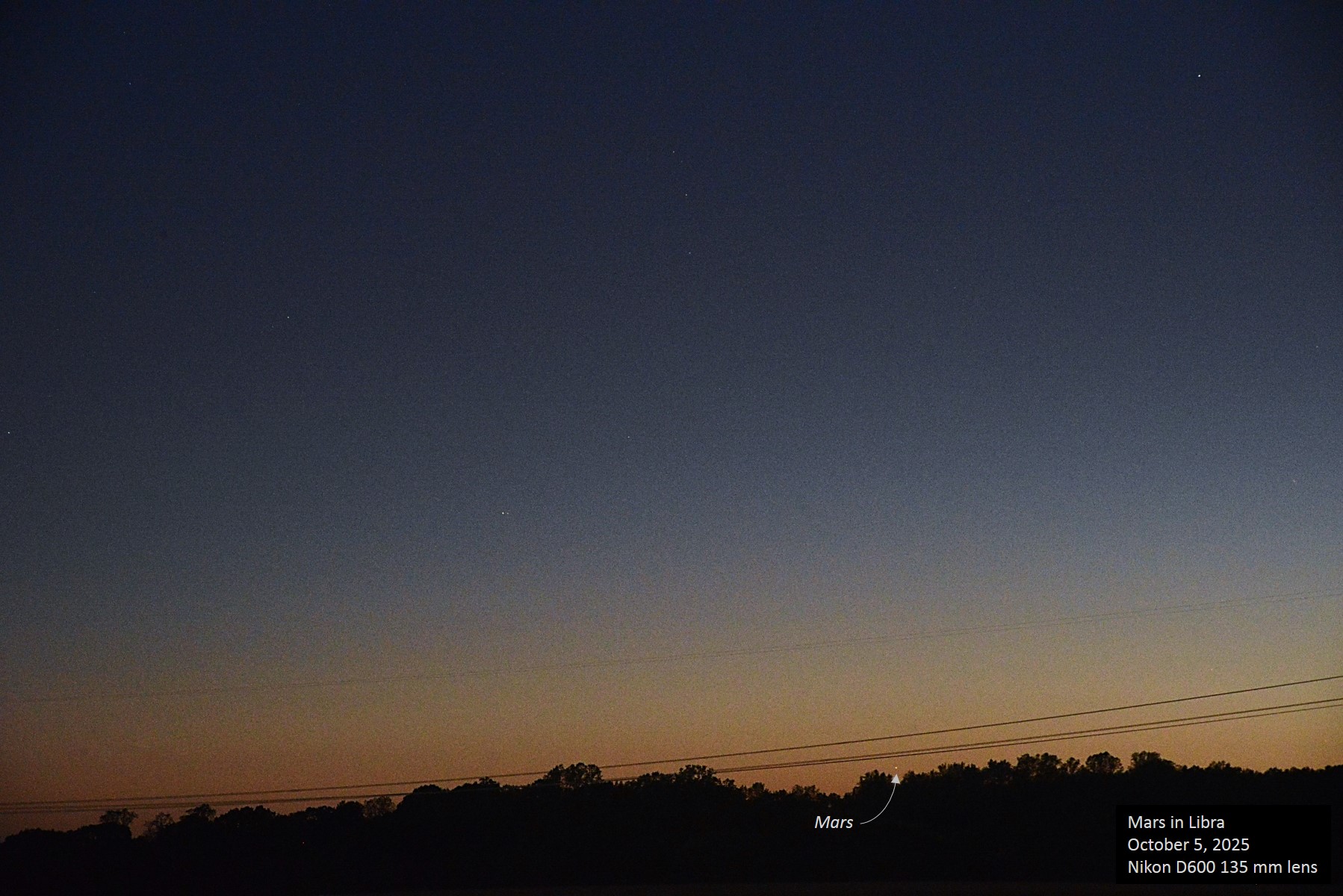
October 5: Venus and Mars Venus still dominates the dawn sky but each day is getting slightly dimmer and lower as a result of its greater speed around the Sun compared to the Earth. In a few days, Venus will have moved into Virgo. In late evening twilight, we took advantage of the perfectly clear skies to pick Mars out of the dusk just before it set beyond the distant treeline. |
|
|
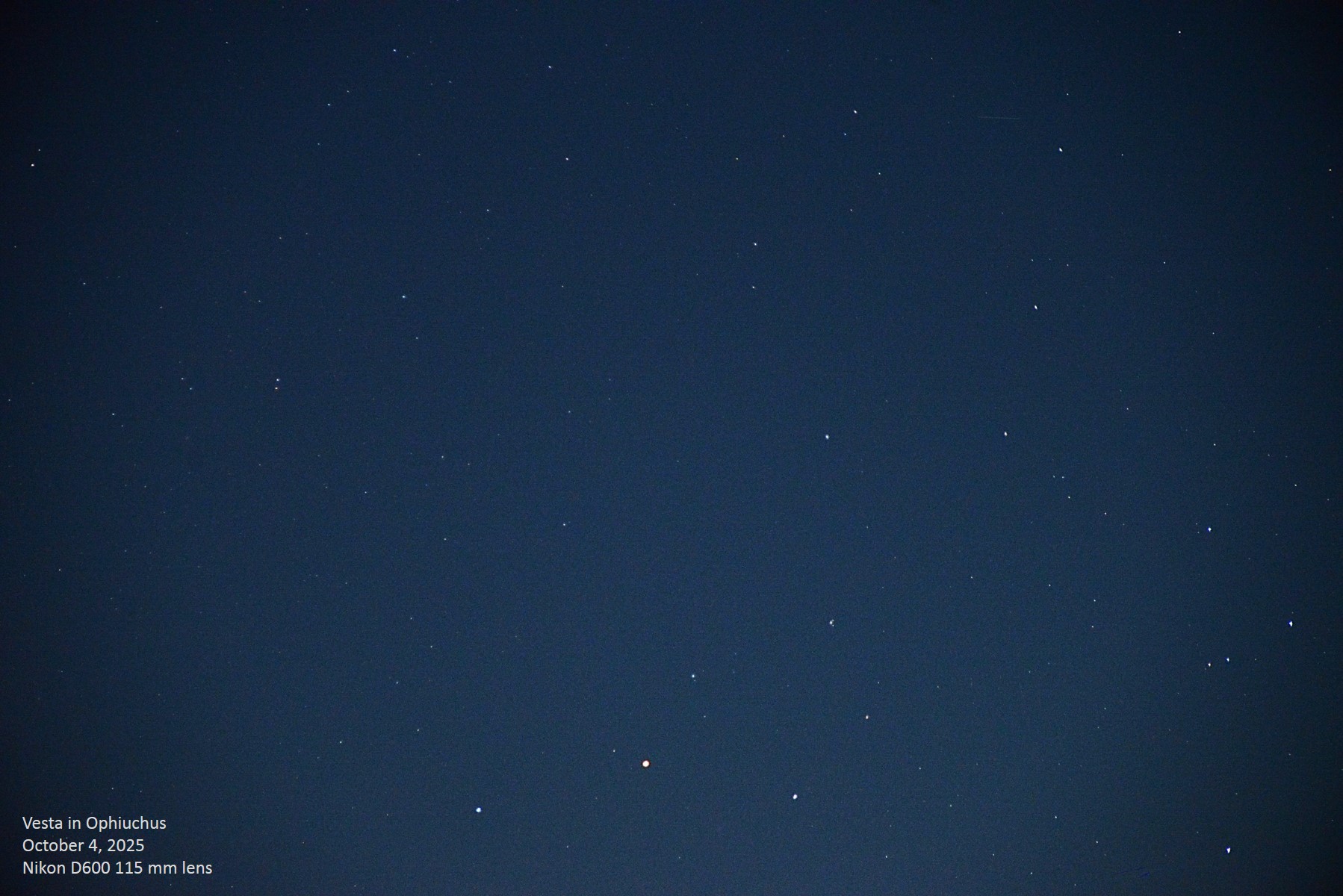
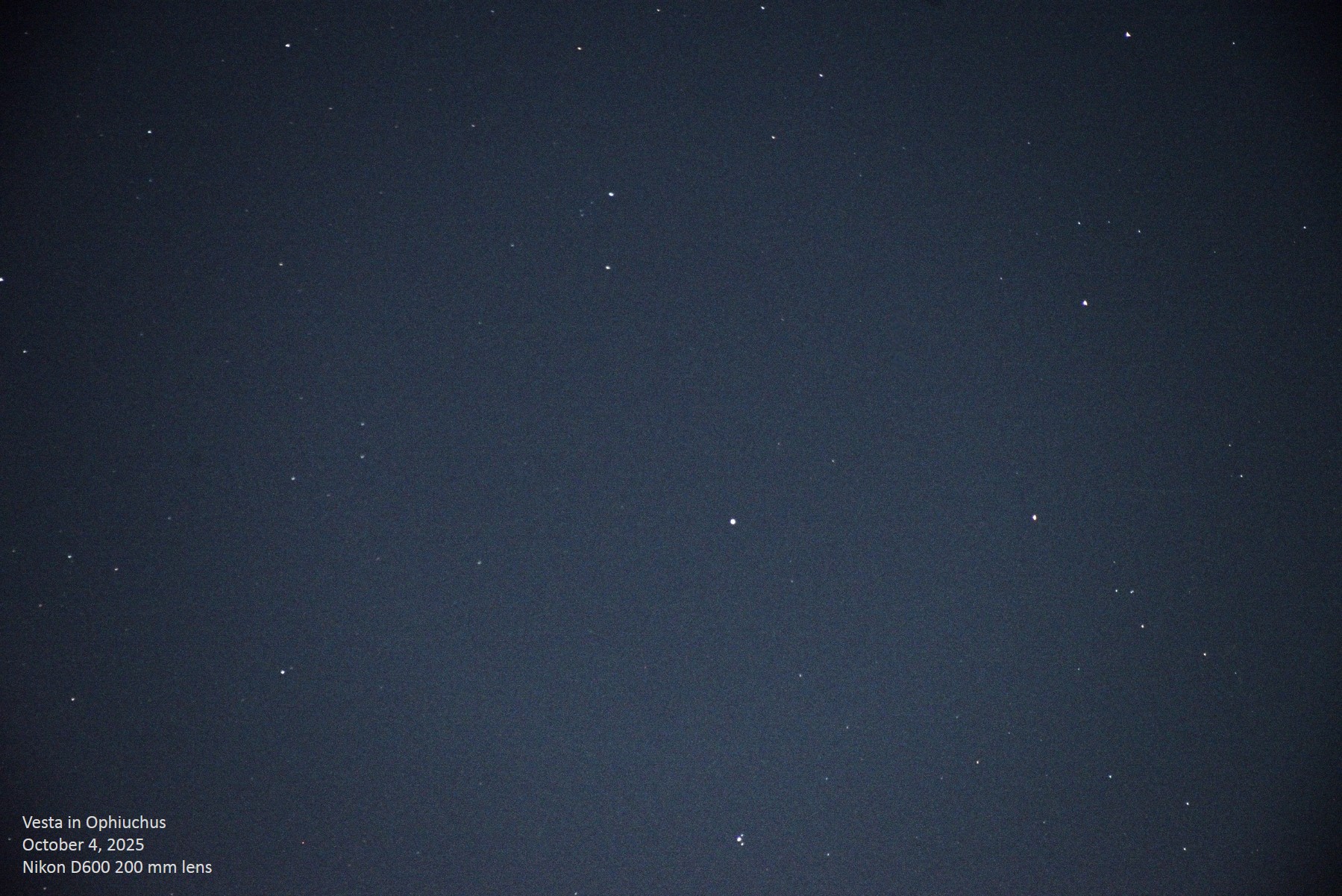
October 4: Vesta Despite bright light from a gibbous Moon, I was able to get some snapshots of the minor planet Vesta in the region of Ophiuchus just north of Antares in Scorpius after the last bit of twilight glow faded. The first thumbnail goes to an image shot at 115 mm focal length; the second one was taken at 200 mm. |
|
|
|
|
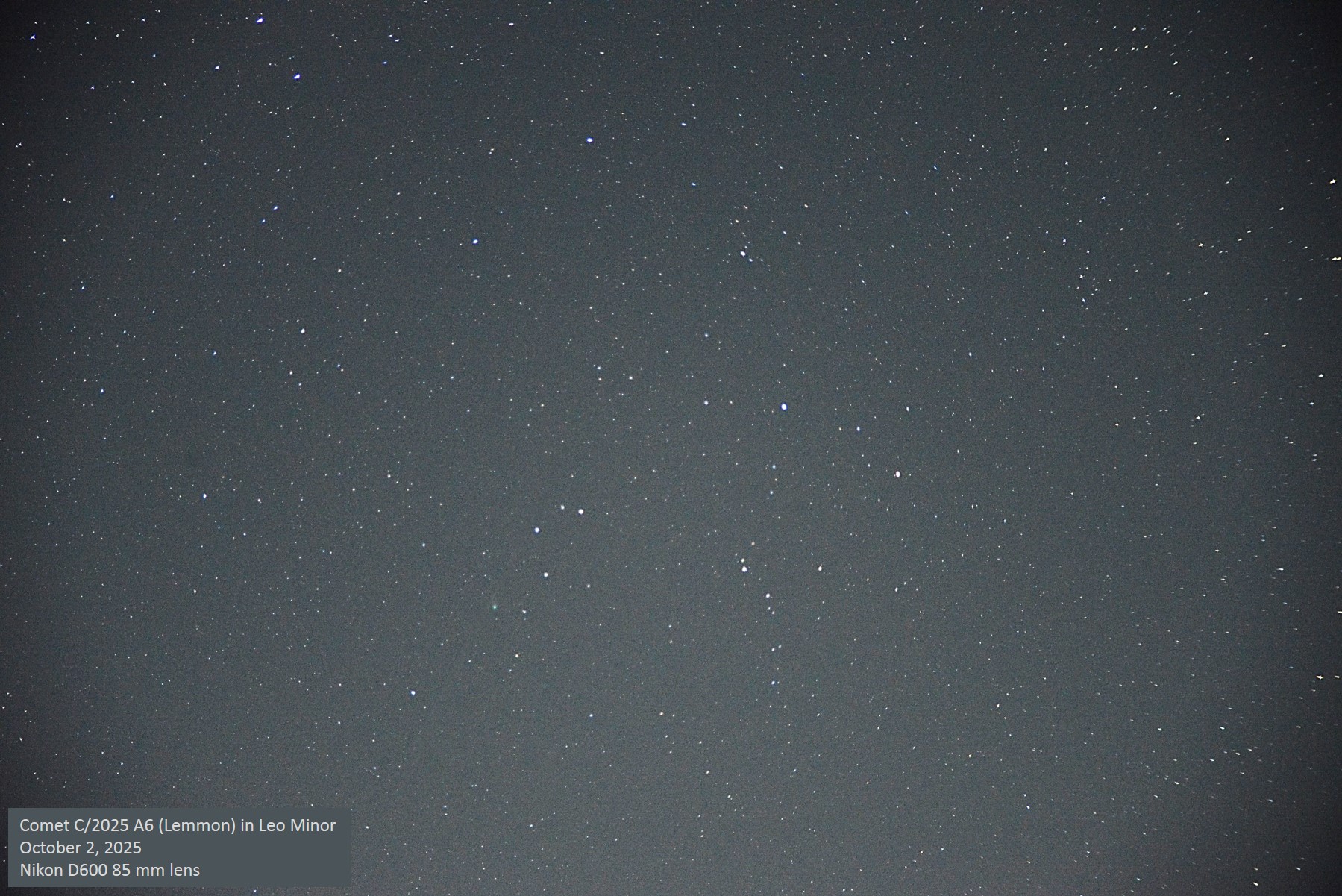
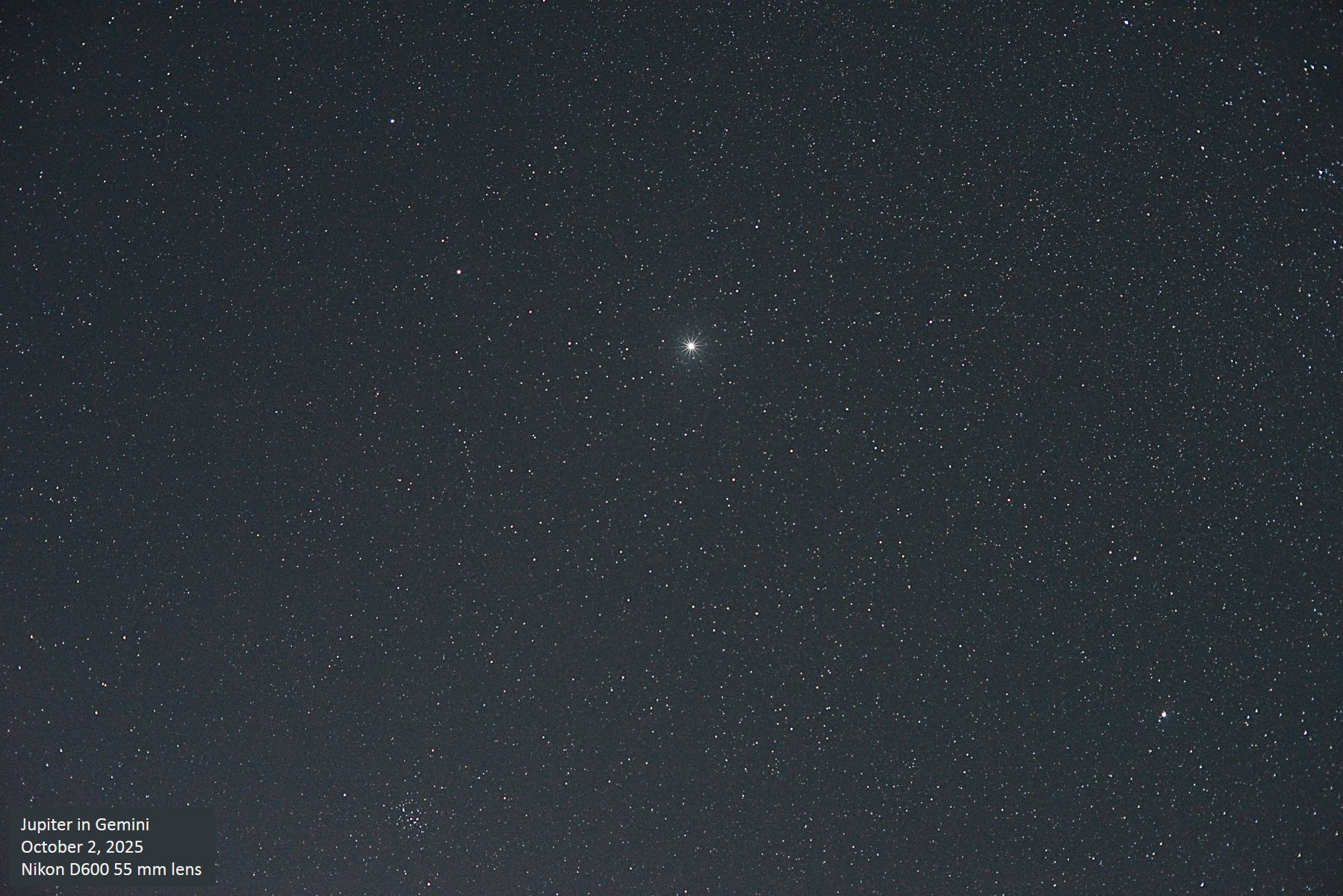
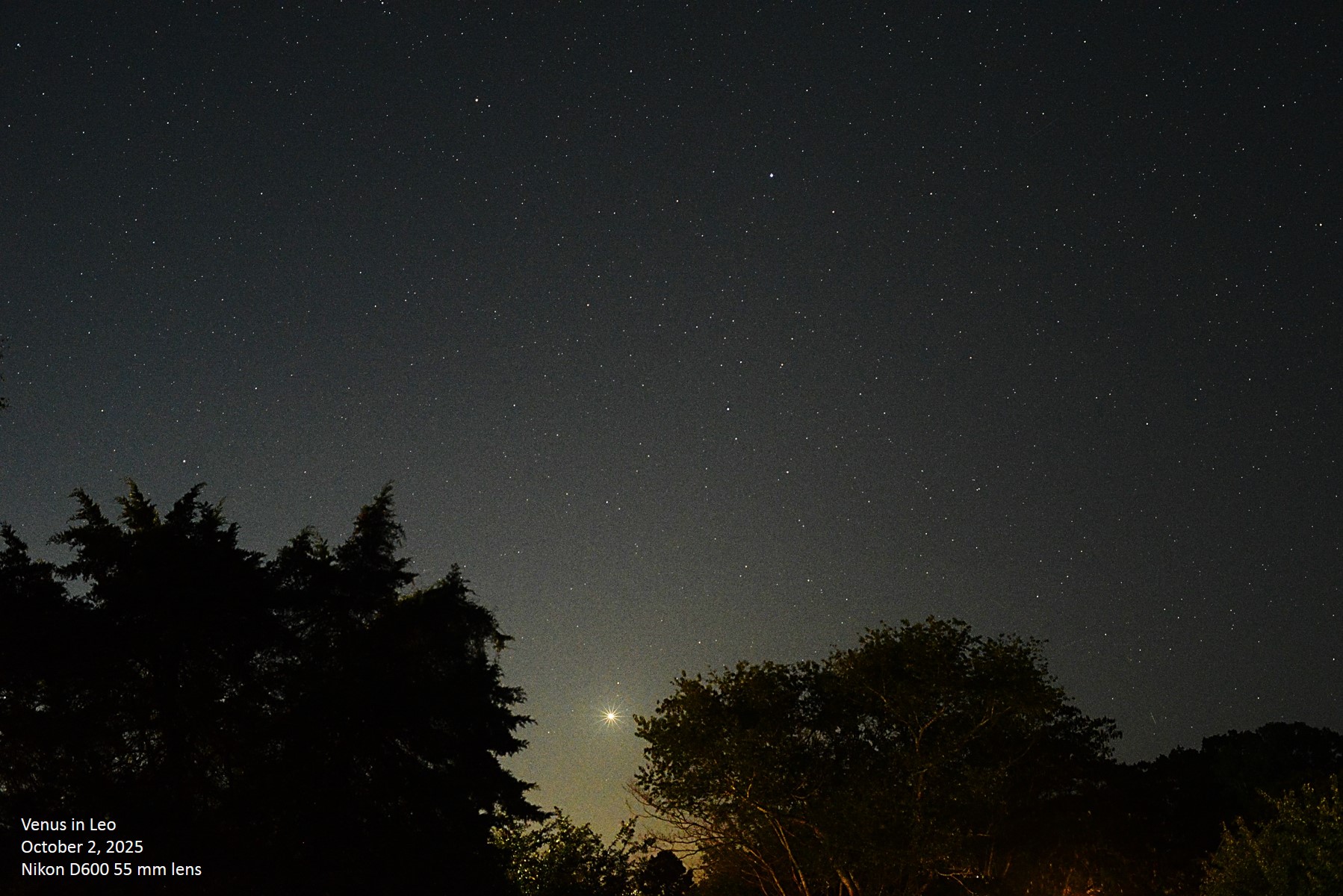
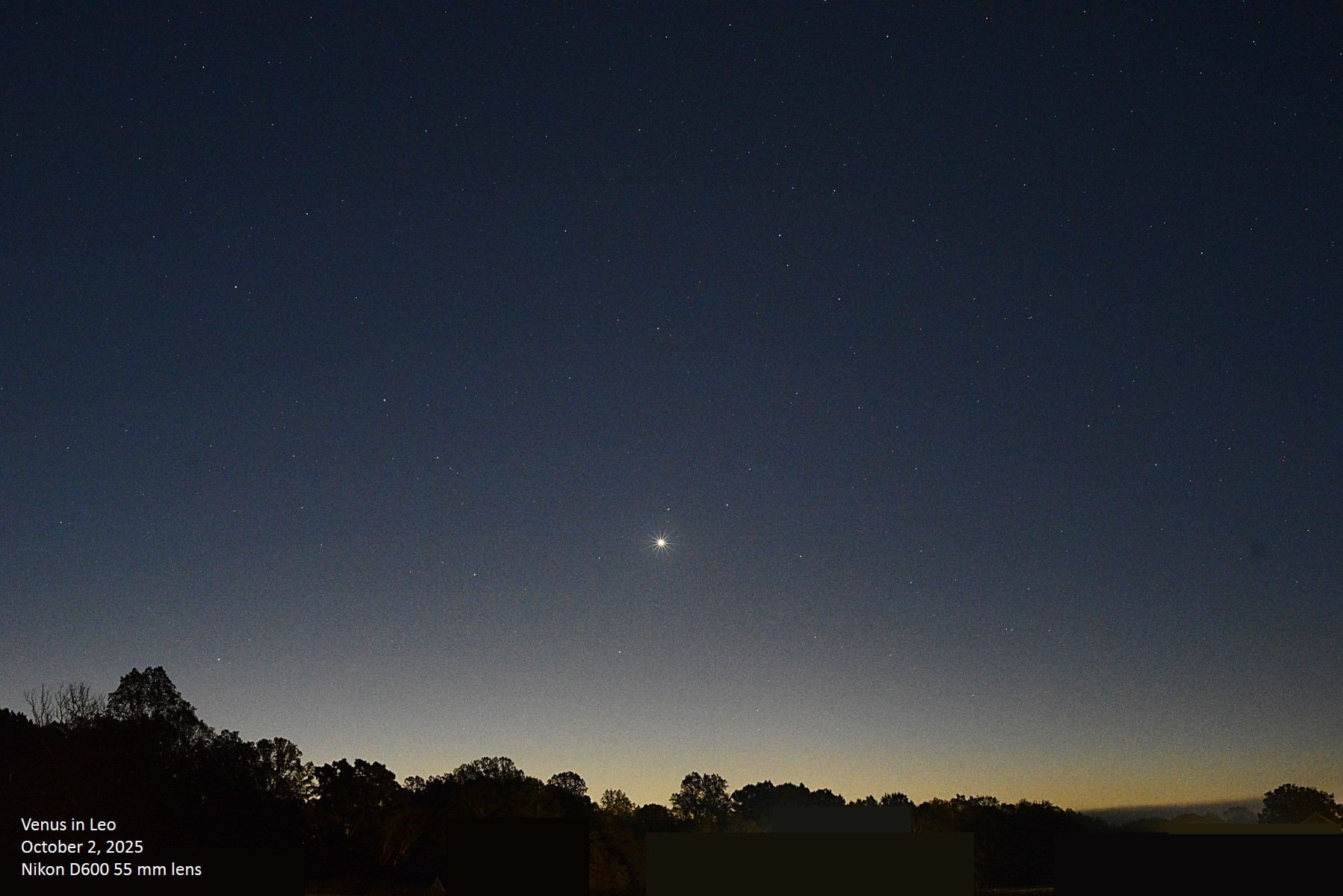
October 2: Comet Lemmon, Jupiter, and Venus On a beautifully clear and dark morning, I was able to capture images of Comet C/2025 A6 (Lemmon) in Leo Minor, Jupiter in eastern Gemini, and later on a couple of Venus shots as twilight gathered. |
|
|
|
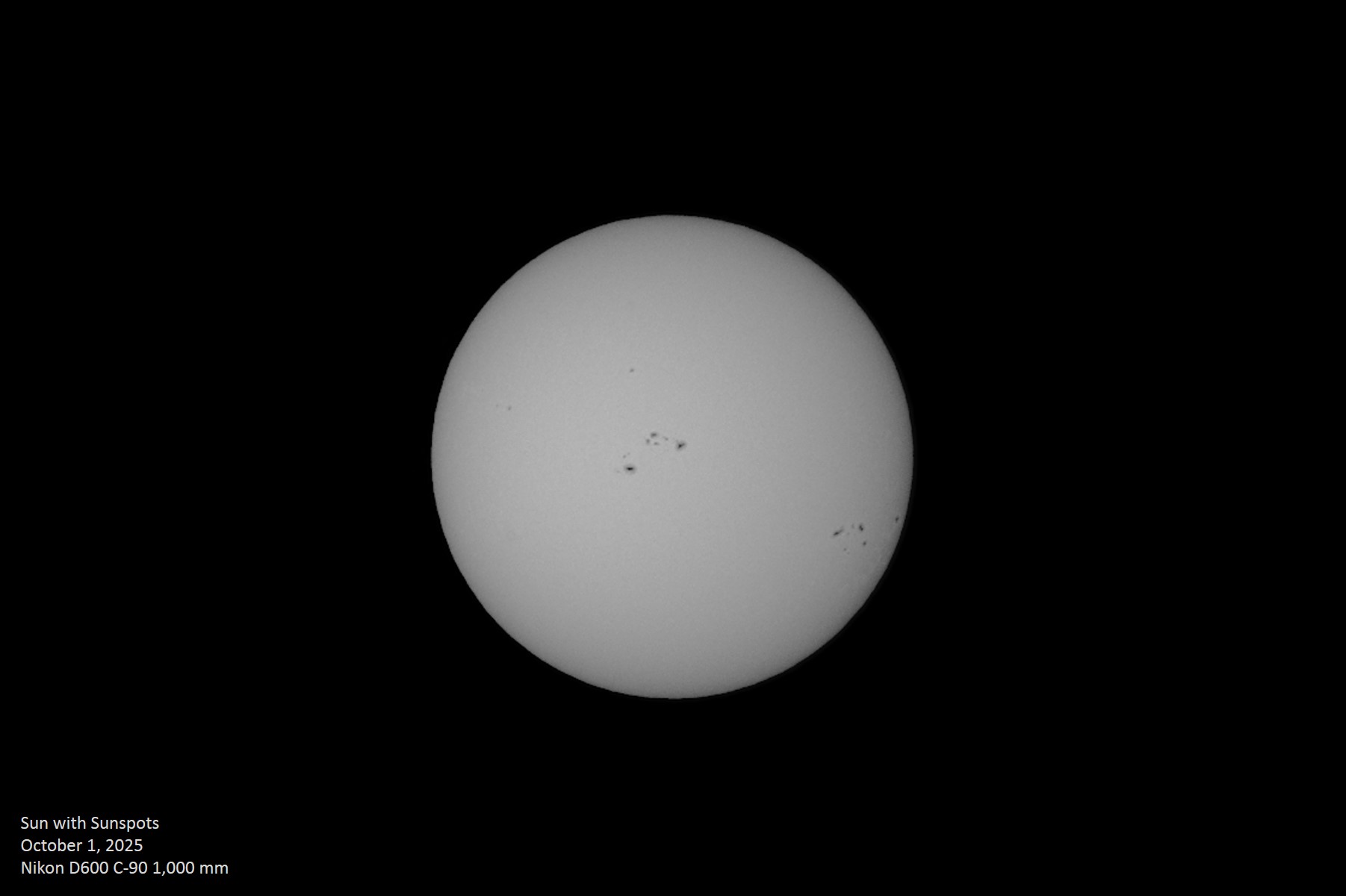
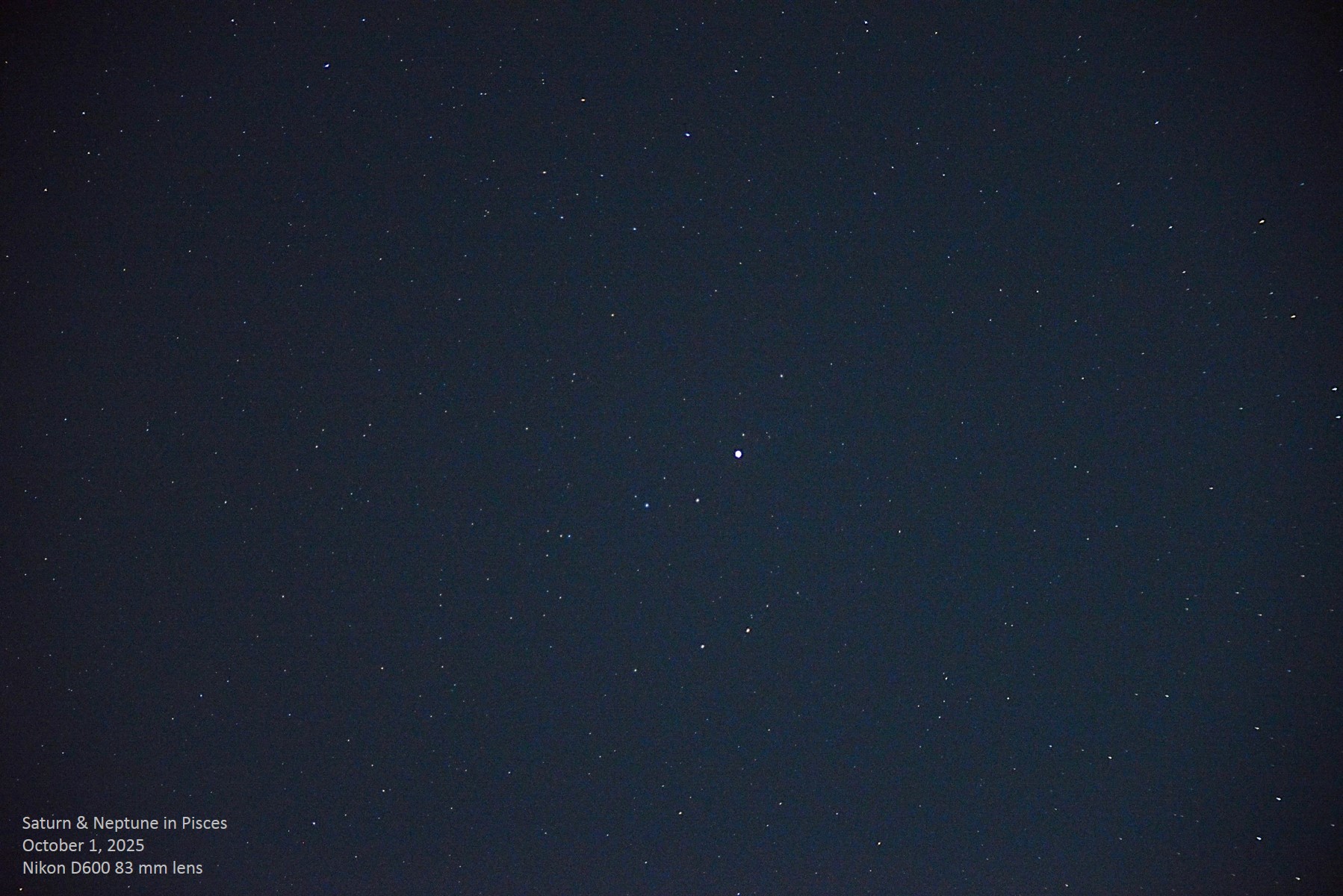
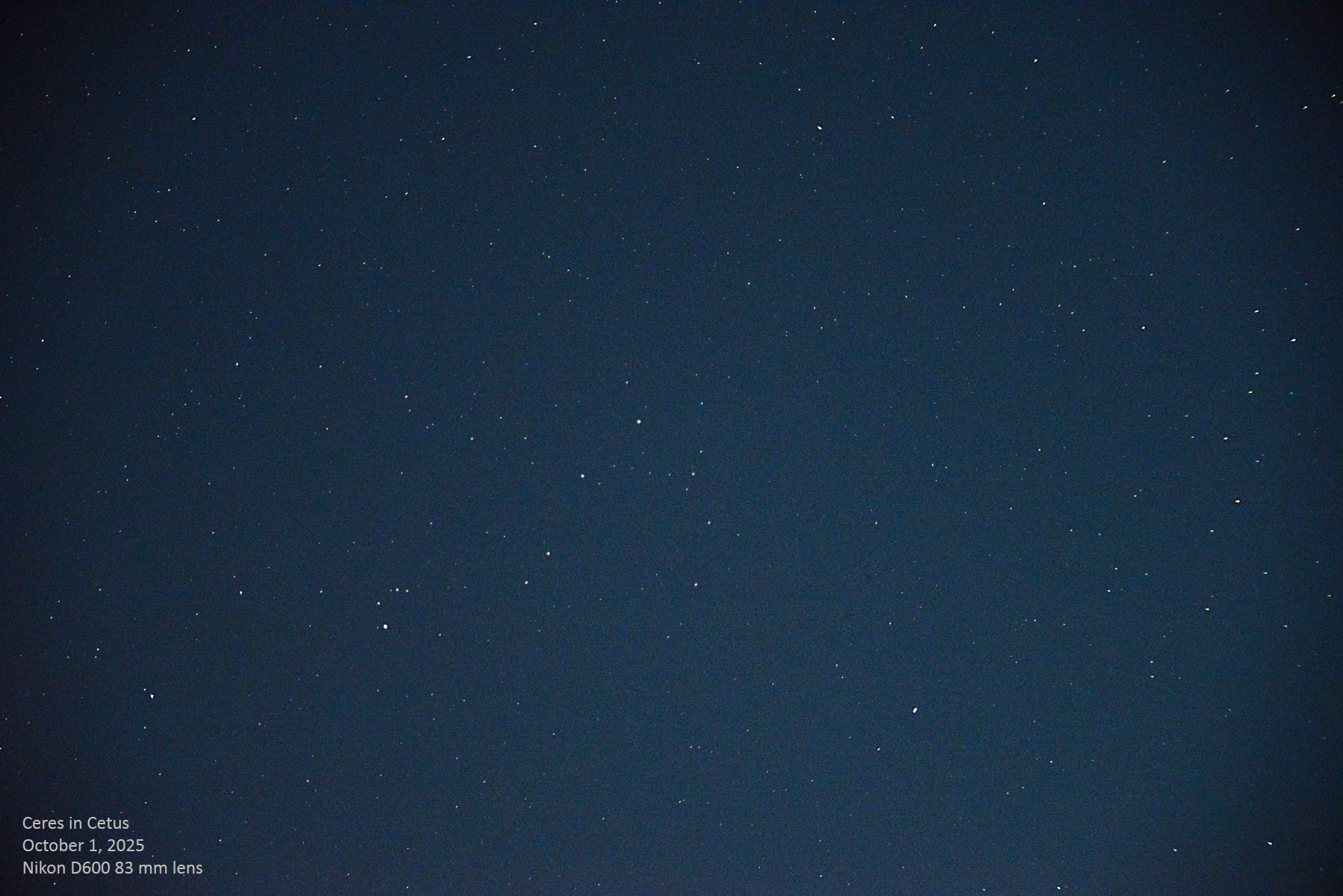
October 1: Sun, Saturn, Neptune, and Ceres Great sunspots today, this time however my daughter Christa said I should not apply artificial coloring to the image, so here it is in grayscale. As usual, spaceweather.com has the best daily characterization of the sunspots today. Saturn, Neptune, and Ceres are all situated in the same part of the sky where Pisces, Aquarius, and Cetus meet. |