Images from Big Bend and Grand Canyon National Parks
June/July 2019
|
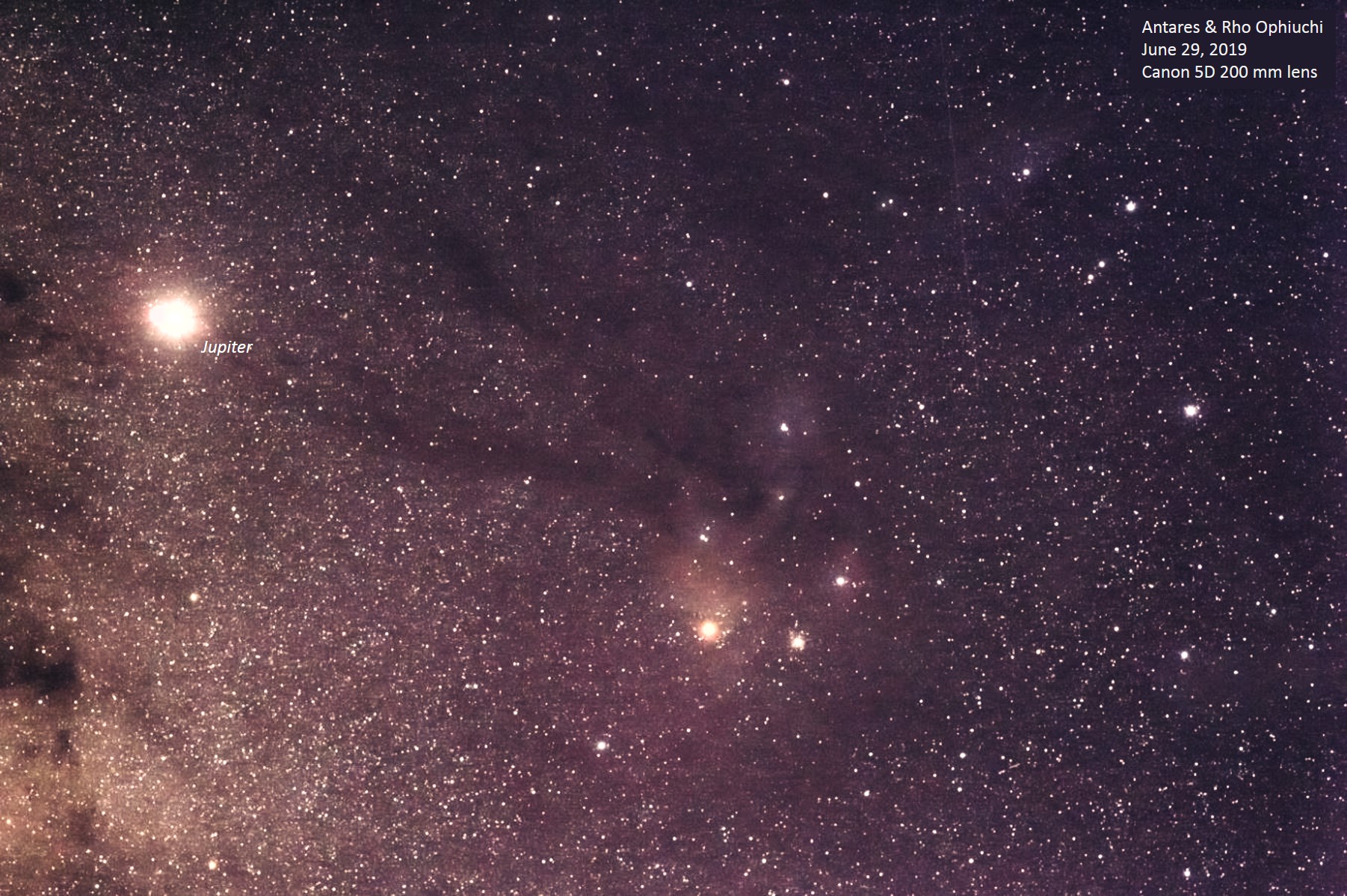
Antares, Rho Ophiuchi, and Jupiter (at left) from Big Bend National Park; the camera used was a modified Canon 5D which records H-α light in the deep red part of the spectrum. The nebulosity between ρ Oph and Antares must be quite faint because it barely shows up. |
|
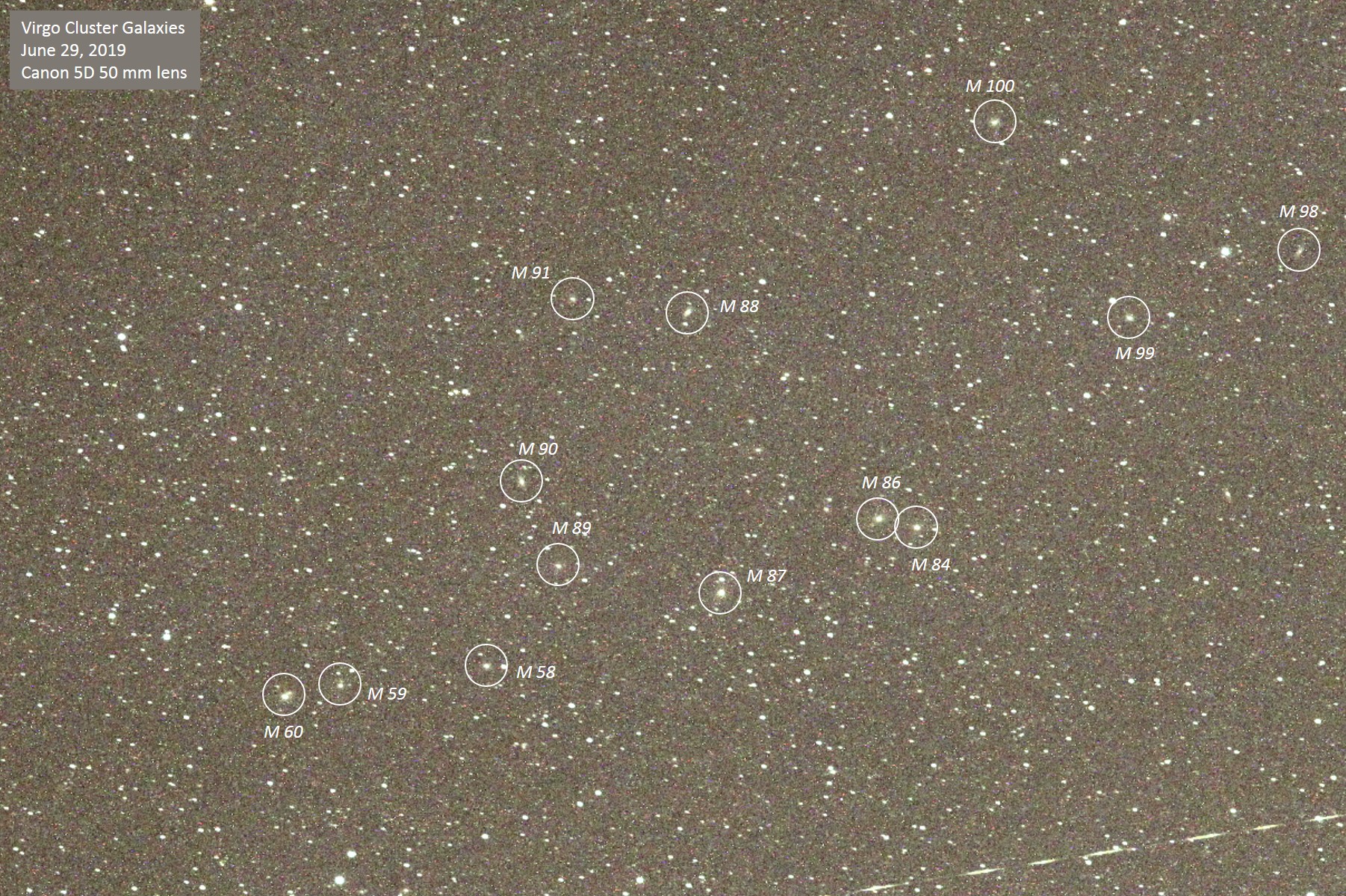
Wide angle image of the Virgo Cluster Messier galaxies: this image did not turn out as well as I hoped. The next time I attempt the central part of the Virgo cluster, I need to use a 100 mm lens and use a longer exposure or stack shorter images together, and of course center the field. There is also no need to use the modified camera in this case, since we are not collecting any H-α emission here. |
|
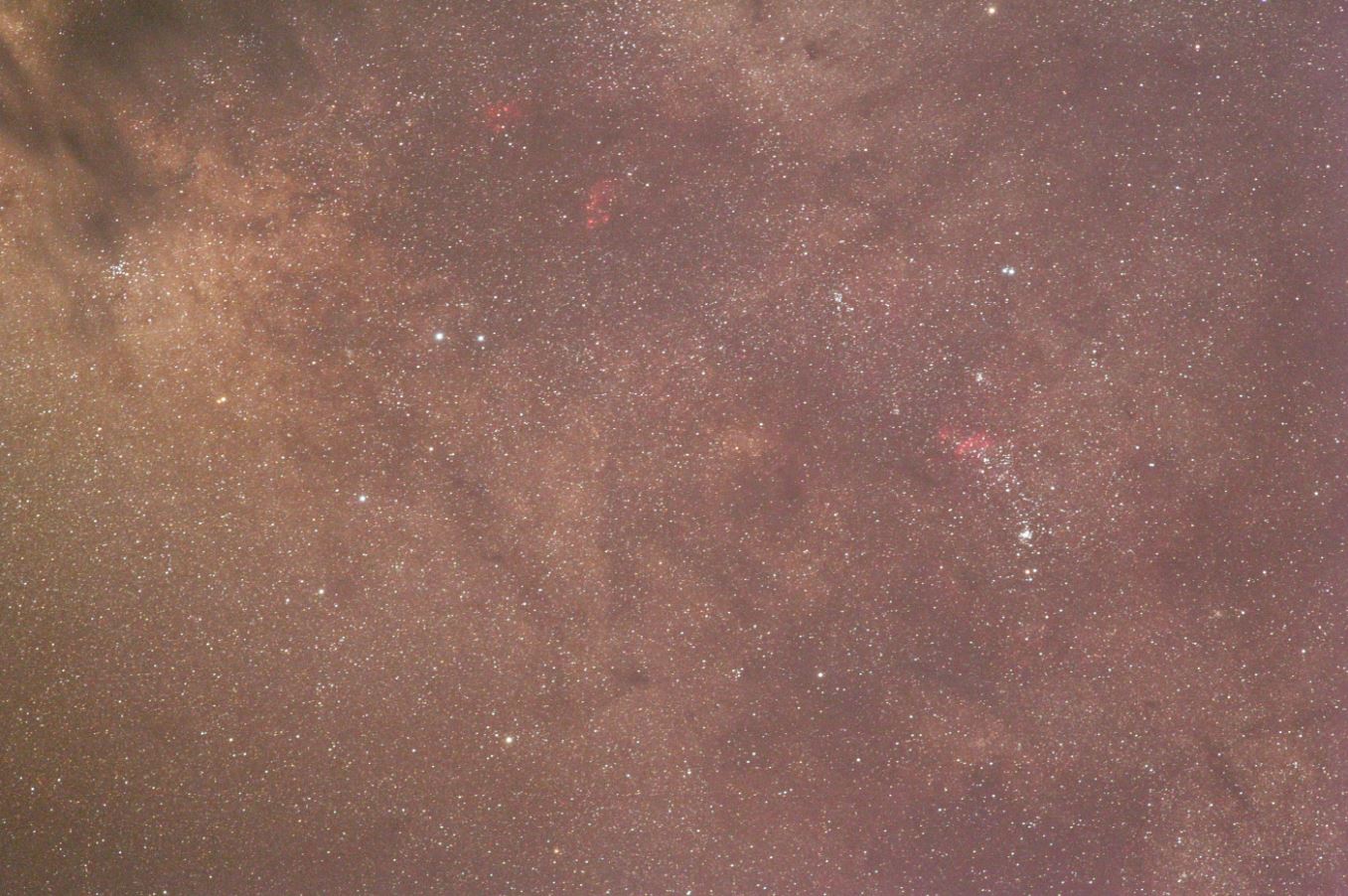
Table of Scorpius and the Cat's Paw Nebula: this image stretches from M7 at upper left (where dark terrestrial clouds are encroaching from the upper left corner), to NGC 6231 and the False Comet at center right. Three distinct areas of red emission nebulae can be seen ~ from left to right, they are NGC 6357, then the Cat's Paw Nebula, NGC 6334, and IC 4628 in the False Comet. |
|
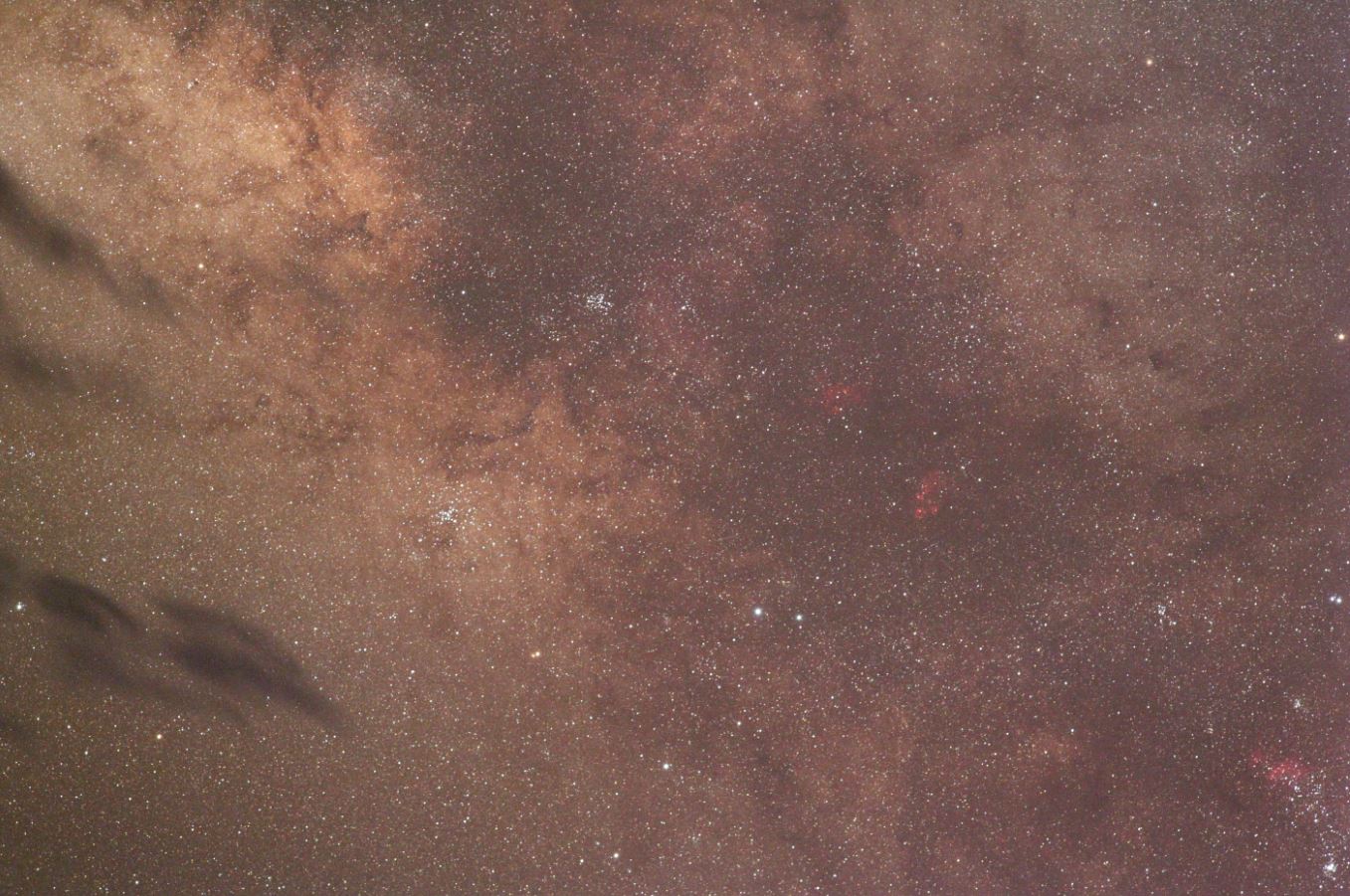
Open Clusters M7 and M6 in southeastern Scorpius: Our view here is centered on the area between M7 and the Cat's Paw Nebula. M7 and M6 are shown somewhat deceptively in this view because the two appear equally prominent, which is not the case in visual observation. It must be because M7 sits amid a bright star cloud while M6 is silhouetted against a dust cloud, making it stand out better. |
|
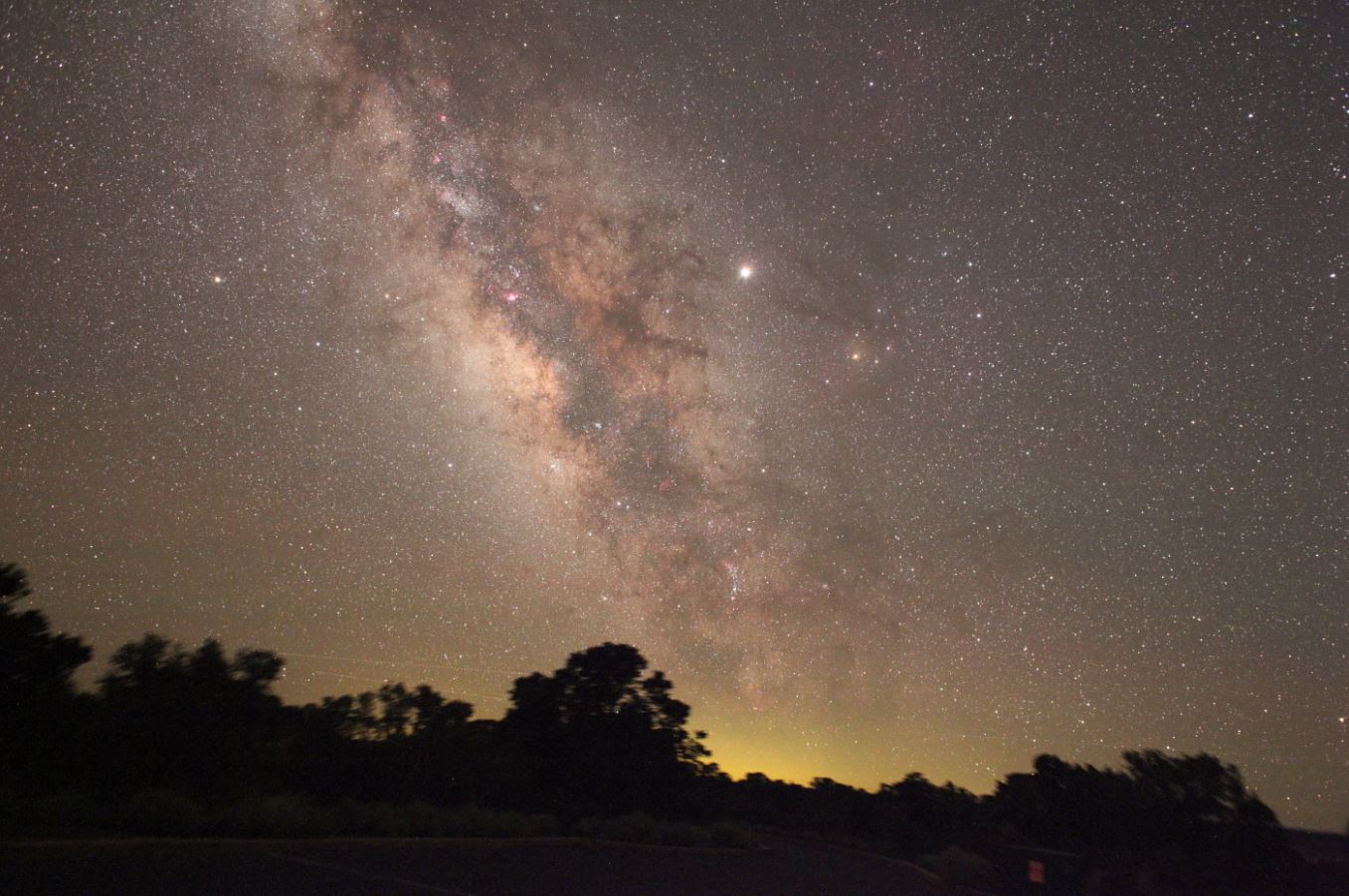
Galactic center from the Grand Canyon: Modified Canon 5D with a 28 mm lens from the south rim of the Grand Canyon in early July 2019. This is by far the best shot I've ever obtained of the Milky Way. Two features I've never noticed before are (1) the linear dust lane lower right of Antares, half way to the horizon, and (2) the intricate dust lanes near the teapot of Sagittarius. |
|
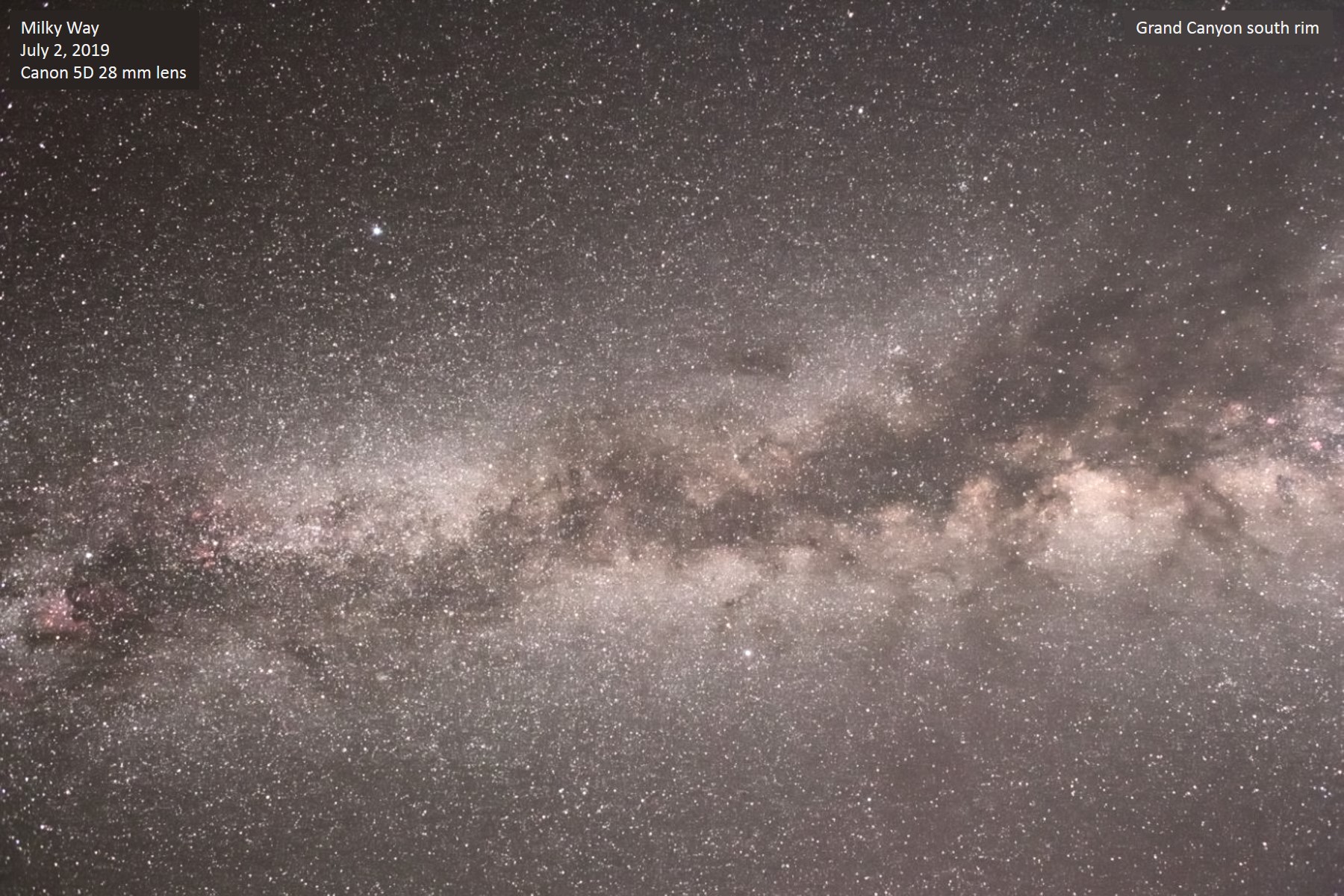
Central Milky Way from Cygnus to Sagittarius: The view extends from NGC 7000 (North America Nebula) to M17 (Omega Nebula), in Sagittarius the archer. This 28 mm wide angle view really highlights the dark dust lanes that obscure the galactic plane. Notice how the clouds widen as you move toward the right of the image (toward the galactic center). |
|
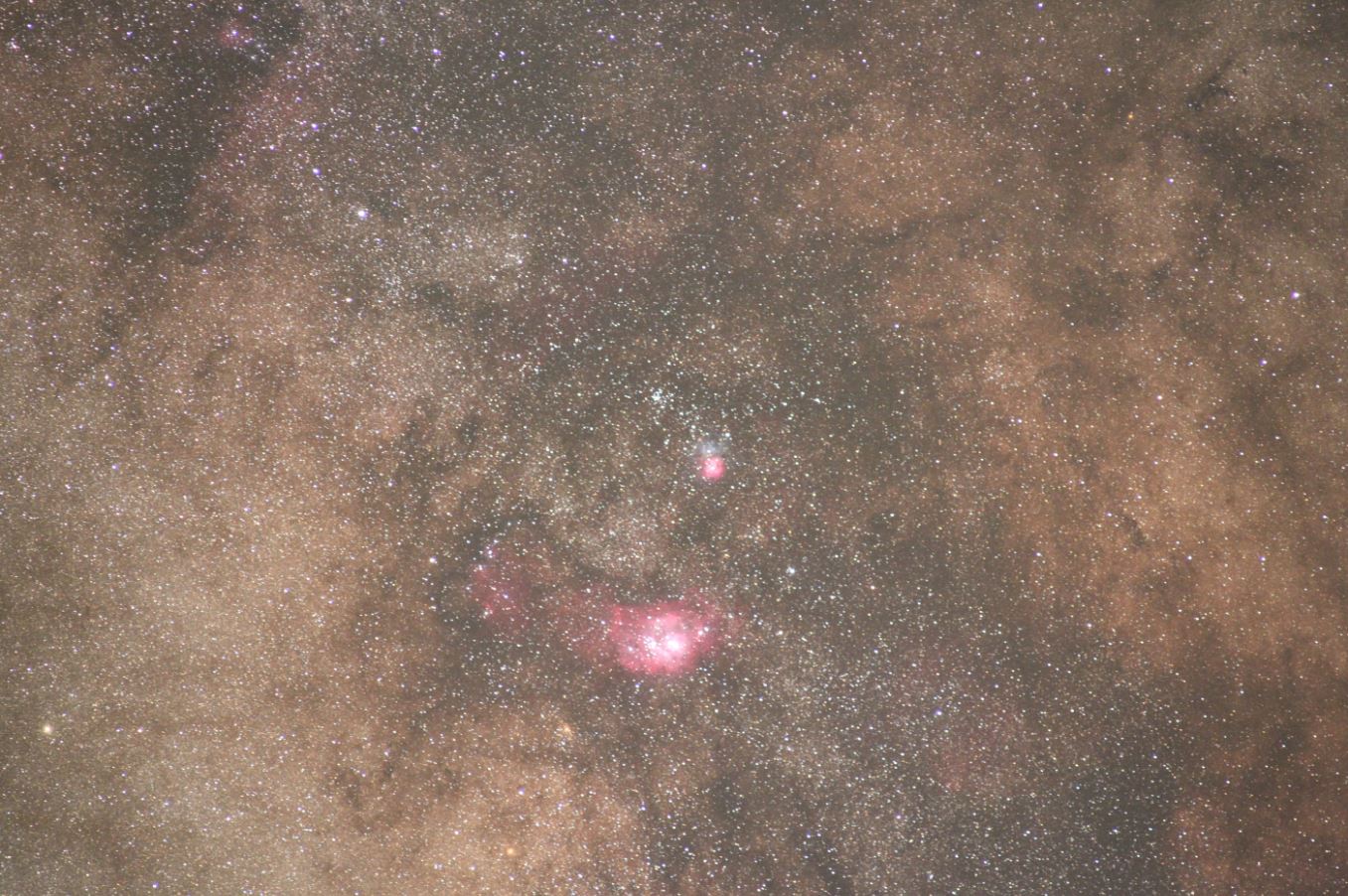
Lagoon and Trifid Nebulae: this telephoto image with a 200 mm lens highlights the H-α emission of the Lagoon and Trifid nebulas, but also reveals the intricate dust clouds and lanes in front of the starry background near the galactic center. |
|
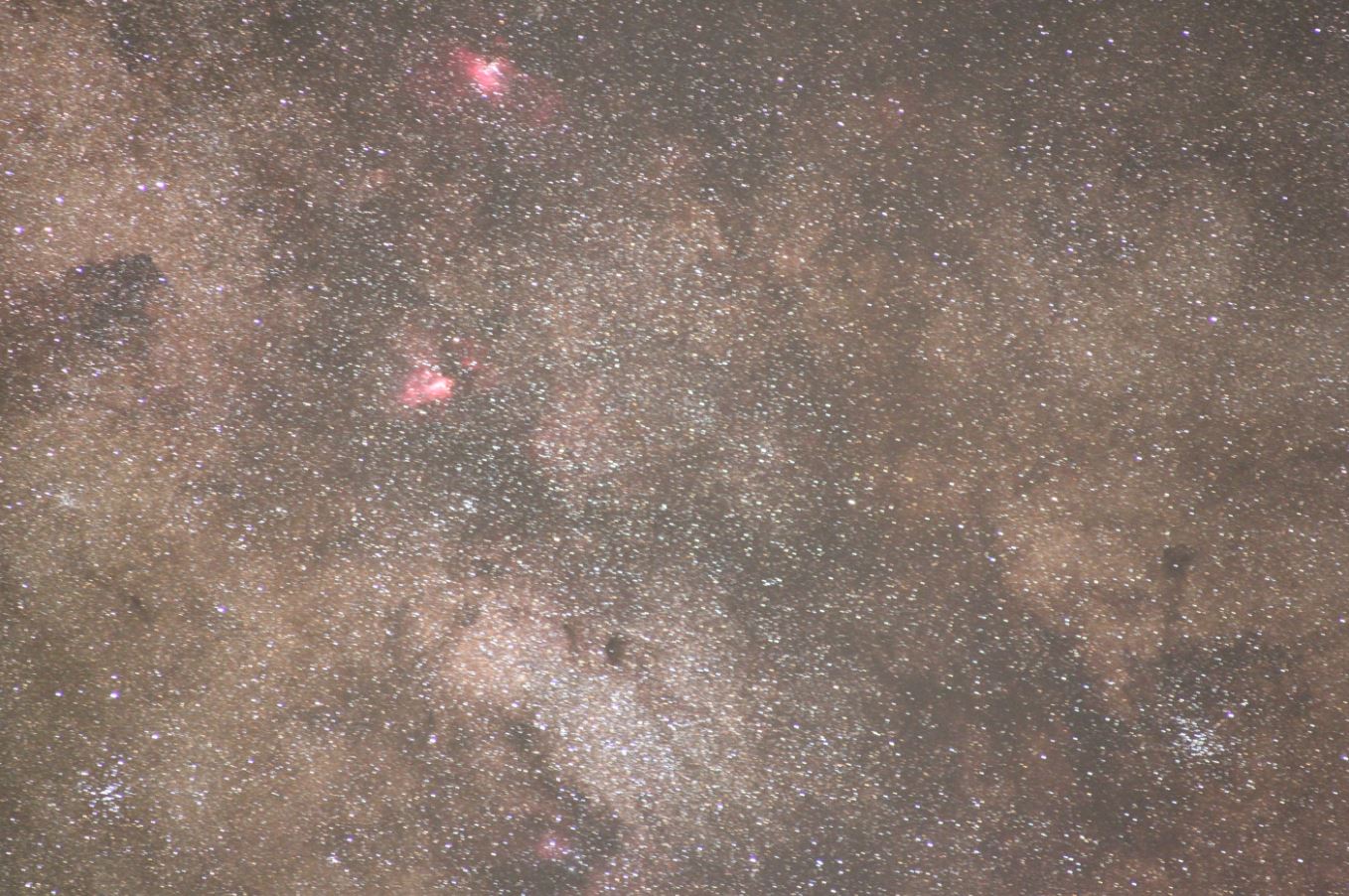
M16 the Eagle Nebula and M17 the Omega or Swan Nebula: Moving north from the image to the left, we encounter the two open clusters M23 and M25, at lower right and left, respectively, as well as the small Sagittarius Star Cloud, M24, at bottom cen-ter, and of course M17 and M16 above them. Great examples of dark globules and dust clouds are seen all across the field. |
|
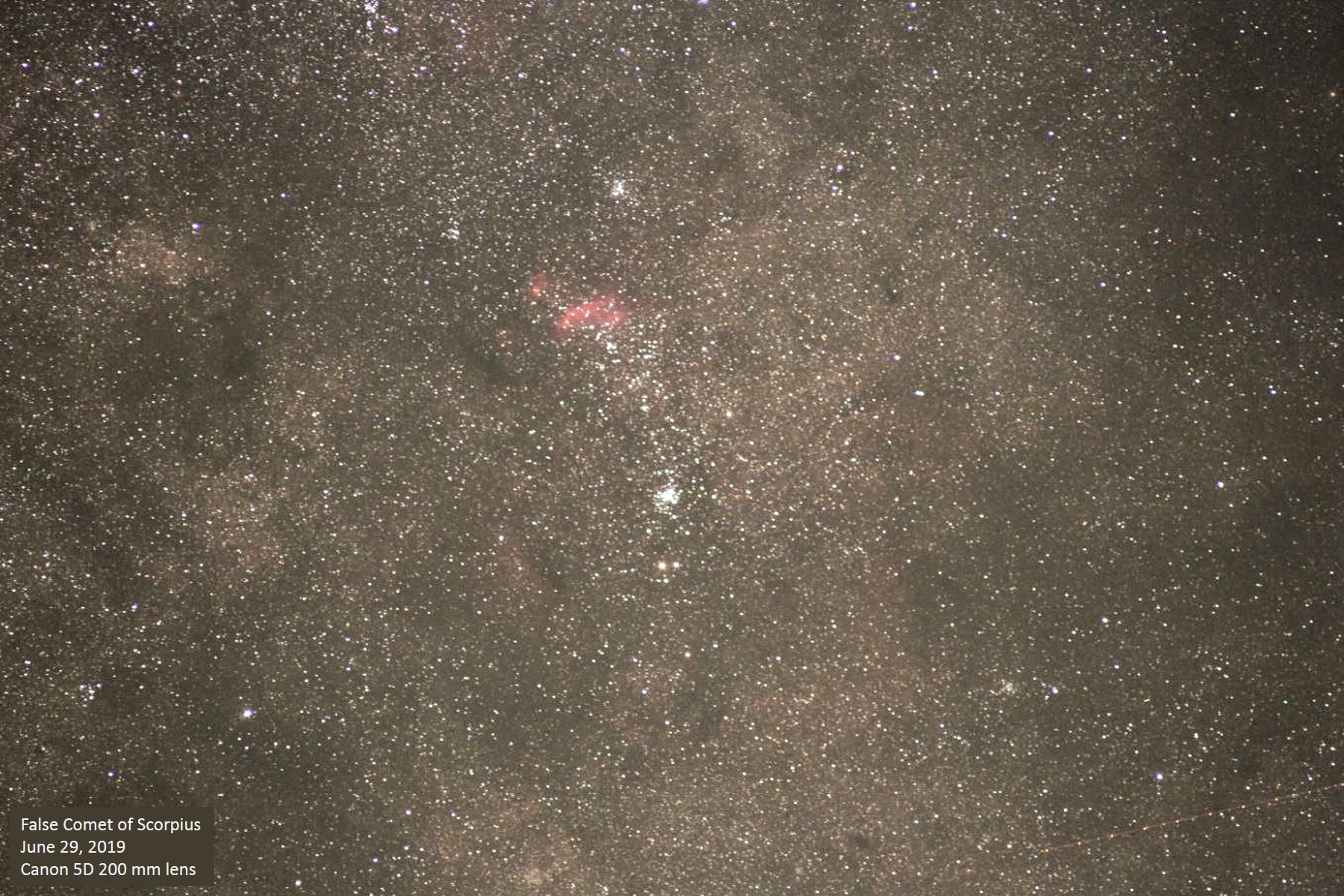
False Comet region of Scorpius: I obtained this image
from Big Bend National Park in late June 2019. It shows the so-called
False Comet region in the "Table of Scorpius", which stretches from ζ Scorpii at bottom of the grouping, through NGC 6231, and then upward and left through two loose open clusters and the red nebulosity IC 4628, to end finally with two smaller NGC clusters. |
|
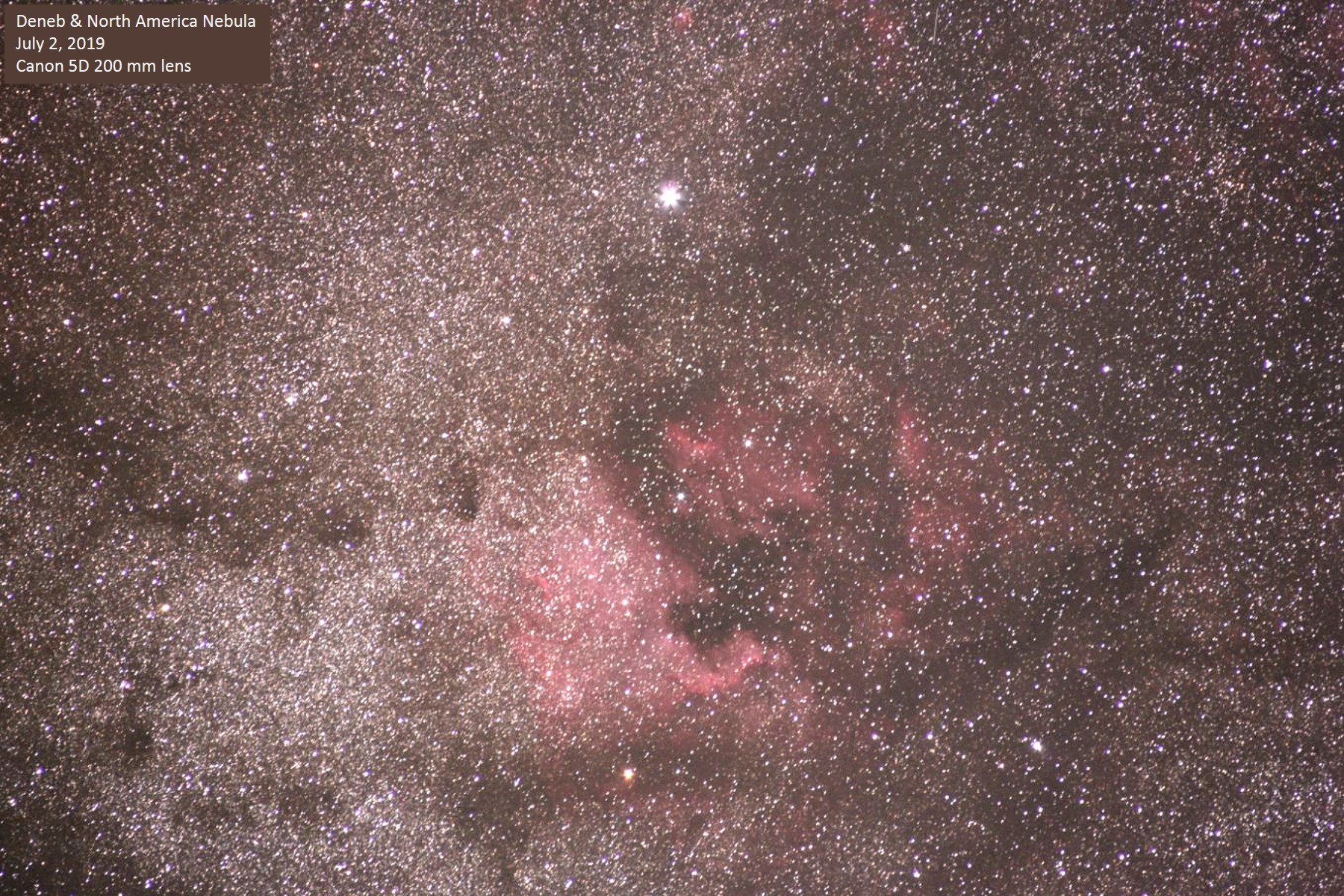
North America and Pelican Nebulae: This 2-minute exposure with my modified Canon 5D camera, which I piggybacked on my Celestron C8 telescope, shows the North America and Pelican nebulas along with the many dark dust clouds and lanes silhouetted against the brighter background. |
|
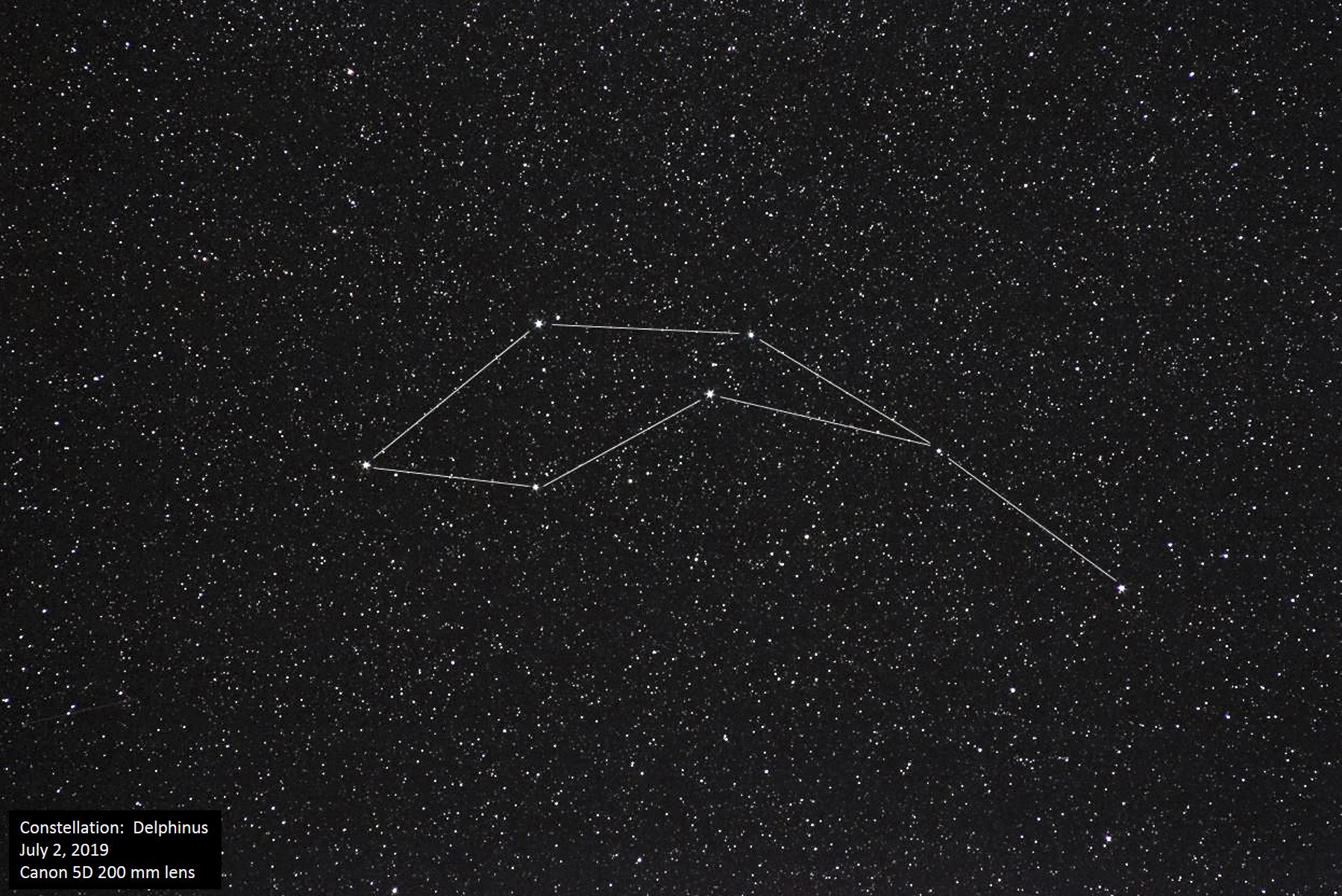
Little Delphinus, with constellation outline re-imagined LOL: From the south rim of the Grand Canyon, my last image of the night was of the little dolphin, the main asterism of which is also known as Job's Coffin. |