Planet Scenes 2014
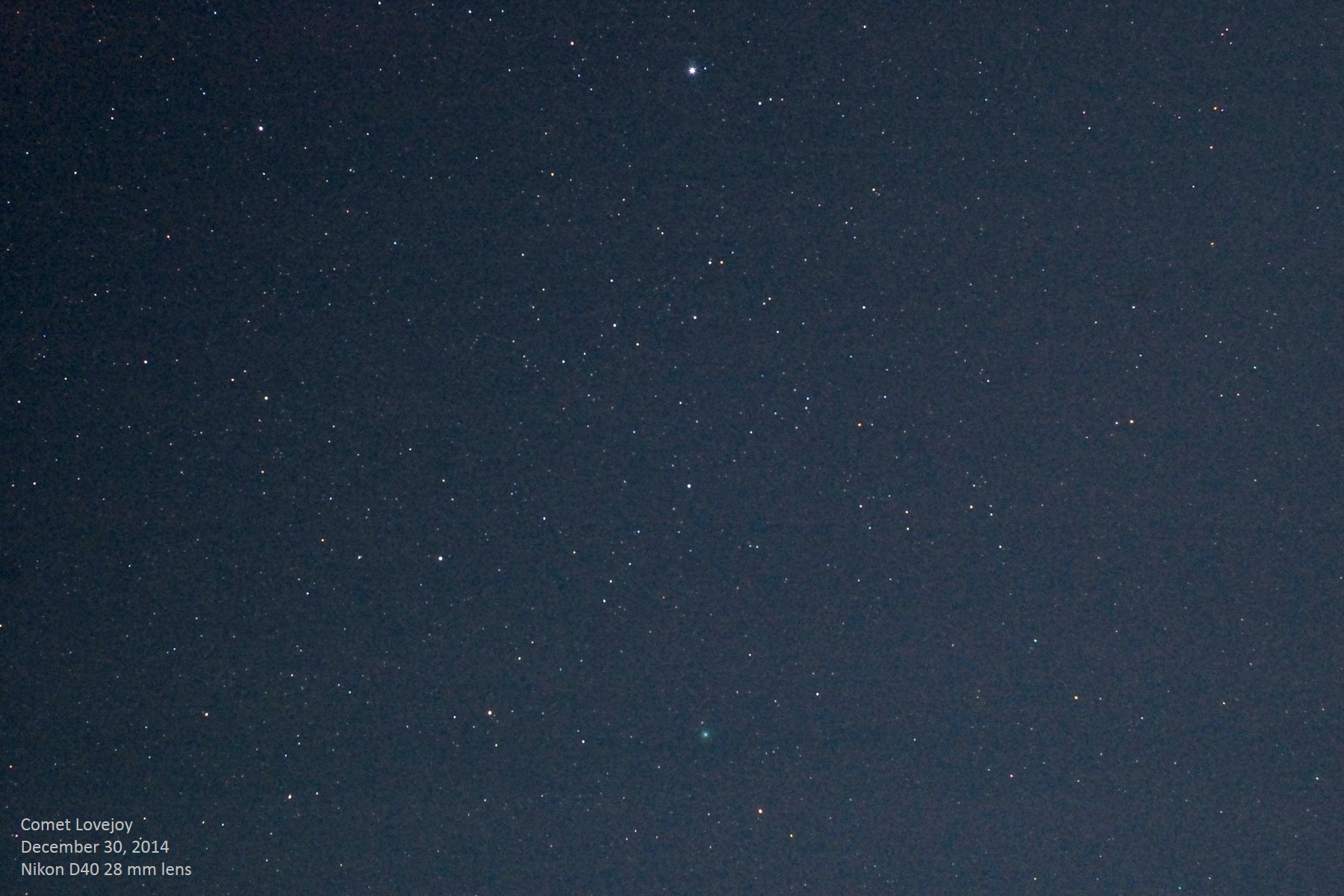 |
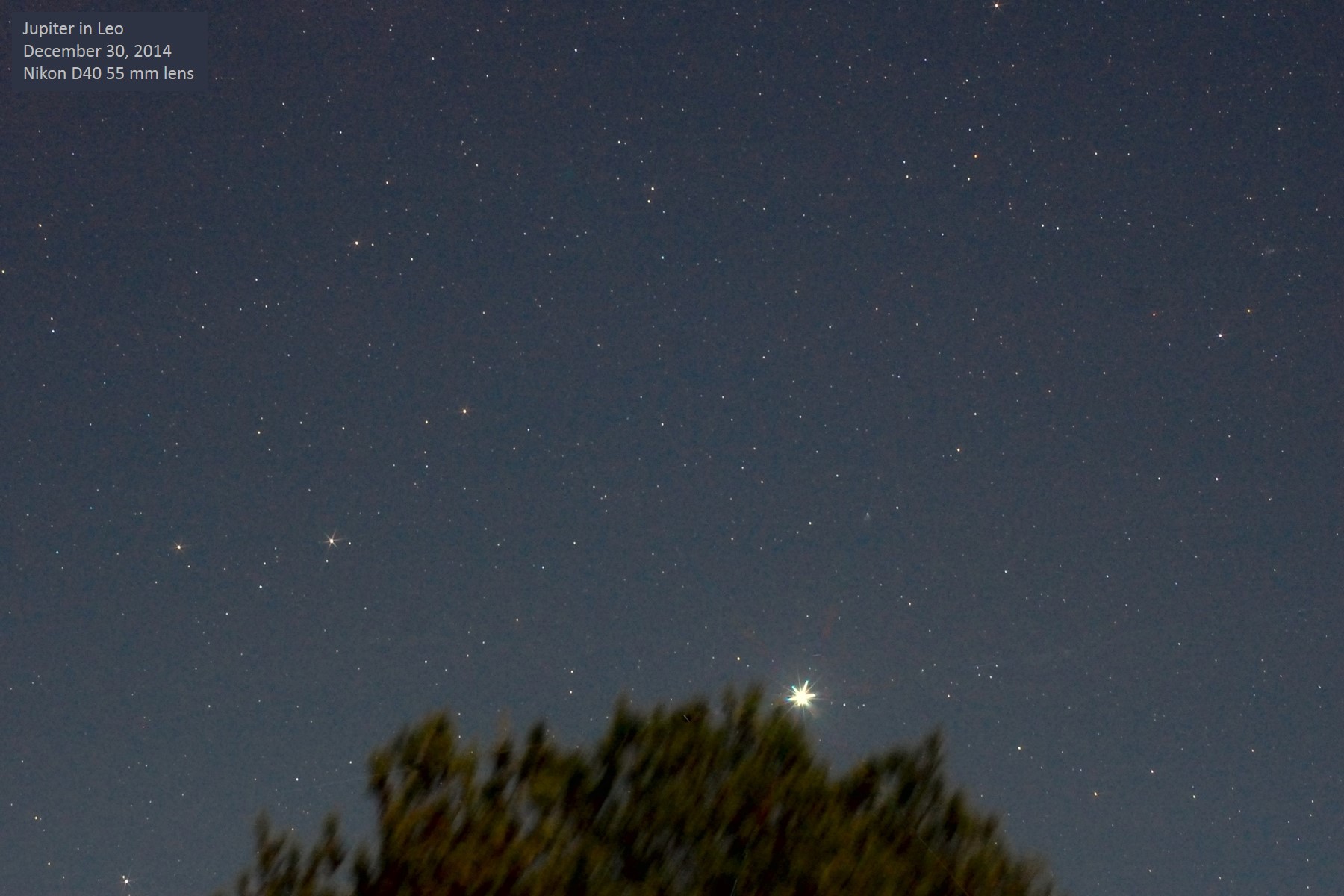 |
Comet Lovejoy and Jupiter, Dec 30 Jupiter is positioned for easy observation in western Leo at the end of the year, near its opposition point, which will be reached on February 6, 2015. Comet C/2014 Q2 (Lovejoy) was an outstanding sight in late 2014 and early 2015 as it raced northward against the backdrop of Lepus, Eridanus, and Taurus. |
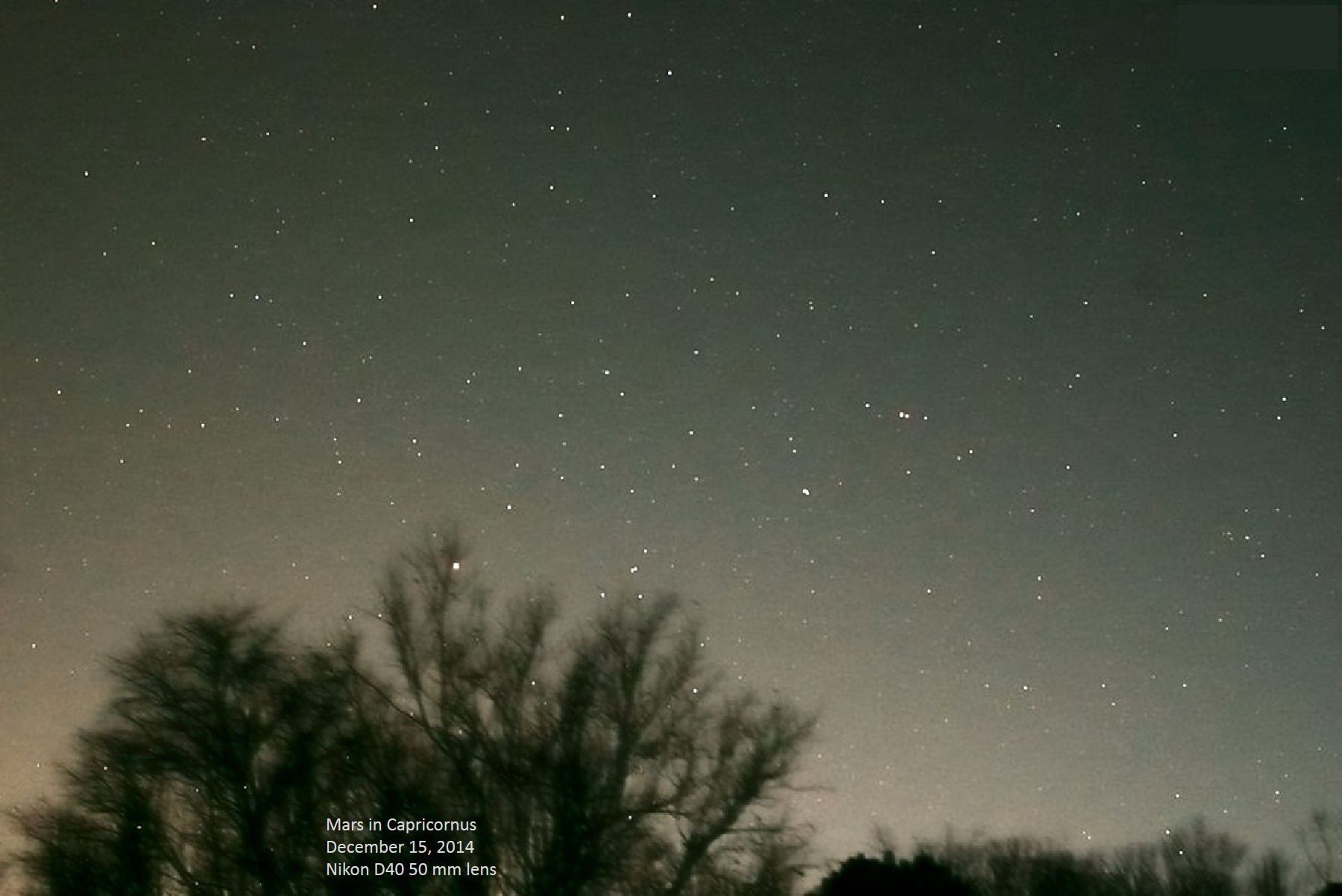 |
Mars in Capricornus, Dec 15 Mars is in the evening sky, slightly less than 45° east of the Sun, in the constellation Capricornus. |
|
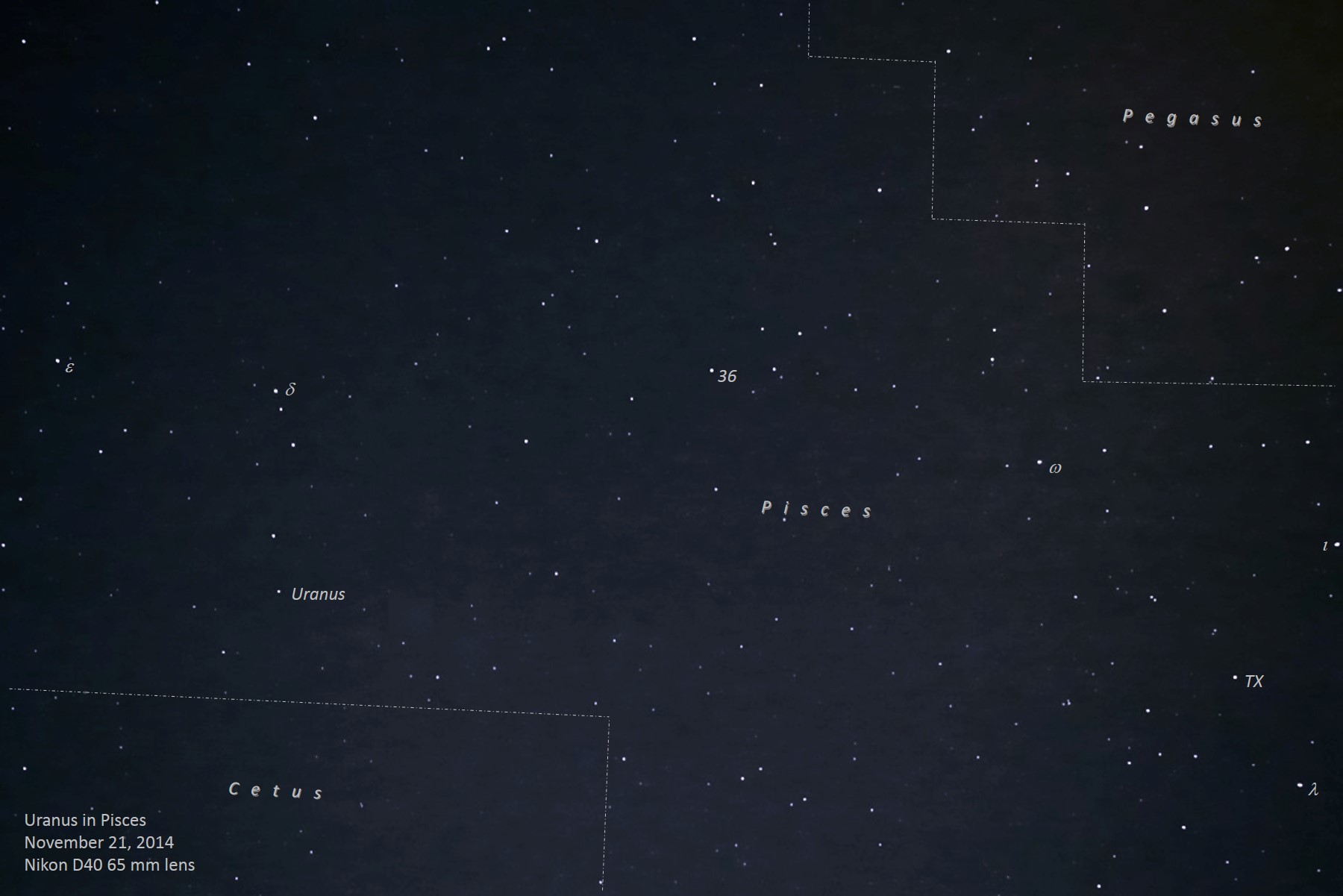 |
Uranus in Pisces, Nov 21 Uranus has been in Pisces for several years, and will continue to do so since it spends on average about 7 years in each zodiacal constellation. This year, Uranus is due south of the relatively bright star δ Piscium and the two stars that make a straight line with δ. |
|
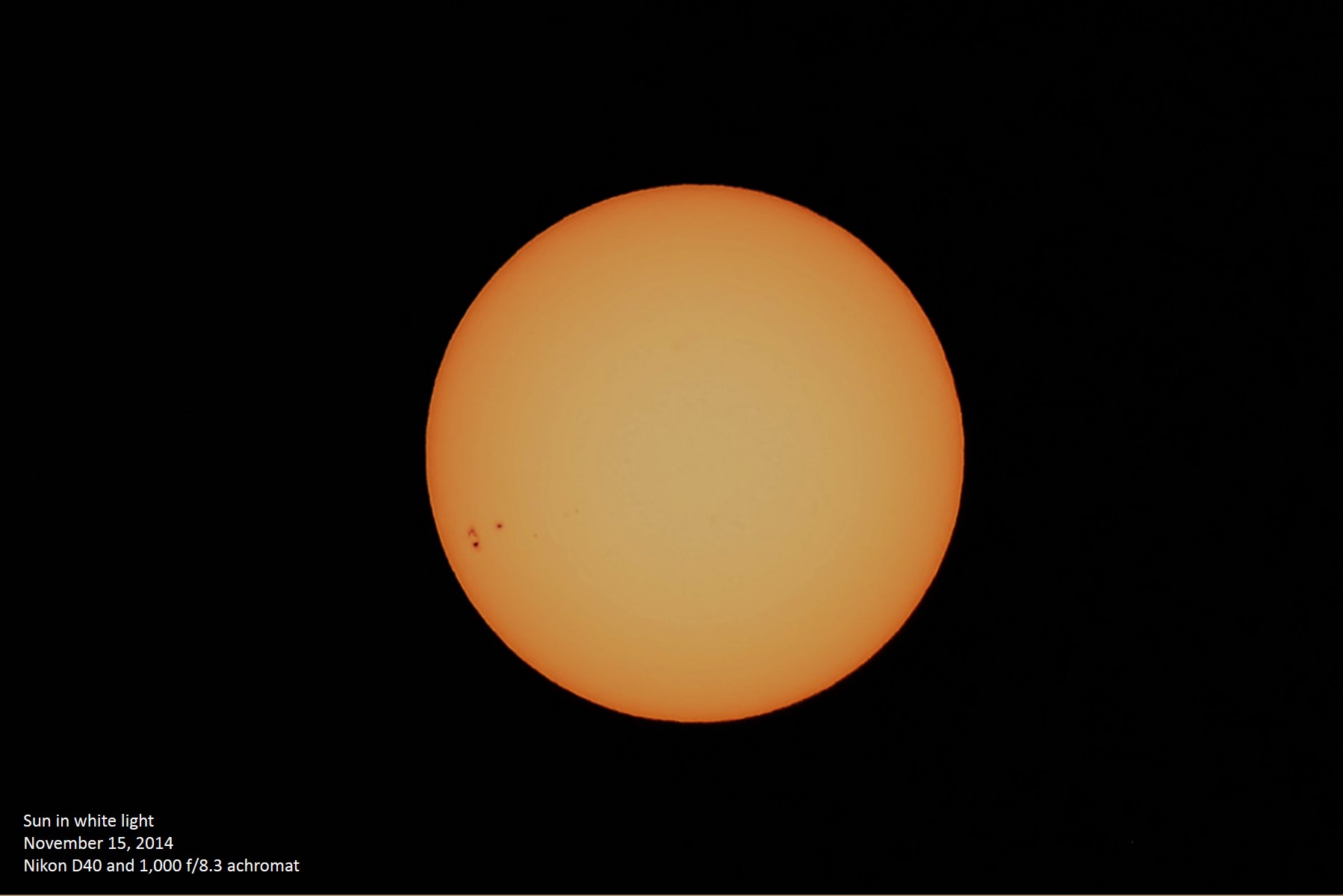 |
Sun with Sunspots, Nov 15 The Sun is still near solar maximum, which means sunspots are frequent ~ this nice group near the trailing edge of the Sun is shown with my Nikon D40 attached to a 120mm f/8.3 achromat with a focal length of 1,000 mm. |
|
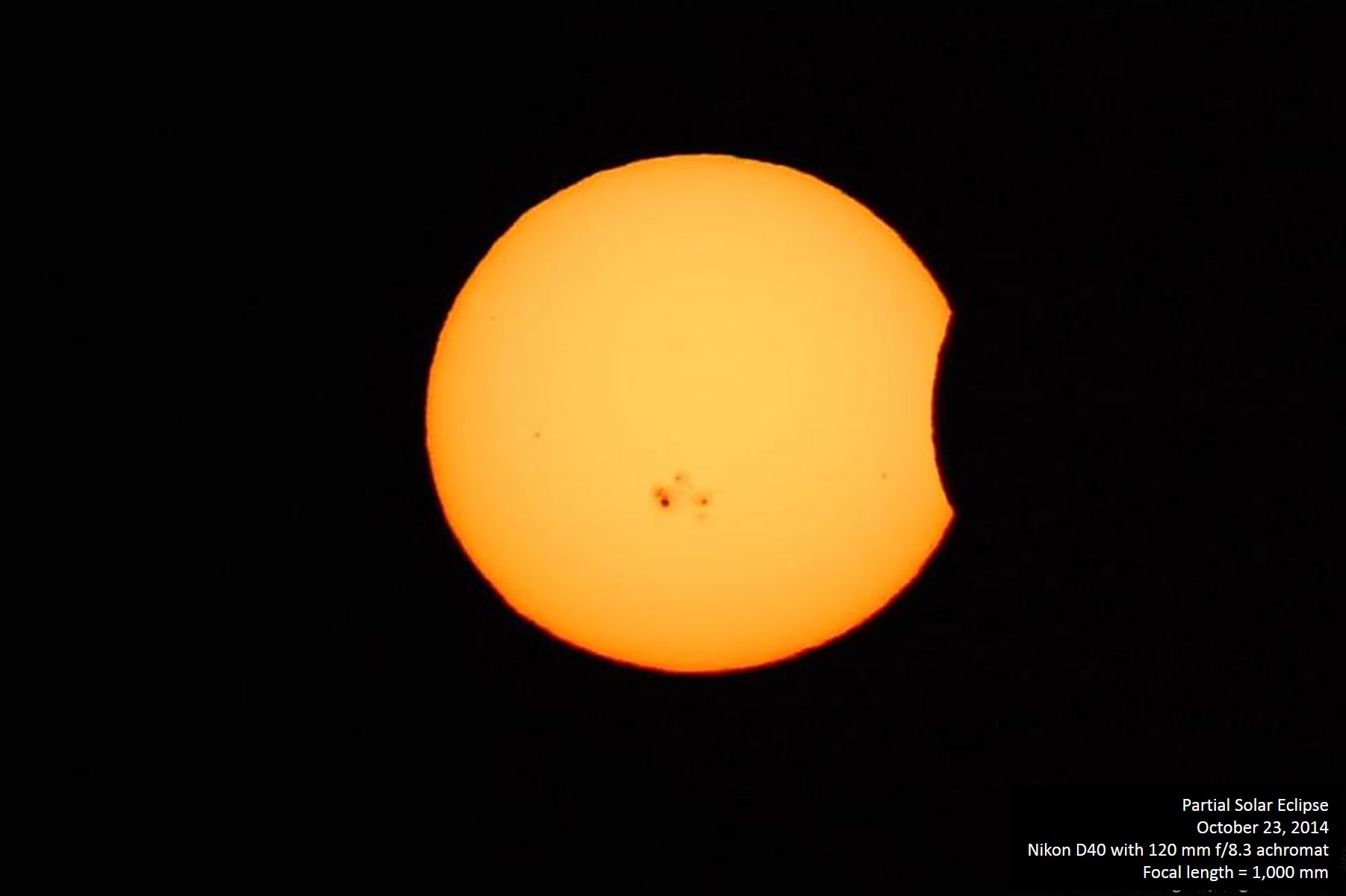 |
Partial Solar Eclipse, Oct 23 We don't always get the opportunity to see both eclipses during one eclipse season, but this time we do, as two weeks after the lunar eclipse on October 8, we see the corresponding solar eclipse. This event is a slight partial one, at least it was for us in eastern Virginia, visible in the late afternoon as the Sun was setting. |
|
 |
Total Lunar Eclipse, Oct 8 A total lunar eclipse was visible from the United States on October 8. Only the first part of the eclipse, into mid-totality, could be observed from the east coast. |
|
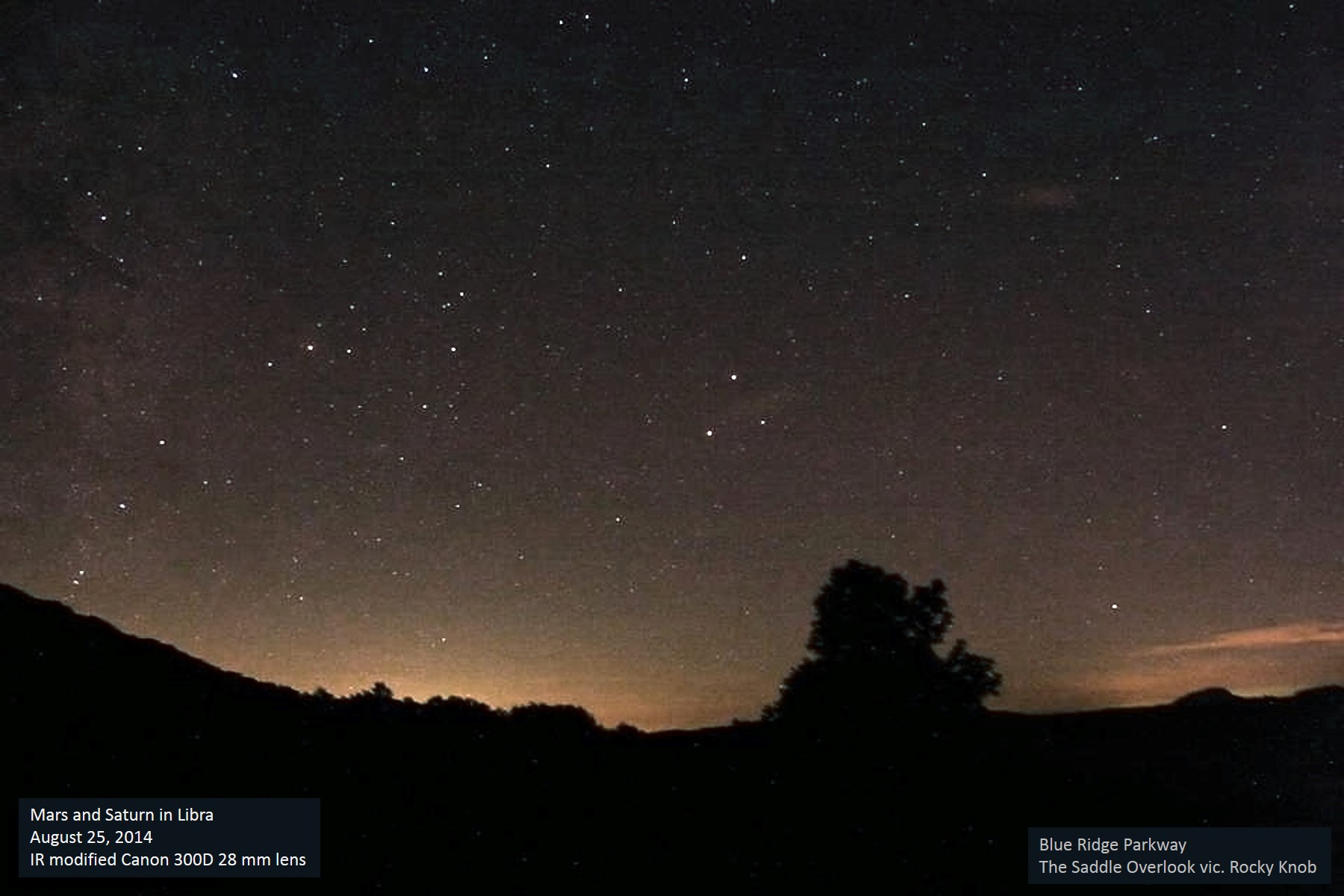 |
Mars and Saturn, Aug 25 Mars and Saturn are in conjunction in Libra, well placed in the evening sky in the southwest after sunset. They are almost exactly the same magnitude, positioned just to the east of, and making a nice triangle with, the star Zubenelgenubi. |
|
 |
Venus and Jupiter, Aug 21 Venus passed Jupiter, resulting in a conjunction, on August 18, but this is the closest date on which I could get a shot of the two of them. |
|
 |
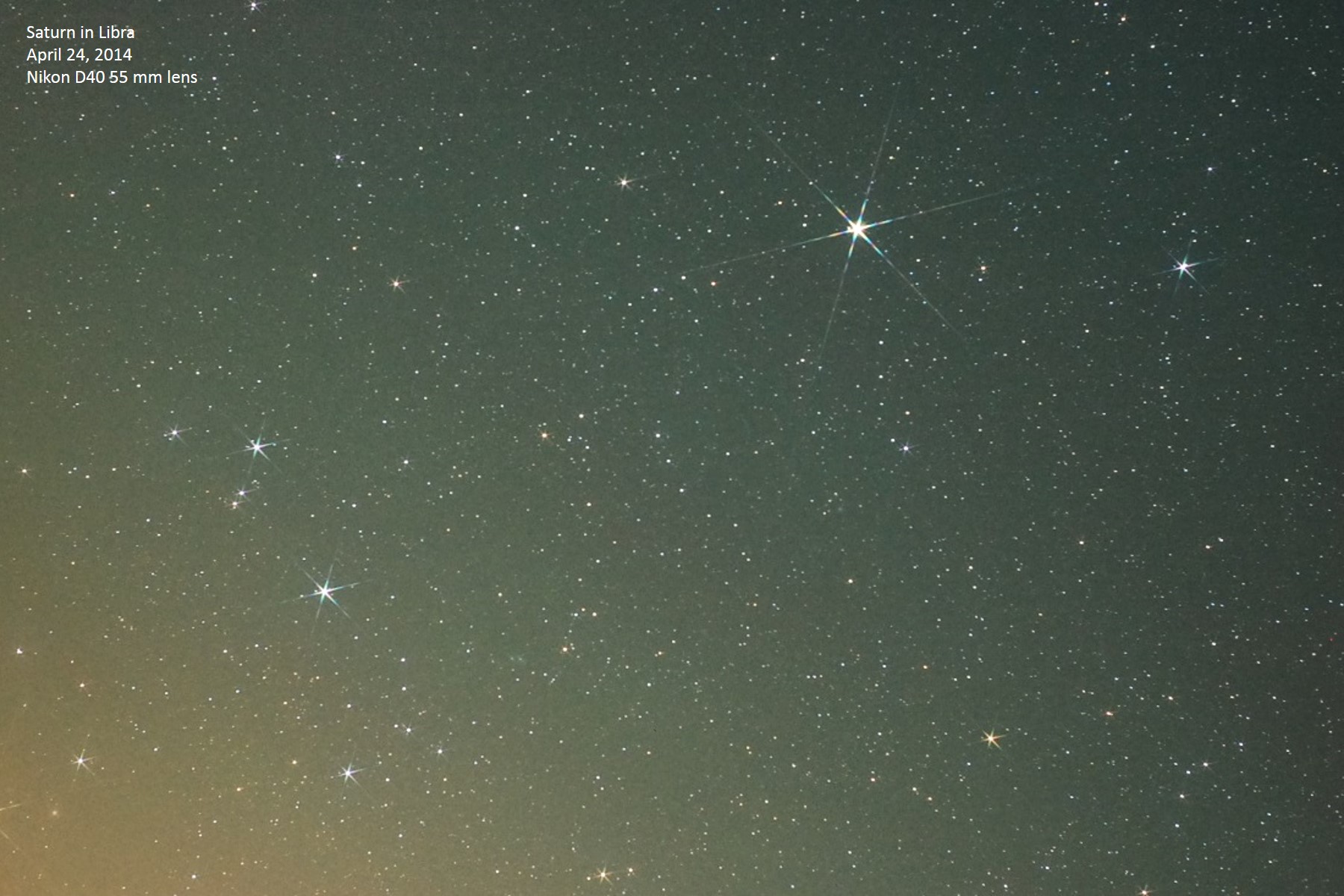 |
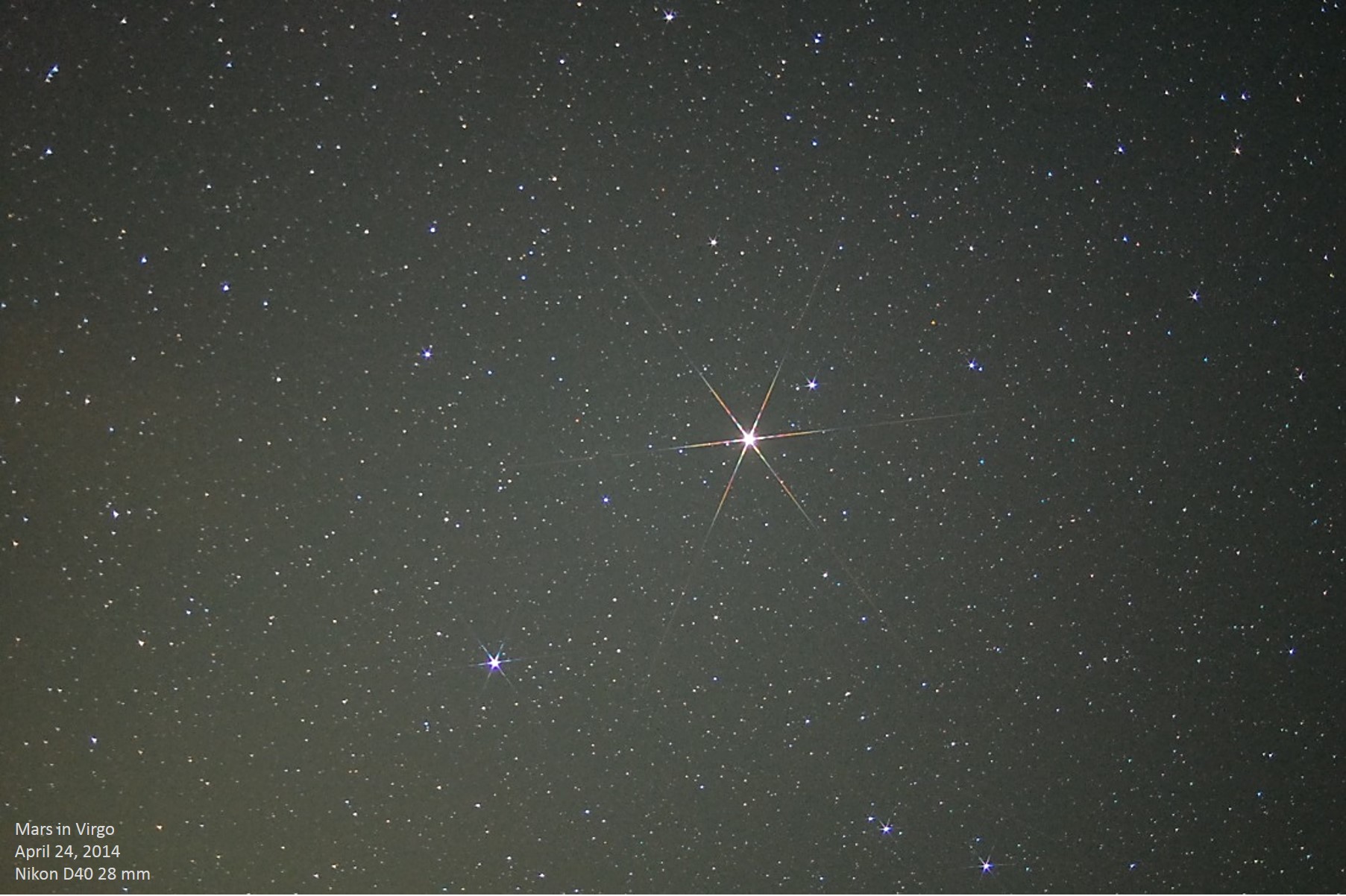
Mars in Virgo and Saturn in Libra, Apr 24 After imaging Jupiter in Gemini, I got a nice image of Mars in Virgo near the time of its opposition, and as a bonus managed to record two bright asteroids, Vesta and Ceres, also in Virgo and of course also near opposi-tion. All the major outer planets were on full display this spring, because after Jupiter and Mars, we turned our attention to Saturn in Libra. In the Saturn image, note that the head of Scorpius is at lower left and Zubenelgenubi is the star at upper right. |
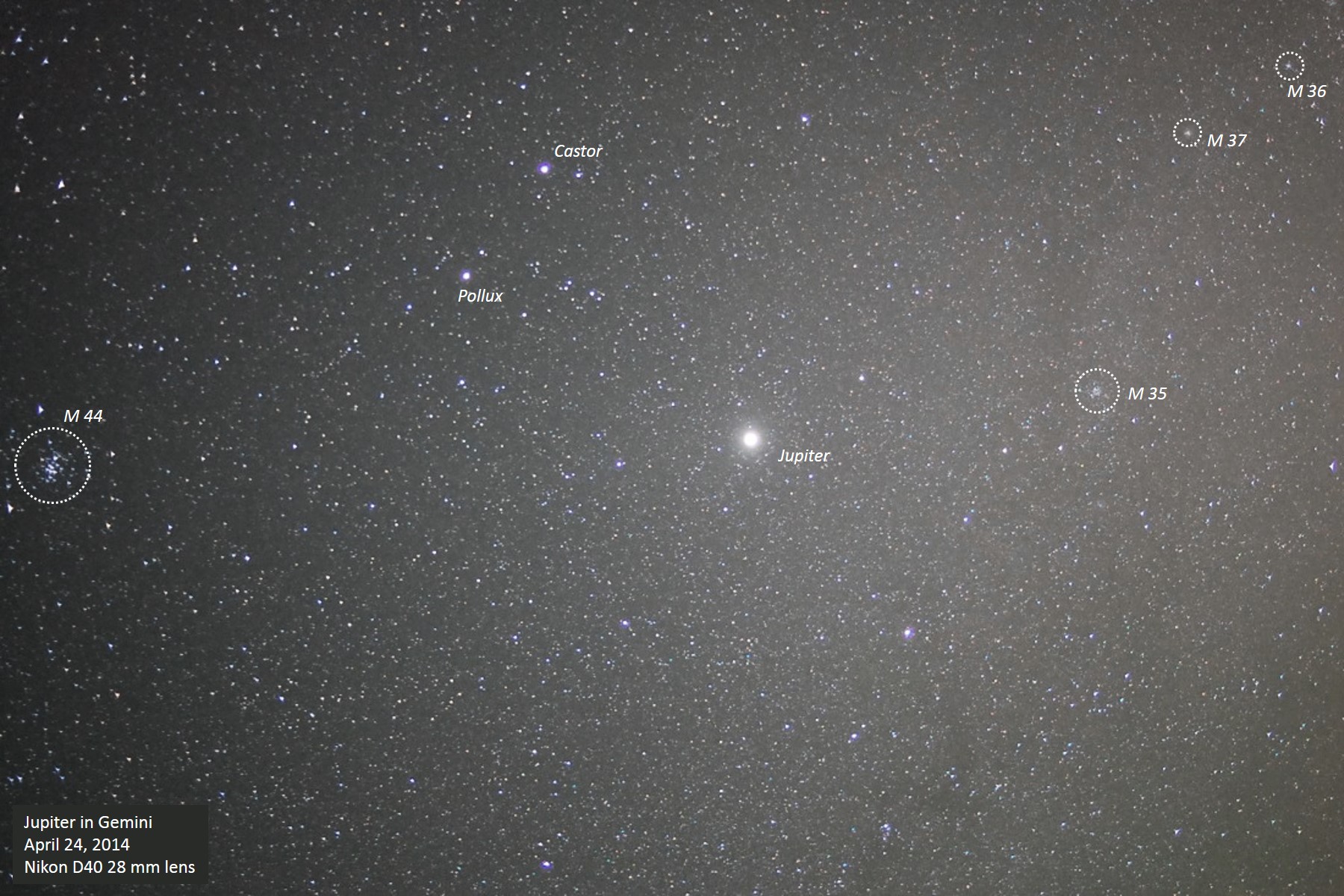 |
Jupiter in Gemini, Apr 24 In April we traveled to Texas to visit family, and while there I drove out to a dark sky site for some astronomy. This image shows Jupiter in central Gemini, just like it was in 2002 and like it will be again in 2026. The image shows the major open clusters in the late winter and early spring sky, from M36 and M37 in Auriga, M35 in Gemini, and the great Beehive Cluster M44 in Cancer. |
|
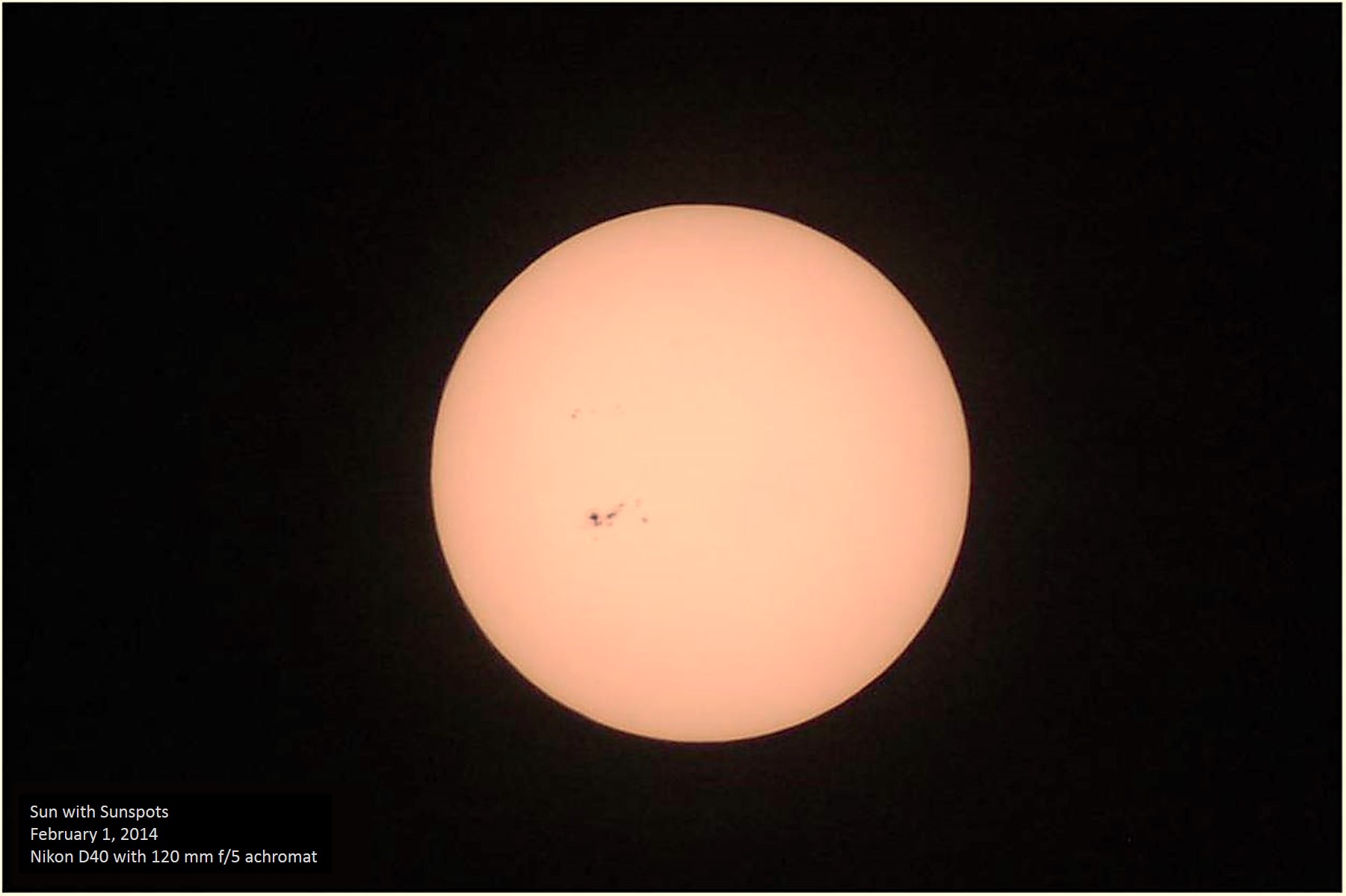 |
Sun with Sunspots, Feb 1 We again have a number of sunspots marking the face of the Sun, which I captured this time with a Nikon D40 with a 120 mm f/8.3 achromat that has a 1,000 mm focal length. I coupled it with an Orion white light filter that gives the Sun a different cast than the filter I used with the C8. |
|
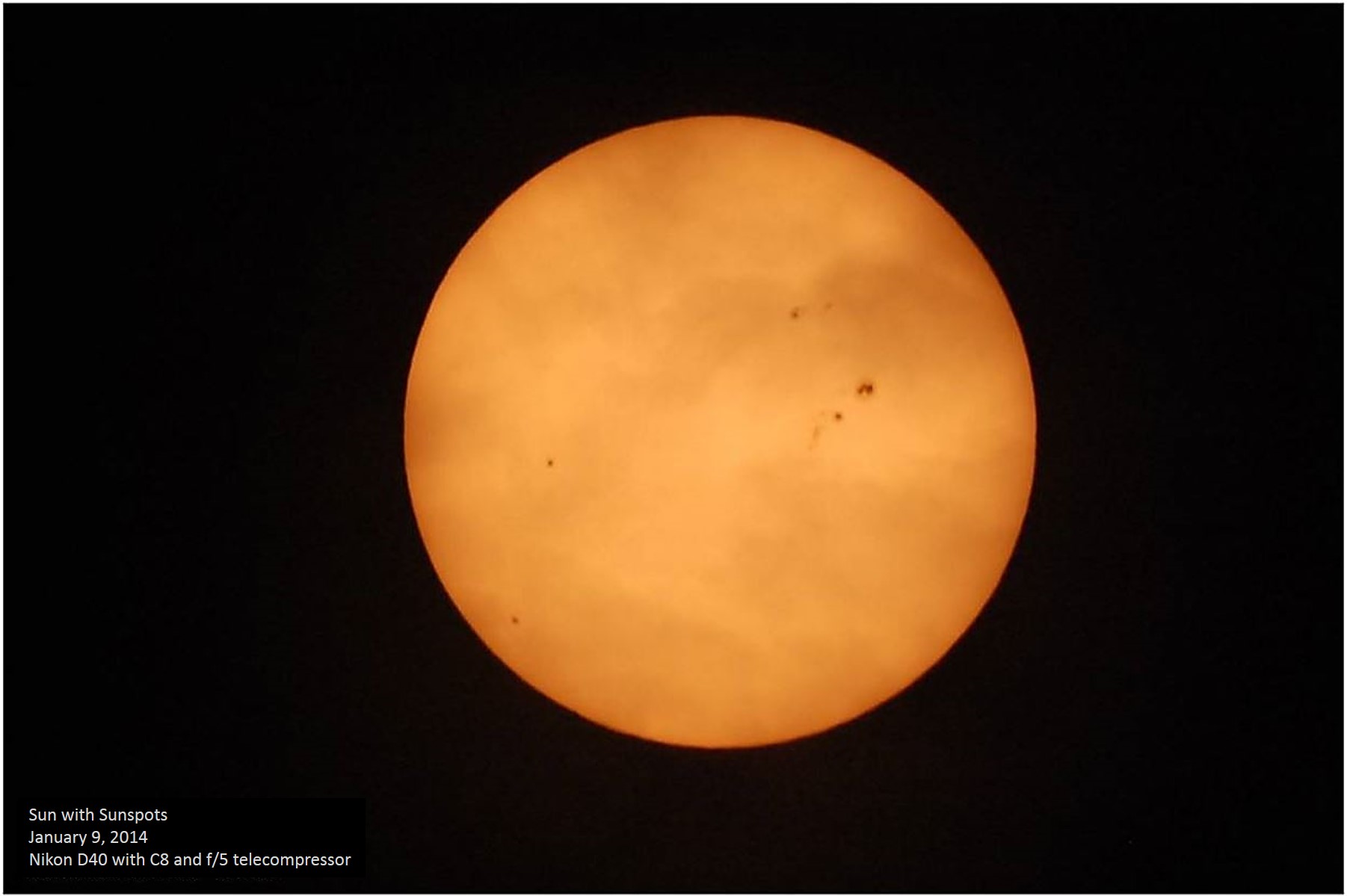 |
Sun with Sunspots, Jan 9 The Sun is near solar maximum and therefore there are a number of sunspots visible at this time. This image was taken using my Nikon D40 mated with a Celestron C8 using a f/5 telecompressor and a white light glass solar filter. Therefore, the effective focal length of this setup was 1,000 mm, but using the D40 with a cropped sensor makes the actual effective focal length 1,500 mm. |
|