|
Two weeks after the lunar eclipse on October 8, another eclipse occurred,
this time of course a solar one. As is mostly the case, because the lunar
eclipse was total, the corresponding solar eclipse will be partial, since
the Moon will be farther away from its node, either ascending or descend-
ing, than it was at the lunar eclipse. North America was best positioned
to see this partial solar eclipse, with the greater degree of obscuration
being experienced the farther north one is. So, we in Virginia saw only a
very slight eclipse.
The eclipse occurred while the Sun was in eastern Virgo, just at the time
when the Moon was still north of the ecliptic but heading toward descend-
ing node, which it would cross after having left the Sun behind. Maximum
eclipse occurred after sunset at my location, but I was still able to de-
tect a noticeable bite into the disk of the Sun before it disappeared.
|
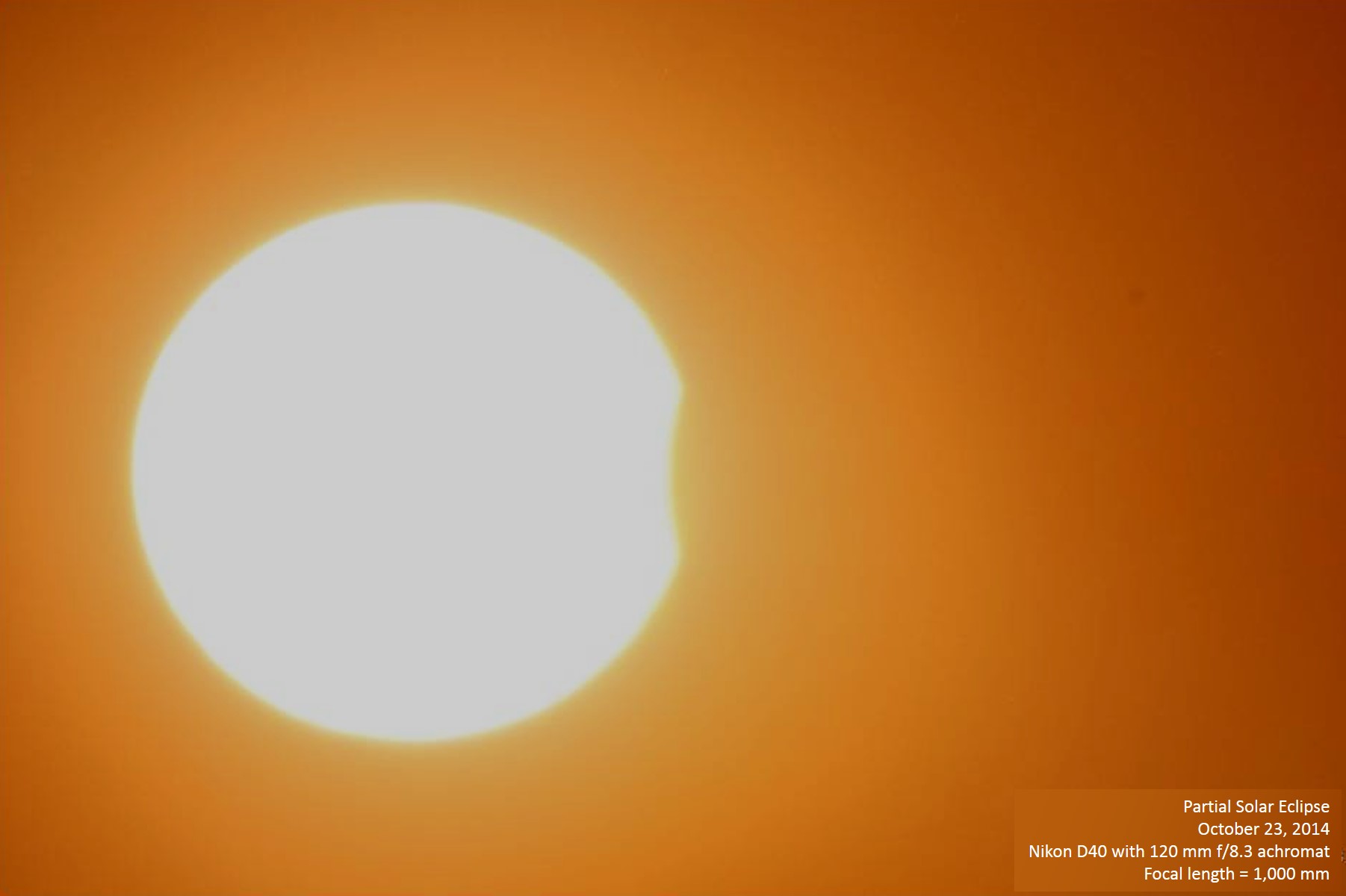
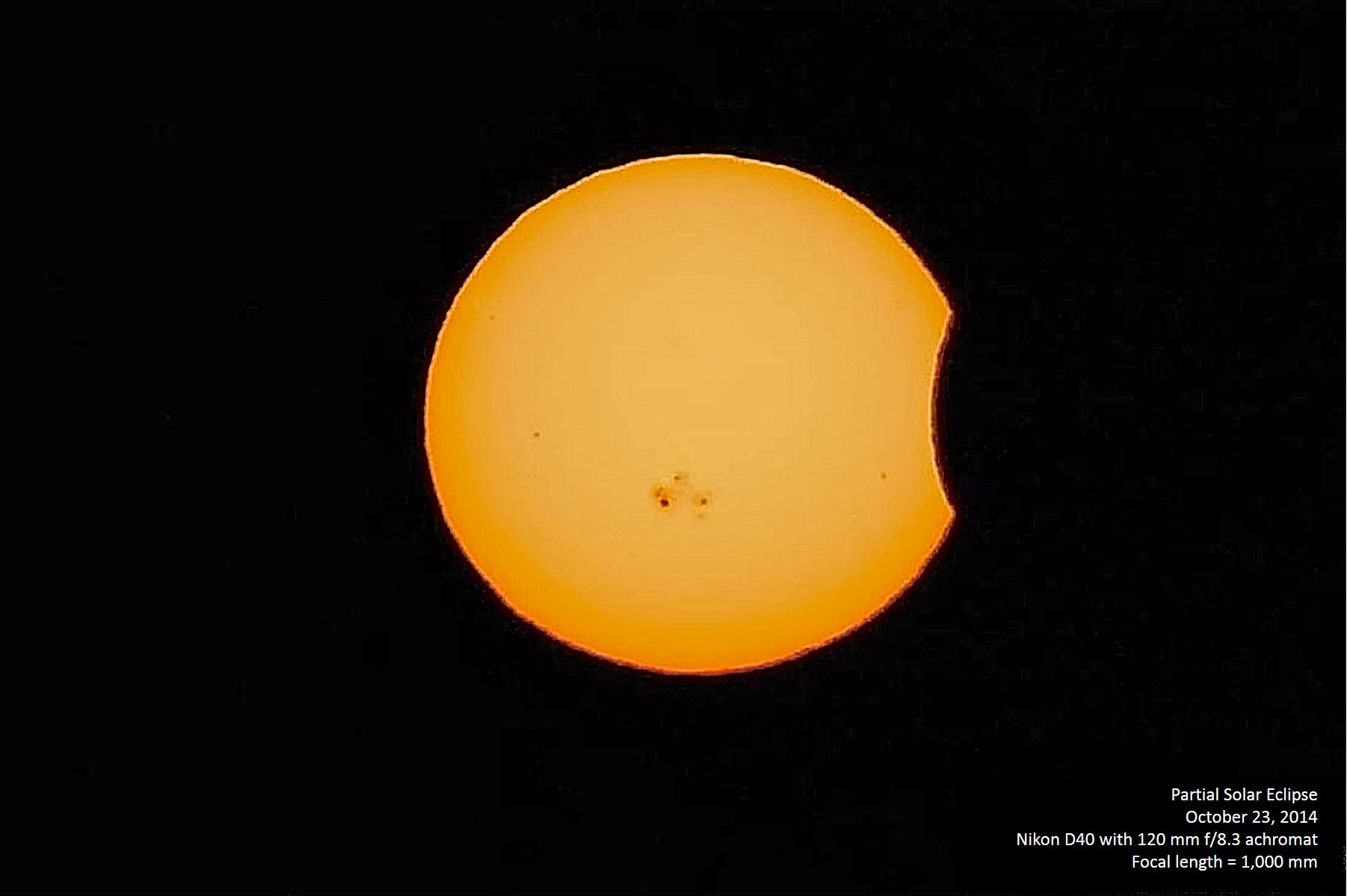
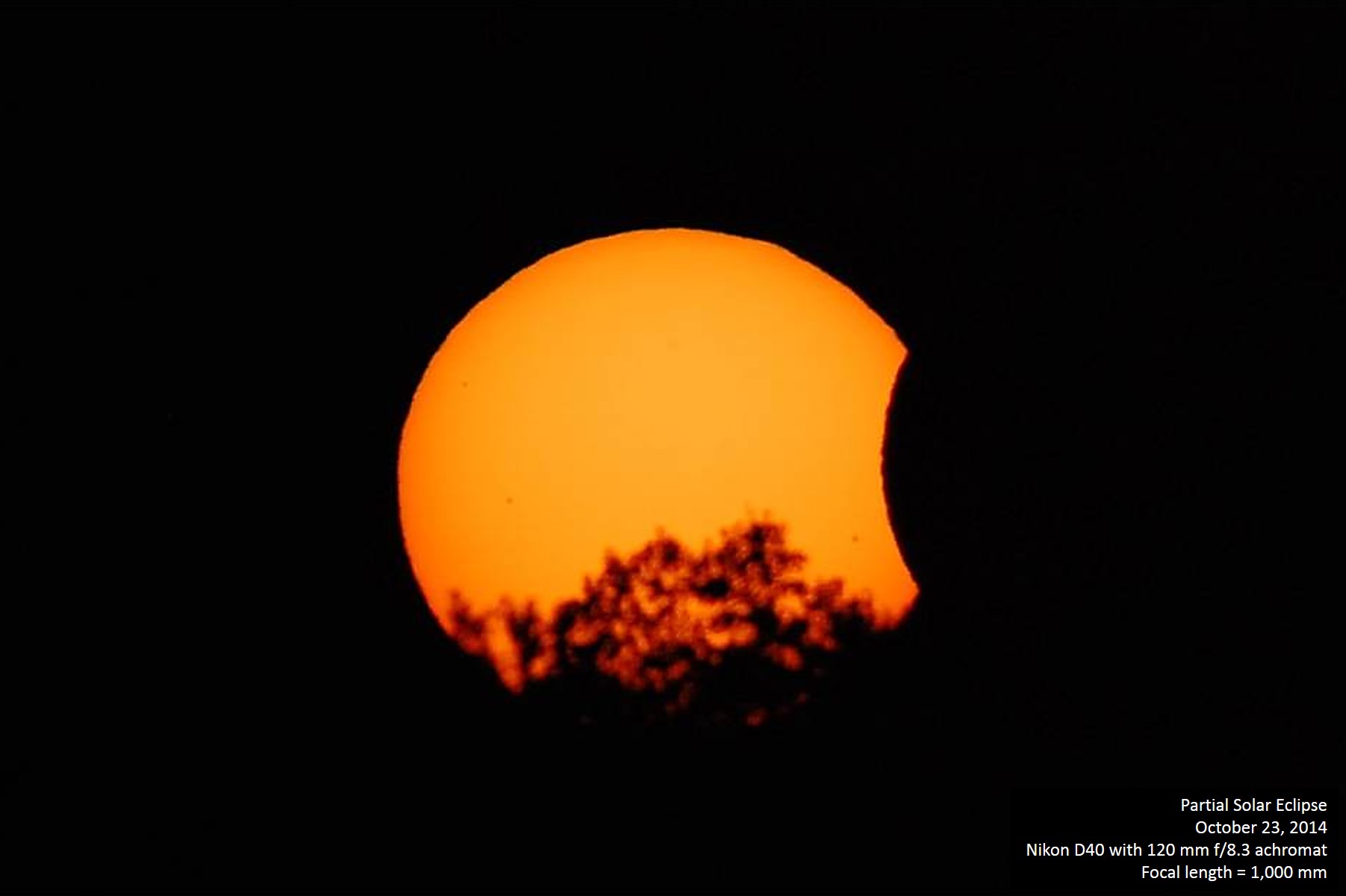
Although it was totally invisible of course, just like in the case of the lunar eclipse two weeks prior, a planet was in close proximity to the Sun at the moment of eclipse. Uranus, the dimmest naked-eye planet, was close to the Moon on the 8th, but this time Venus, the brightest planet, was in a position just north of the Sun and Moon. My equipment for this event consisted of my Nikon D40 DSLR coupled with a 120mm f/8.3 achromat telescope (with 1,000 mm focal length). The pictures shown here were all taken with that setup. Of course, the first image was taken without a filter over the objective because I thought the Sun might be dimmed enough by atmospheric attenuation, but as you can see, that was not the case LOL. The other two pictures were taken with a standard white light filter. |
|
|
|
|
The video at left illustrates the progress of the eclipse as seen from my location on the naval base in Dahlgren, Virginia. Here, we see the Sun as it sets being gradually covered by the Moon on its right side. The movie covers a time span of 19 minutes from first contact to mid-sunset. More information on this eclipse is available at the following links: |