Planet Scenes December 2025
|
|
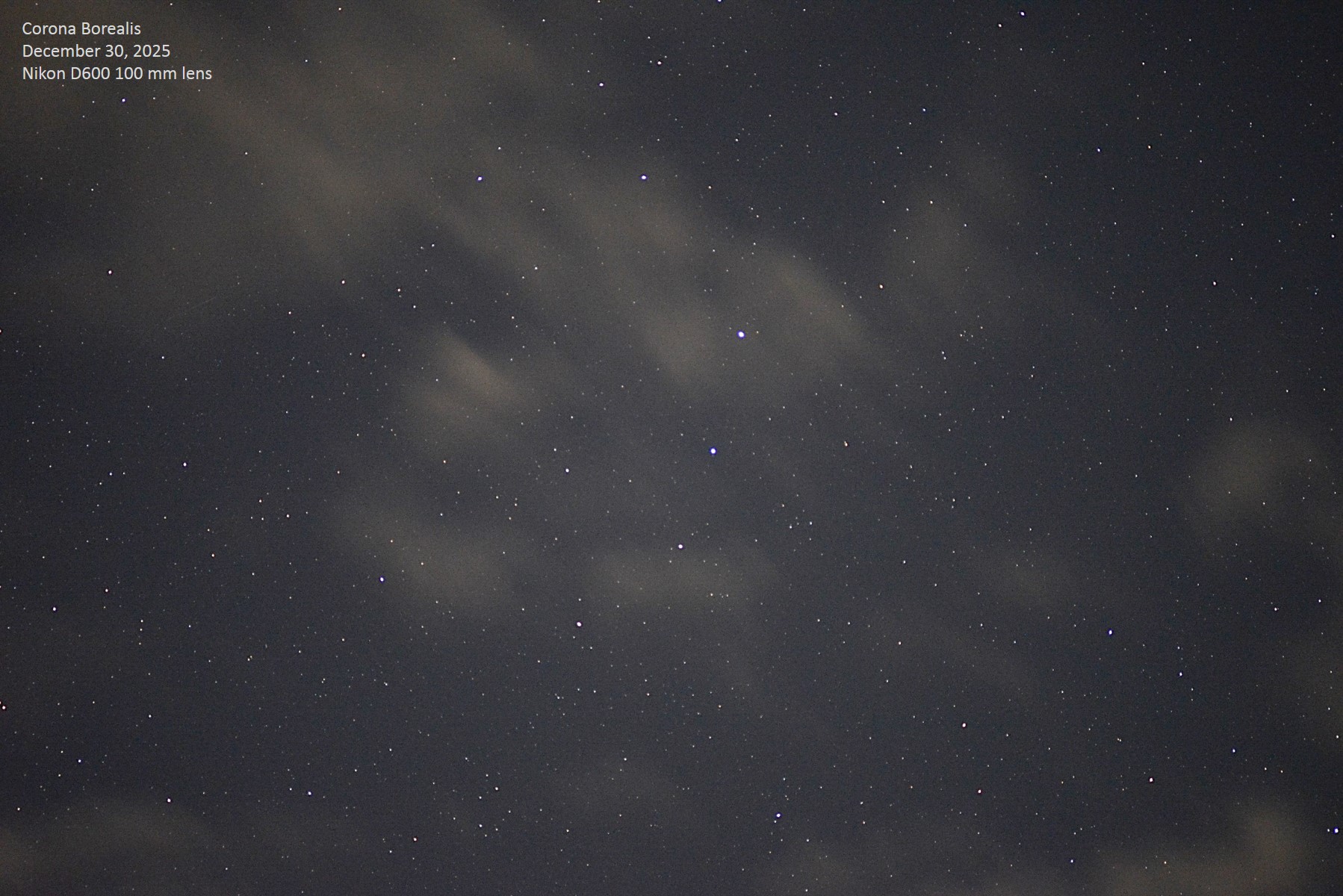
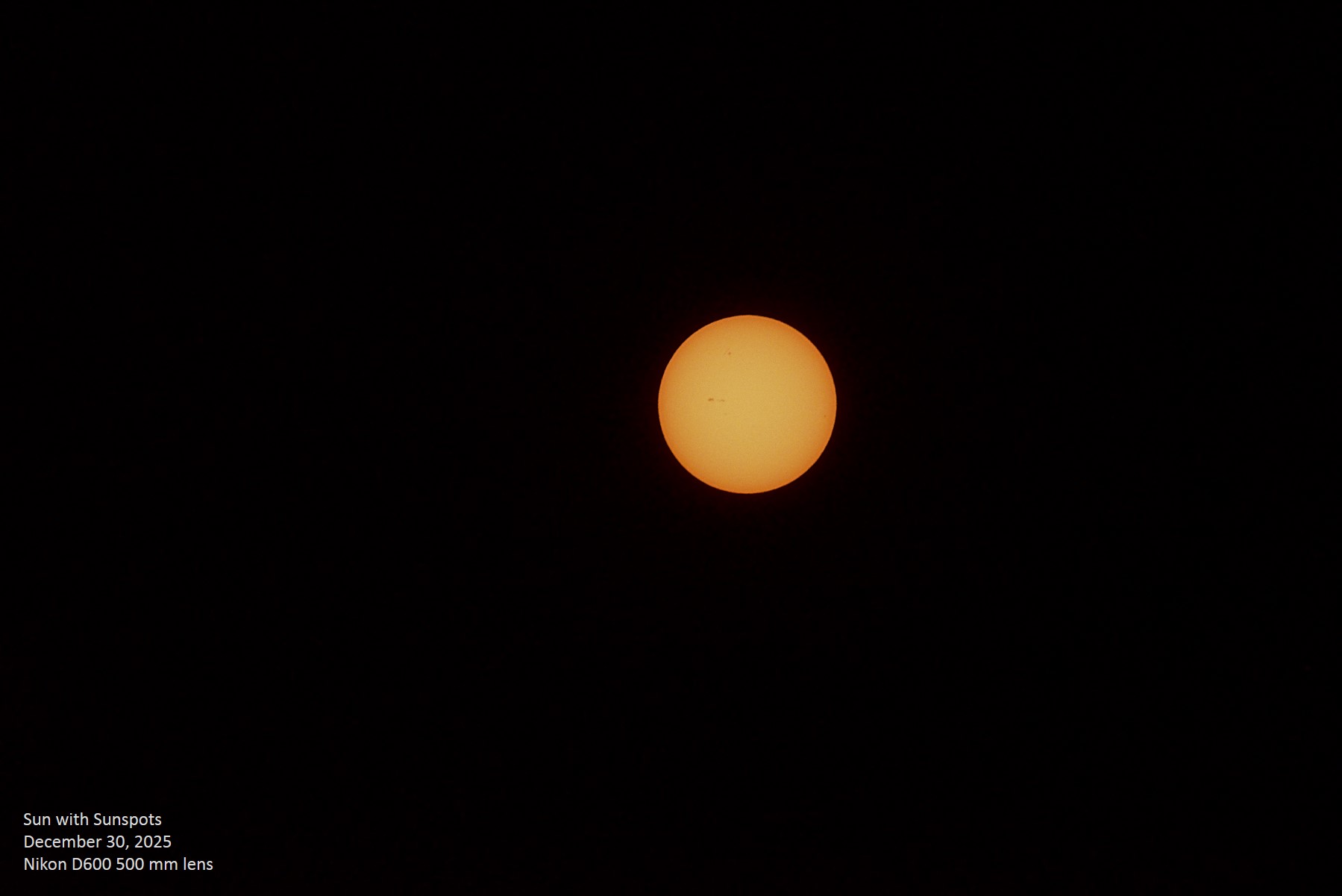
December 30: T Coronae Borealis and Sun The great wait for the periodic nova T Coronae Borealis continues. On the morning of Tuesday, December 30, 2025 we are still anticipating its apparently elusive eruption; here we see the star as a faint dot on our image, while the star R Coronae Borealis checks in at its normal maximum. |
|
|
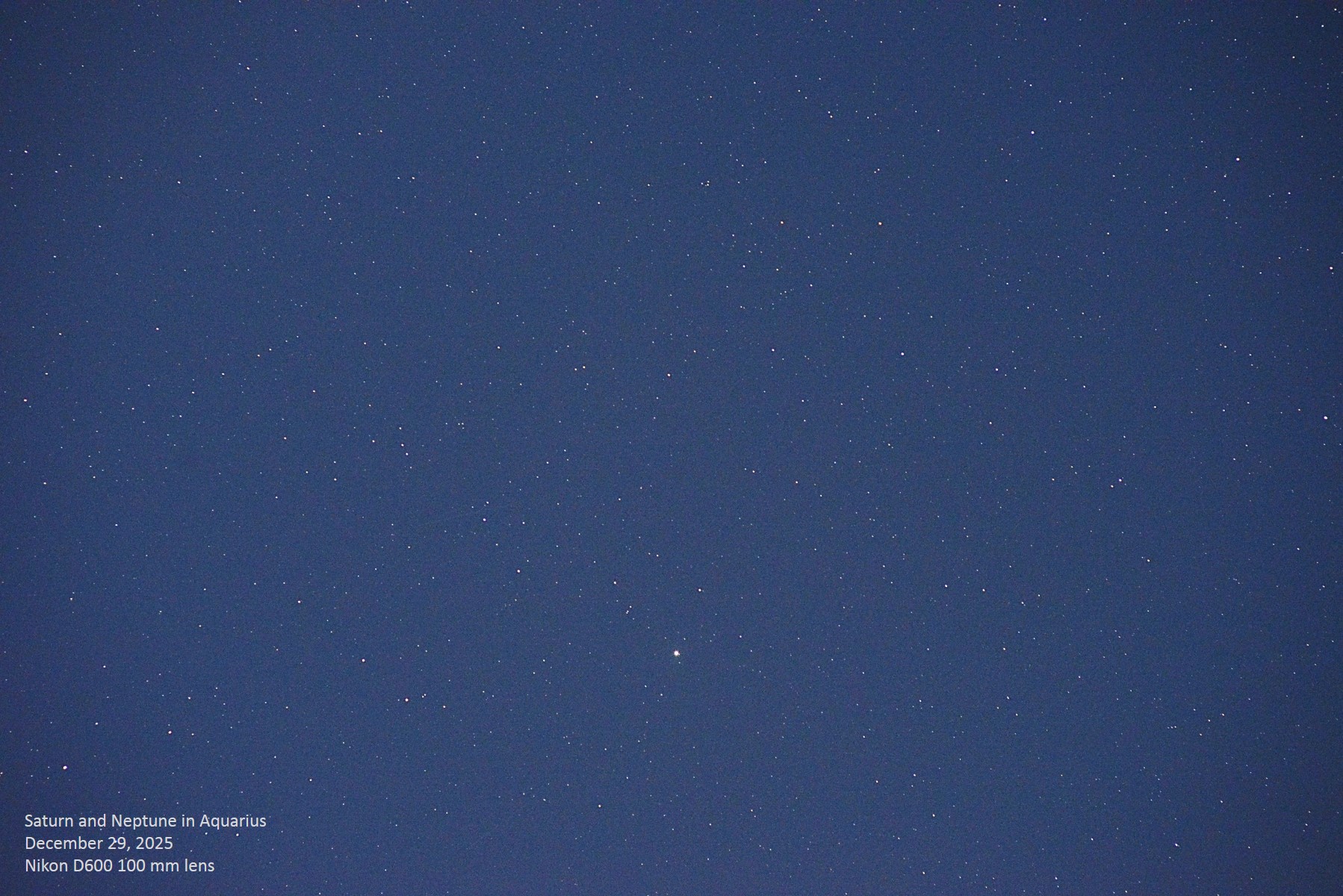
December 29: Saturn and Neptune Saturn and Neptune continue to reside in Aquarius and Pisces, respectively, and are moving eastward in prograde as the year comes to an end. |
||
|
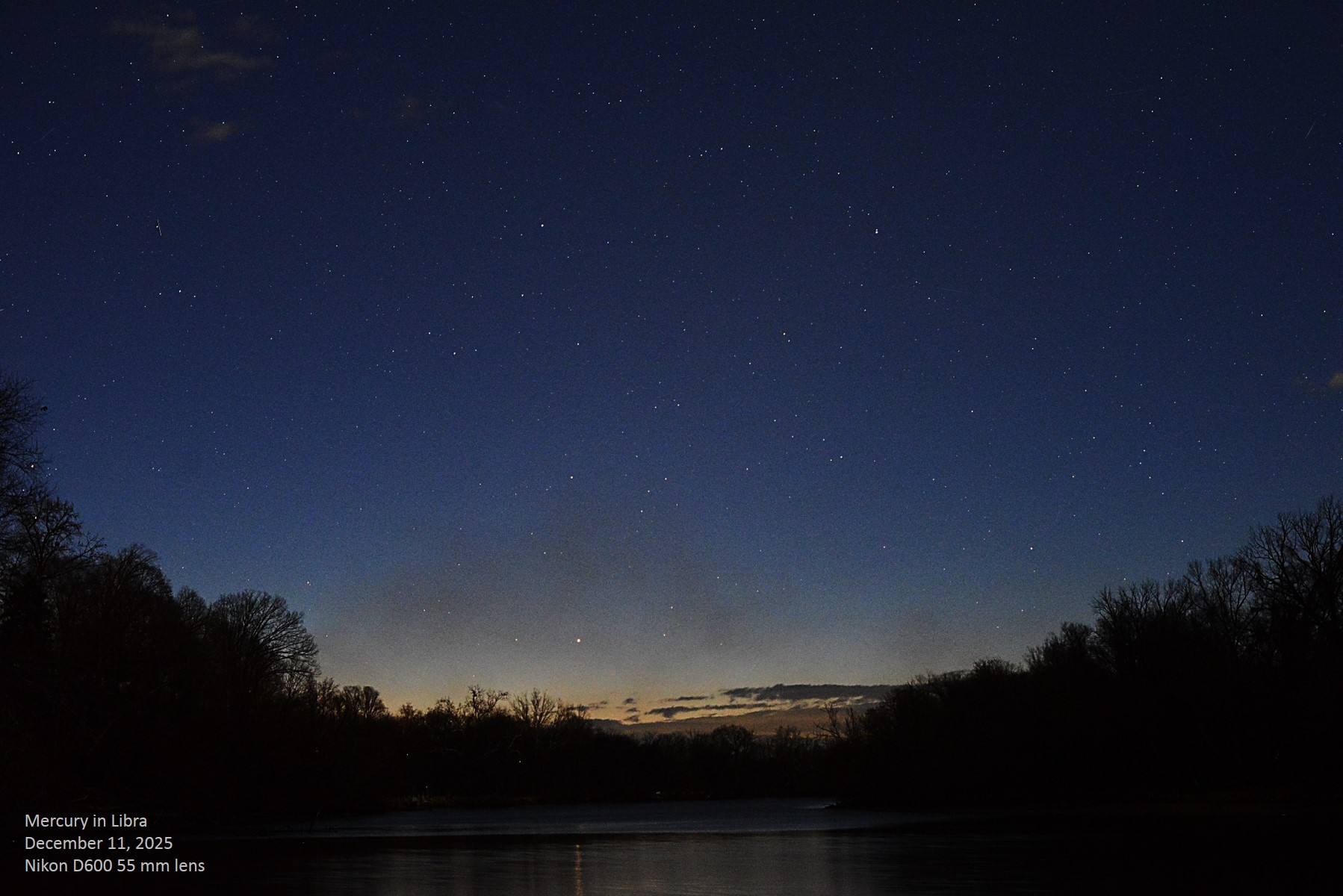
December 11: Mercury Mercury is still in the midst of an excellent morning apparition, here seen rising over the Rappahannock River amidst the stars of Libra. It is still too early in December to see any of the stars from the head of Scorpius coming up over the horizon before dawn. |
||
|
|
|
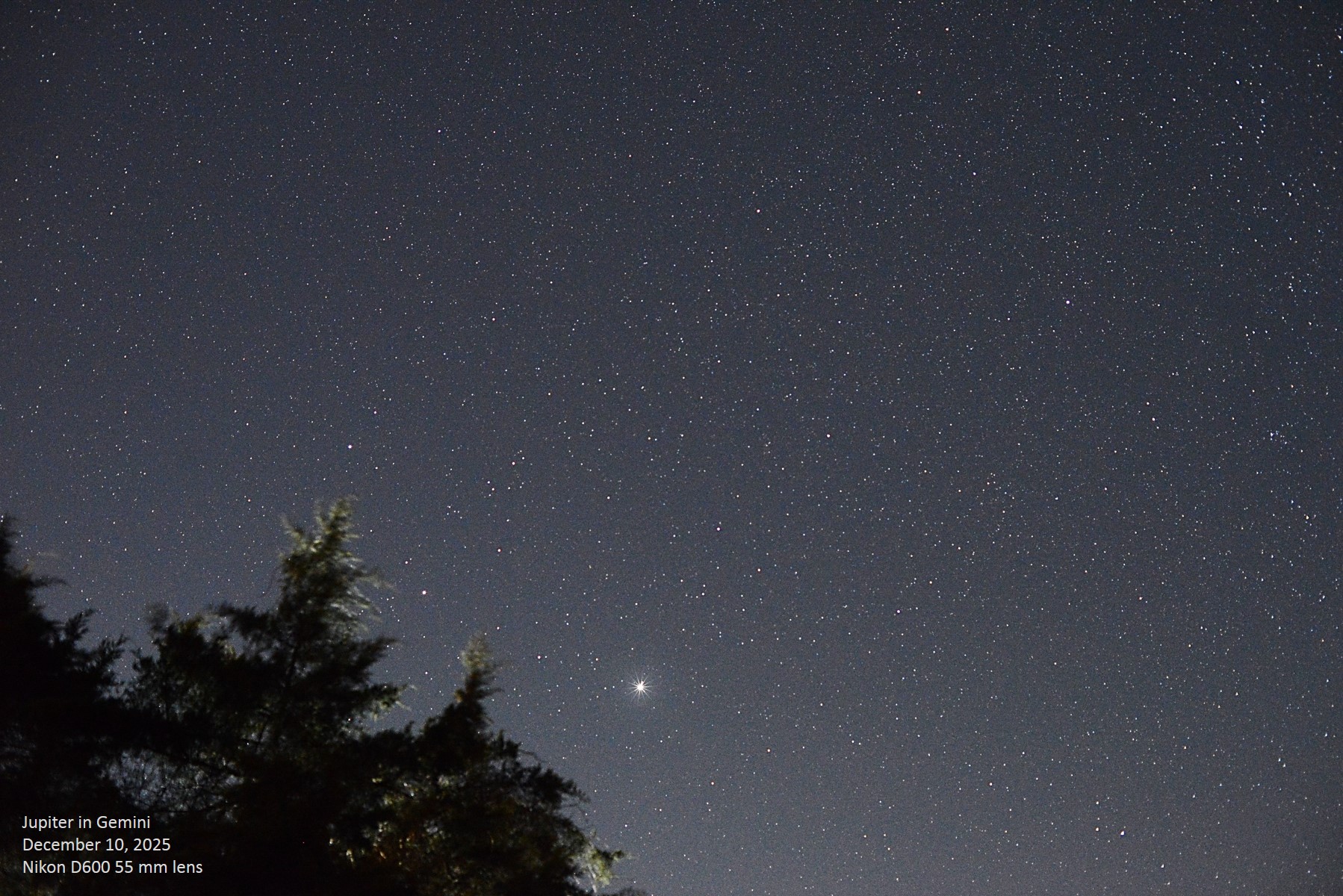
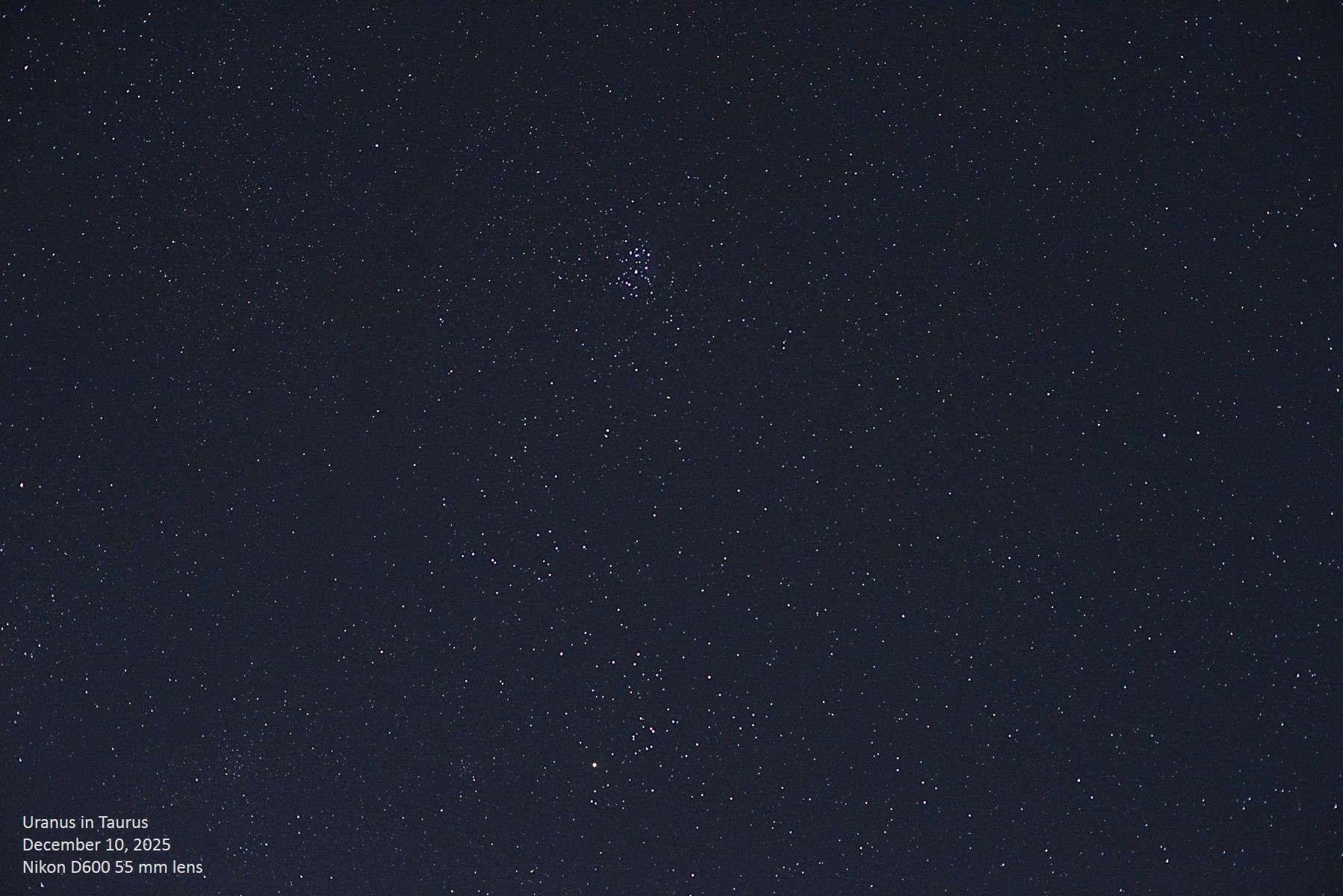
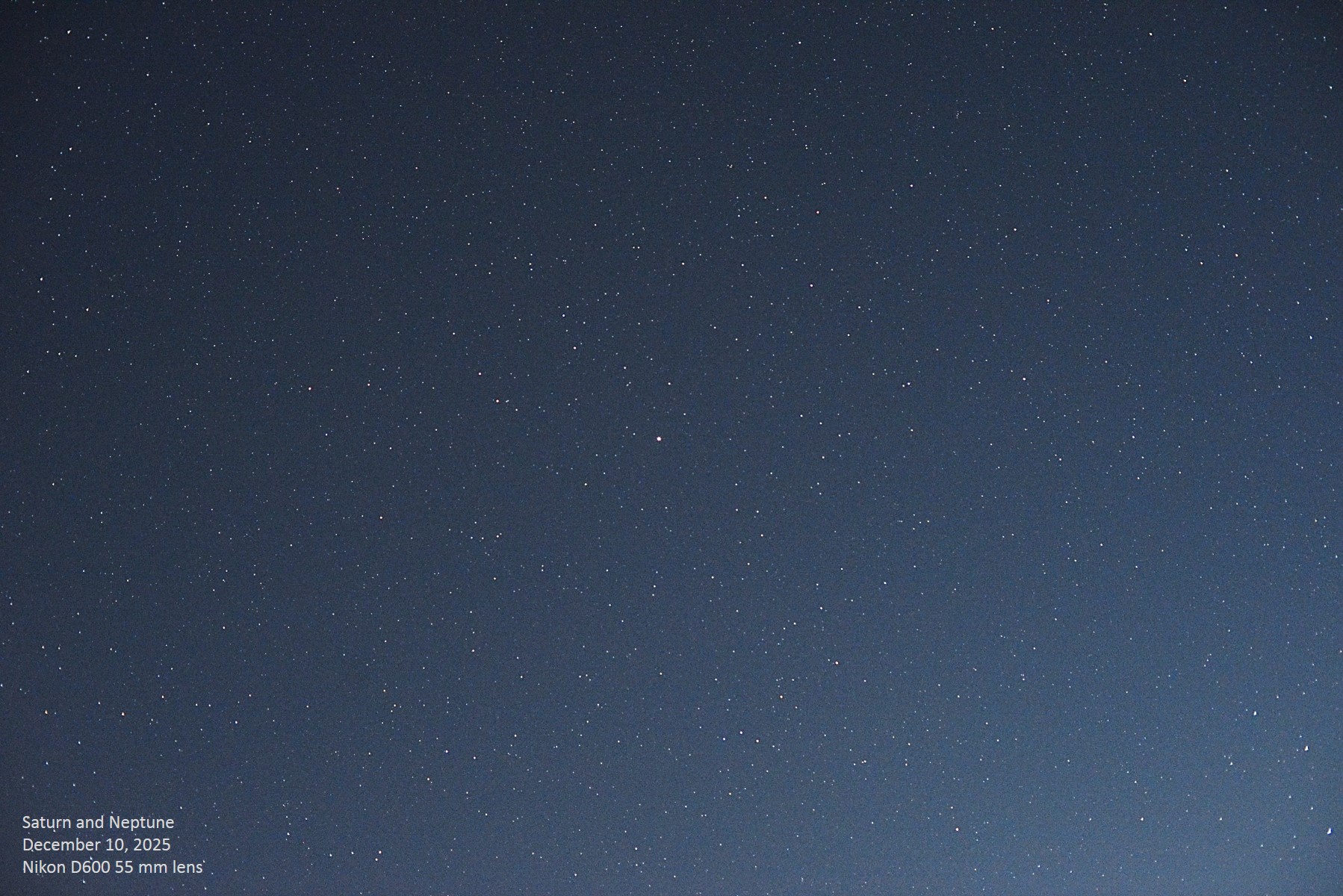
December 10: Four Gas Giants For the first time in a week, we enjoyed a clear evening, which was an opportunity to check in on the planets adorning our evening sky in early December. We began with Saturn and Neptune high in the southwest, then over to Uranus high in the east, and finally to Jupiter rising low in the east with Castor and Pollux. |
|
|
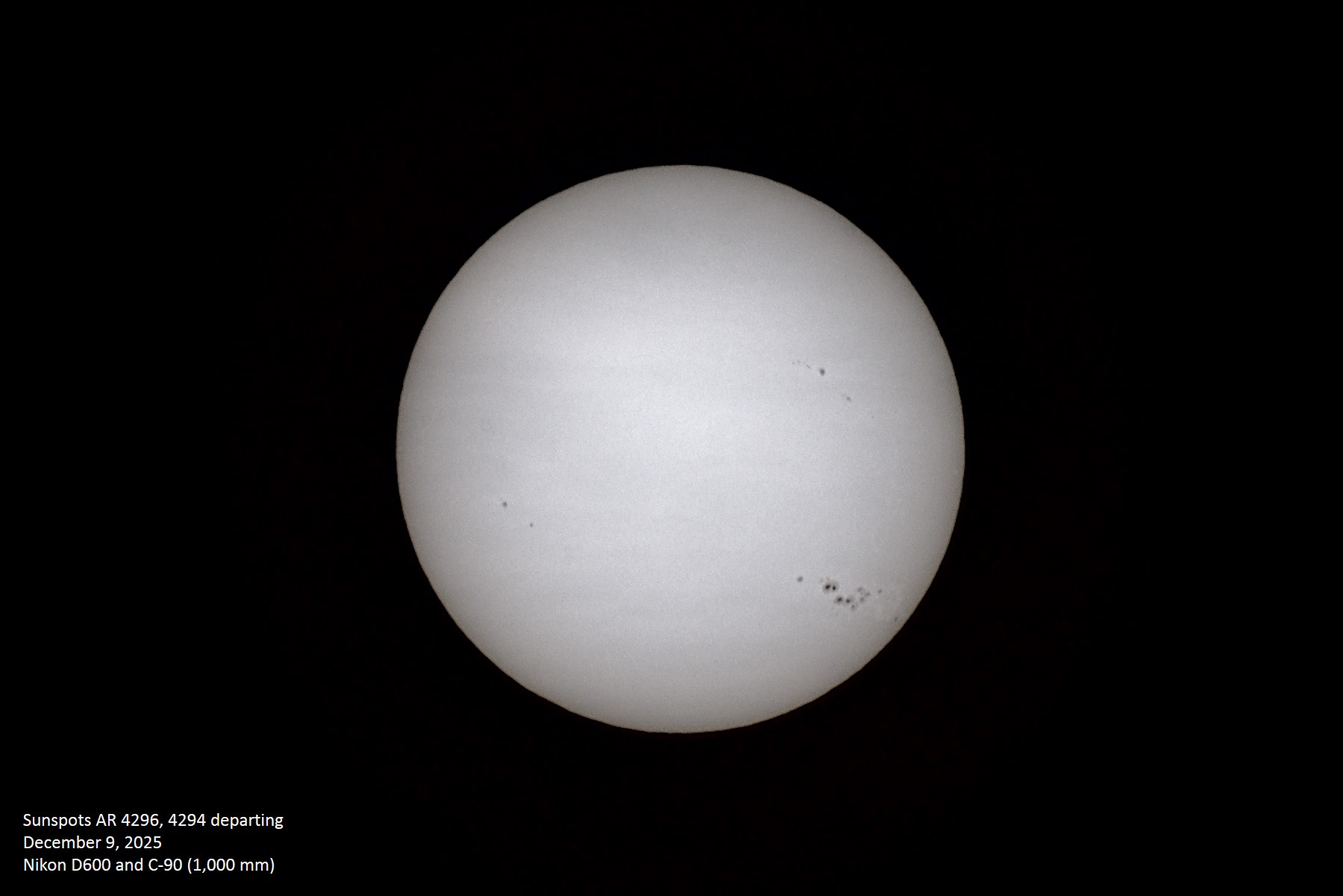
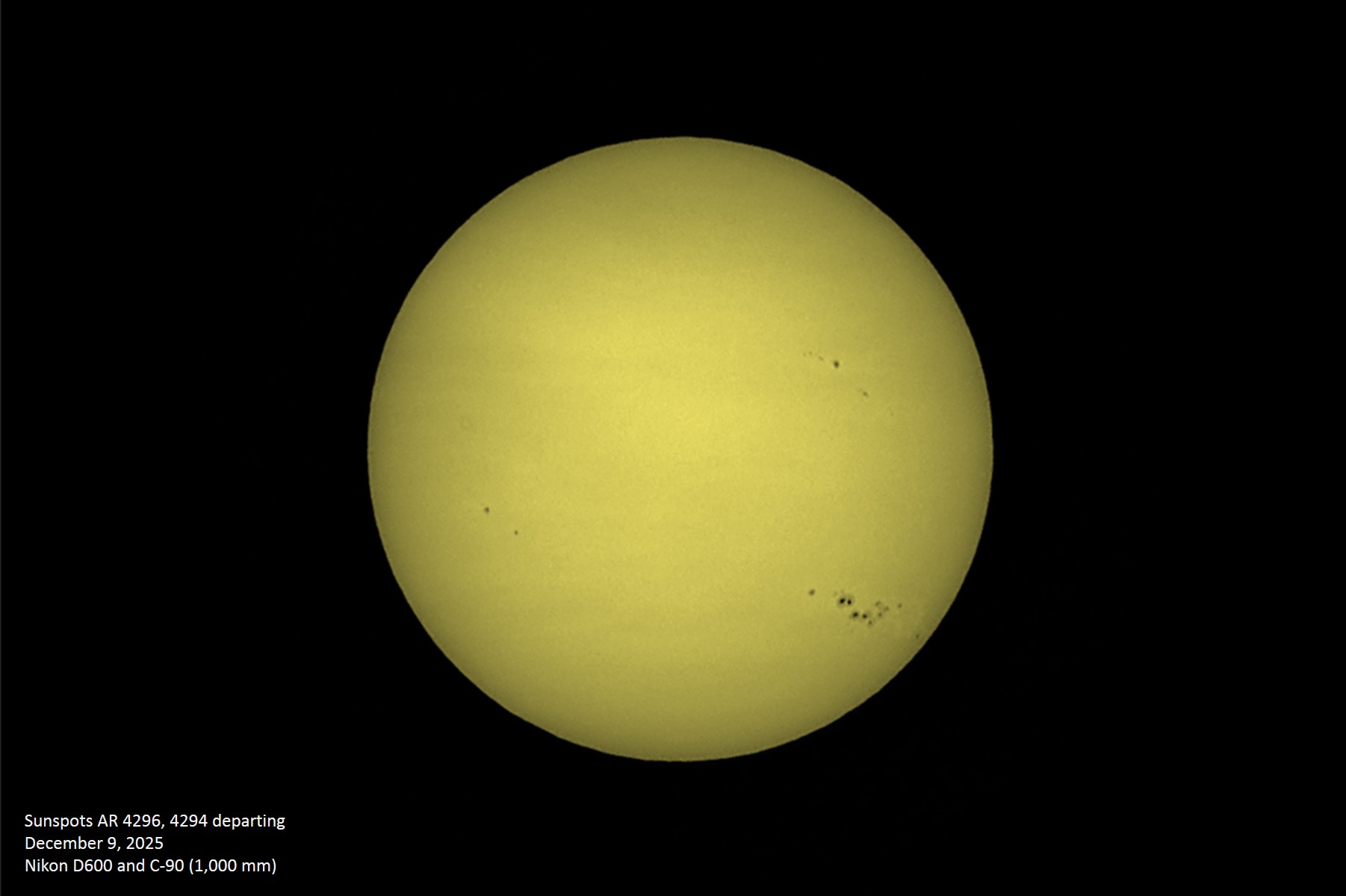
December 9: Sun and Sunspots The large group of three sunspots, AR 4298 leading, then AR 4294, and AR 4296 following, are approaching the preceding edge of the Sun and will soon be lost to view. Several smaller sunspots are visible near the center of the Sun. |
|
|
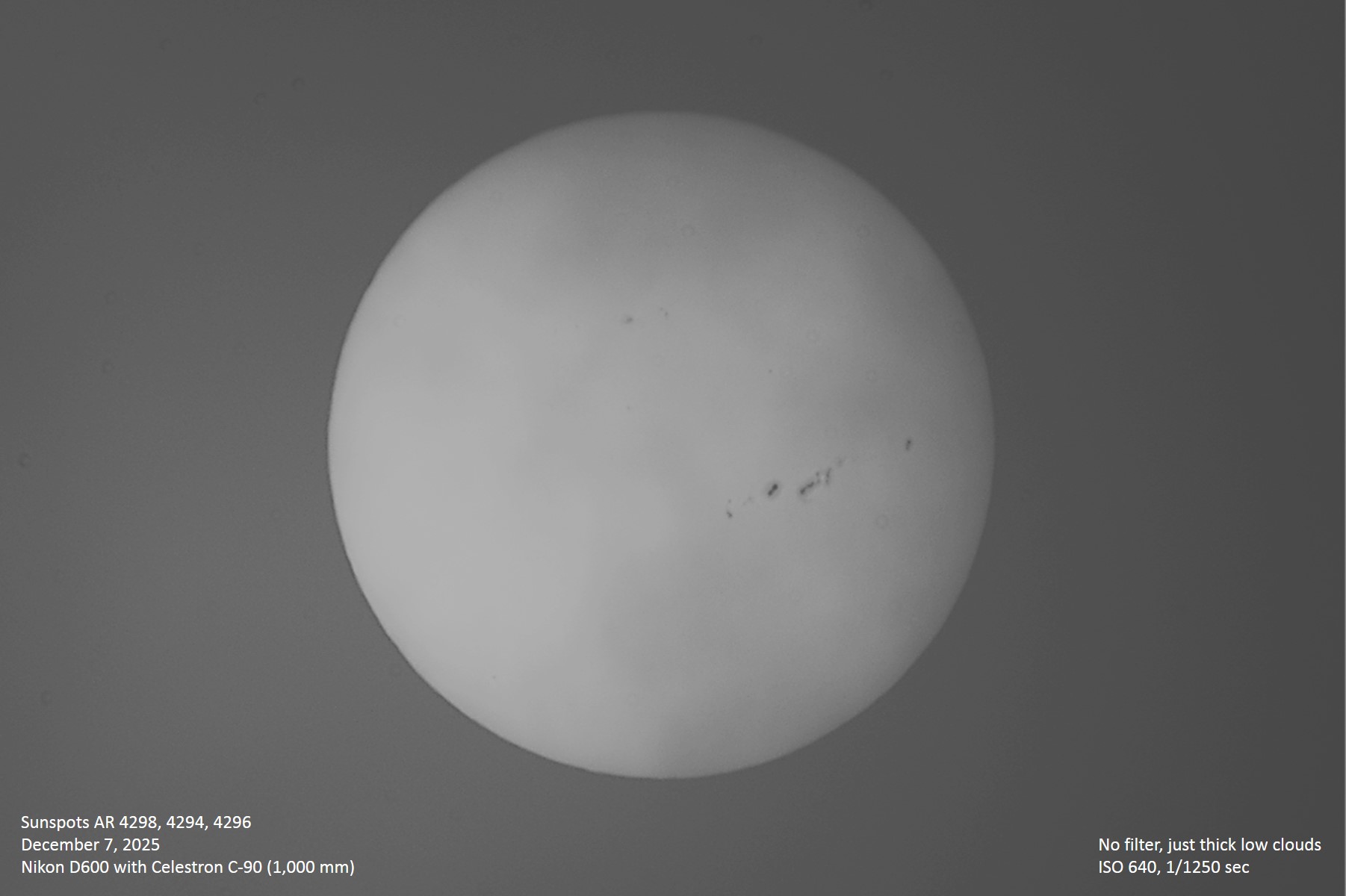
December 7: Sun and Sunspots The large group of three sunspots, AR 4298 leading, then AR 4294, and AR 4296 following, have just passed the solar meridian but are still well placed for viewing. |
||
|
|
|
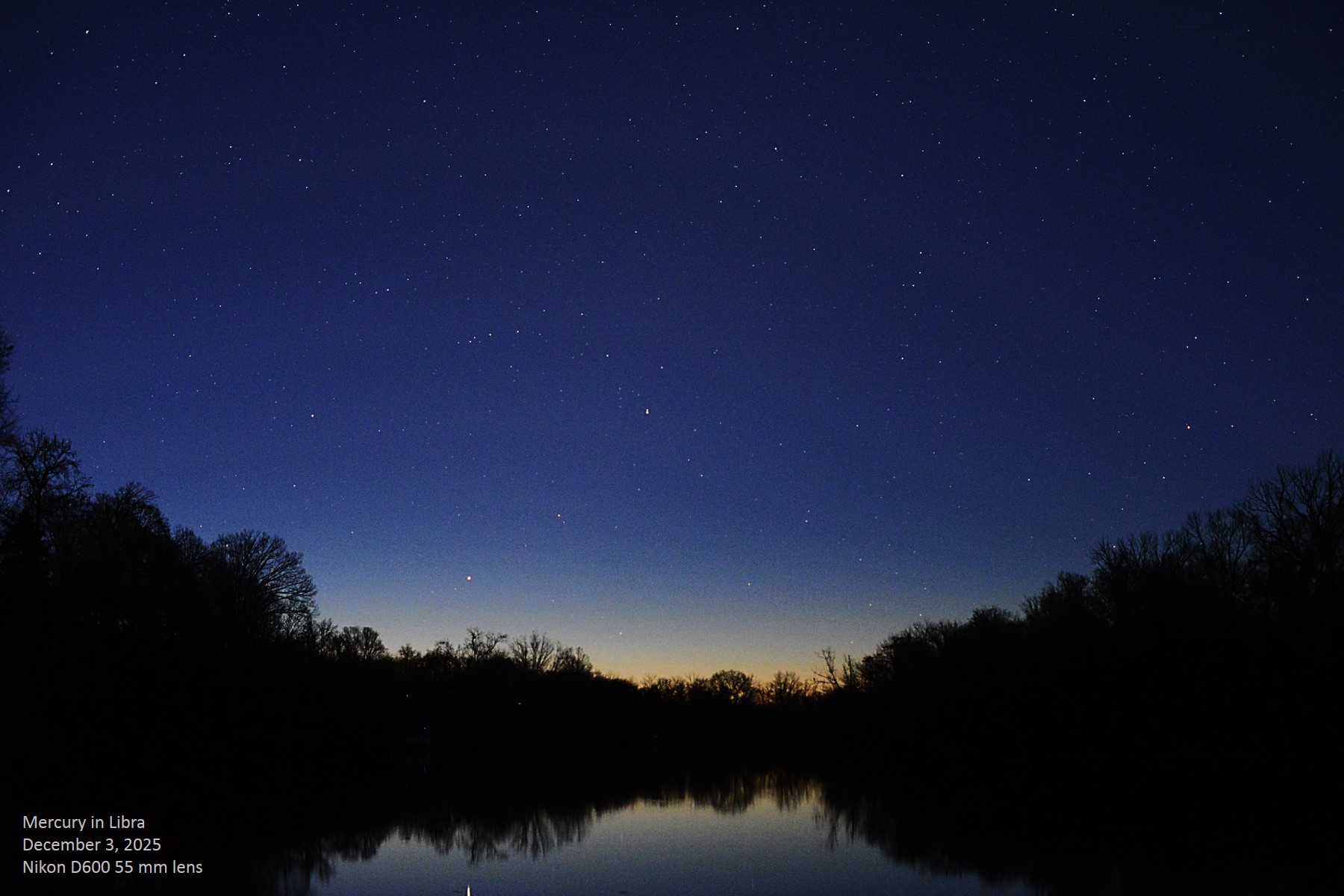
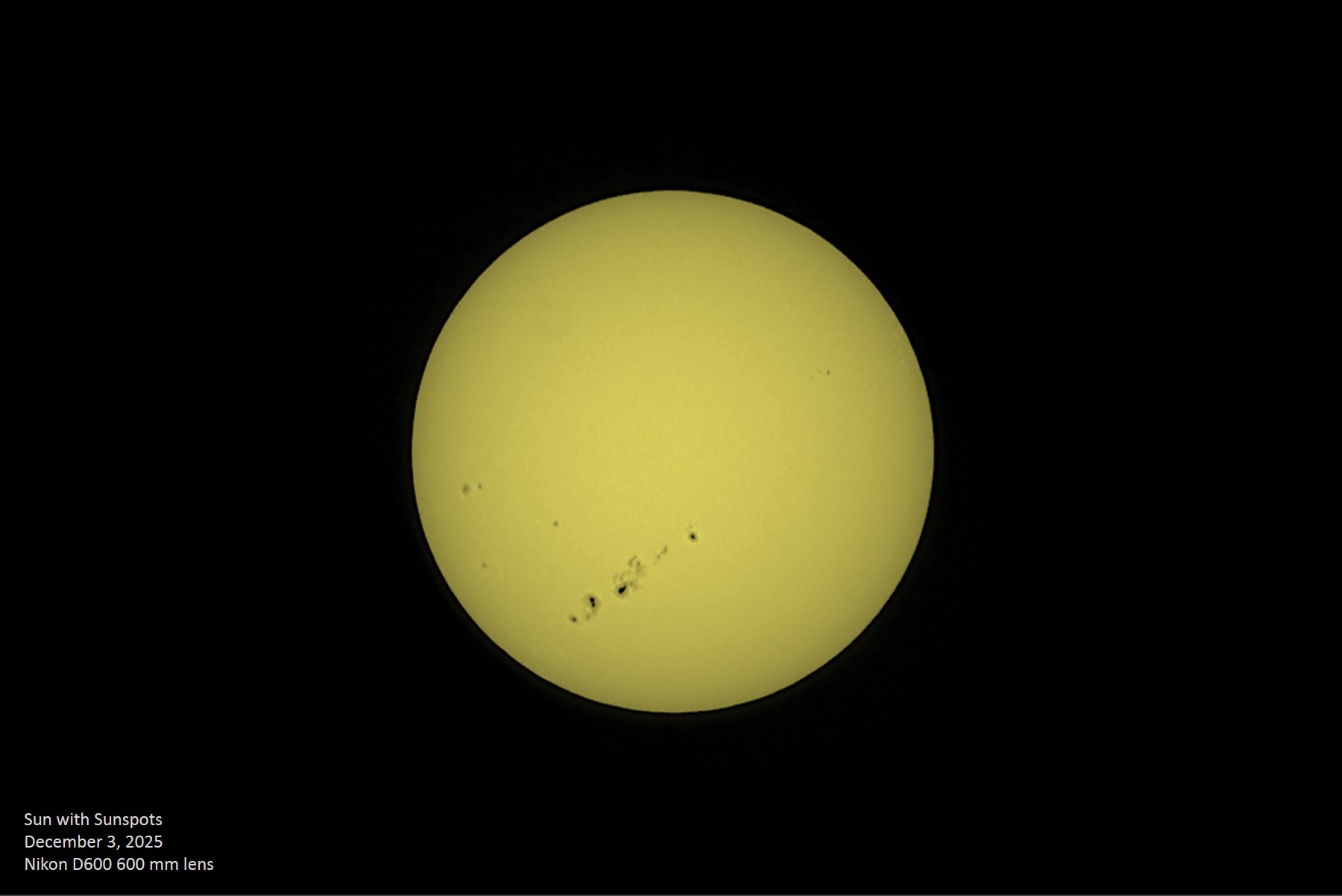
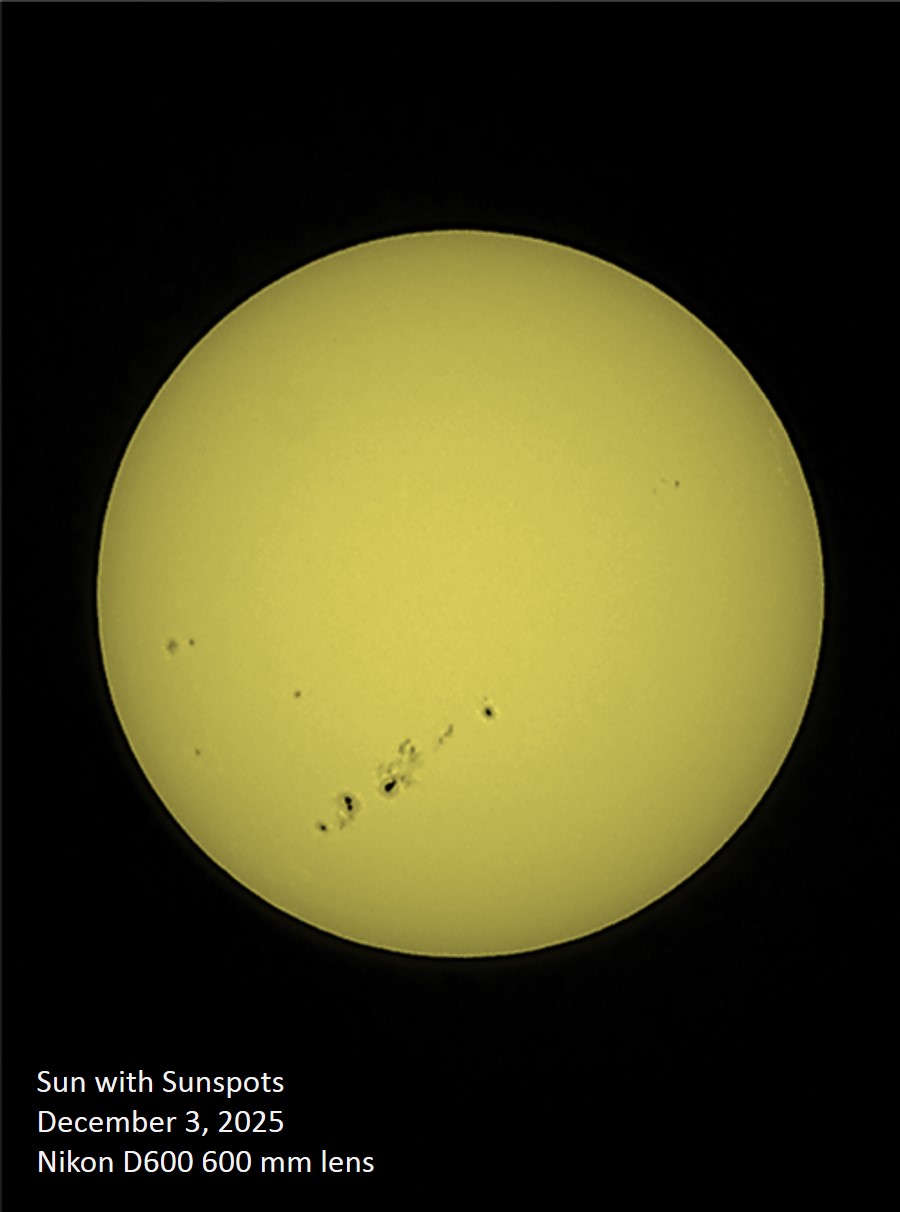
December 3: Mercury and Sun Mercury rises over the Rappahannock River in a dark sky. Five hours later we see the Sun adorned by its amazingly large and complex sunspot group, still on the following side of the Sun. |
|
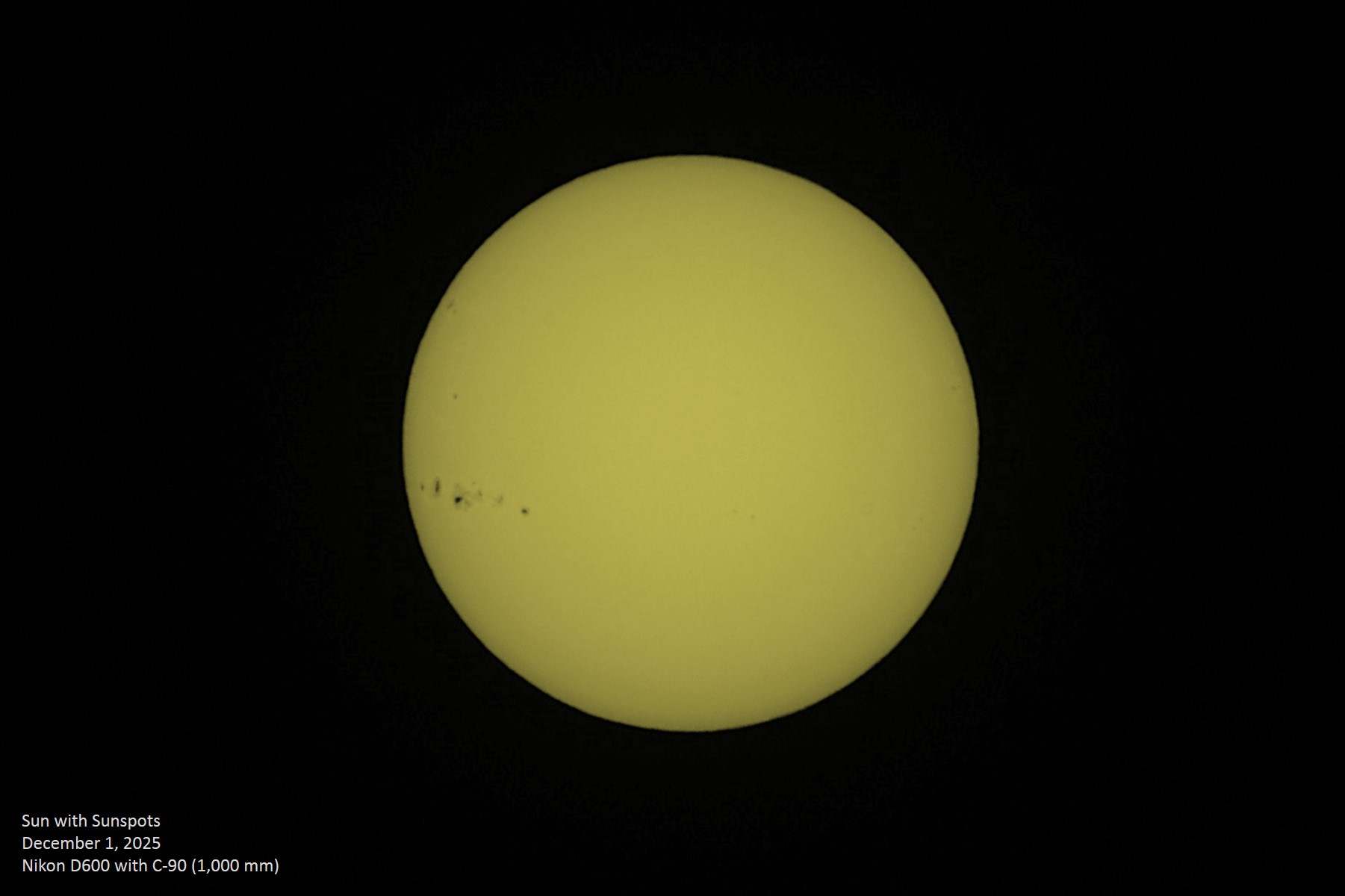
December 1: Sun and Sunspots A massive sunspot group has just emerged around the Sun's following edge. |
||