My lady friend Laura and I traveled to Spain to see Barcelona and to
observe the total solar eclipse from the Mediterranean coast north of
Valencia. We intended to observe from the Ermita Santa Lucia y
San Benet on the mountain range west of Alcossebre, but the local Policia
blocked that location off from the citizens, and in any event clouds
were already obscuring the section of sky in which the eclipse was
going to transpire later that evening. Observers in the Alcossebre
area were directed to the beach at CapiCorb, which offered a great view of
the eclipse sky area due to the very wide coastal plain in that area, but
we decided instead to get on the Autopista and drive
south toward Valencia in search of a better probability of clear skies.
We ended up at a rest area on AP-7 between the small towns of Borriana
and Nules, which are just southwest of the larger city of Castelló
de la Plana. Under a scattered grove of small shade trees, there
were benches and picnic tables and restrooms as conveniences for travelers,
but the rest area was momentarily transformed into an eclipse observing
location for about 30 persons. The sky there was clear, but hazy
with some combination of dust and possibly still some smoke from the forest
fires, that lowered
its transparency.
Our observing location gave us a view to the west with a mountain range
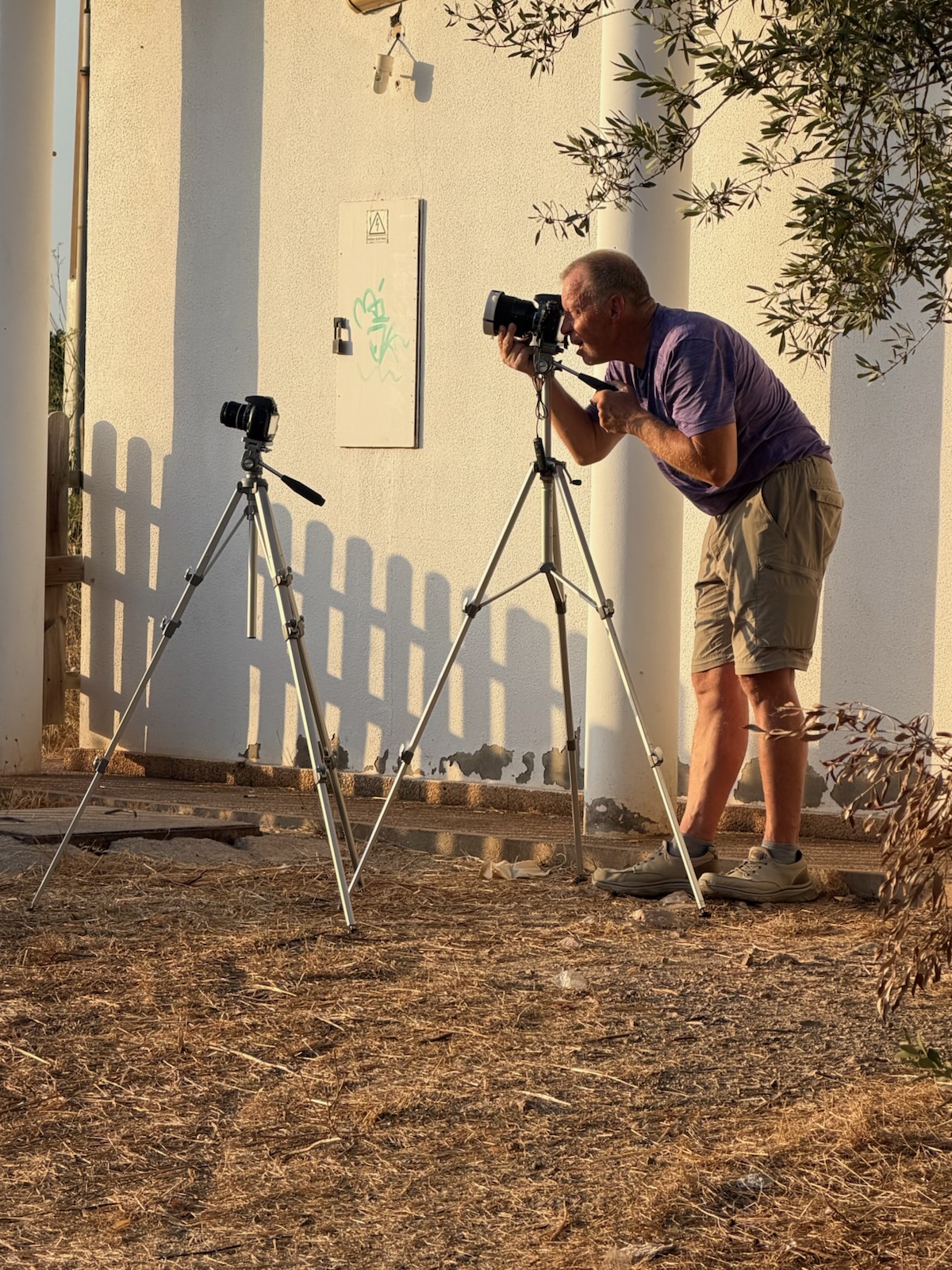
well off in the distance, and I set up my cameras near the picnic area's
building that I hoped gave me a clear view of the entire trajectory of
the Sun until after third contact. My equipment was (i) a Nikon
D600 DSLR with a Sigma 600 mm mirror lens and Kendrik mylar film neutral
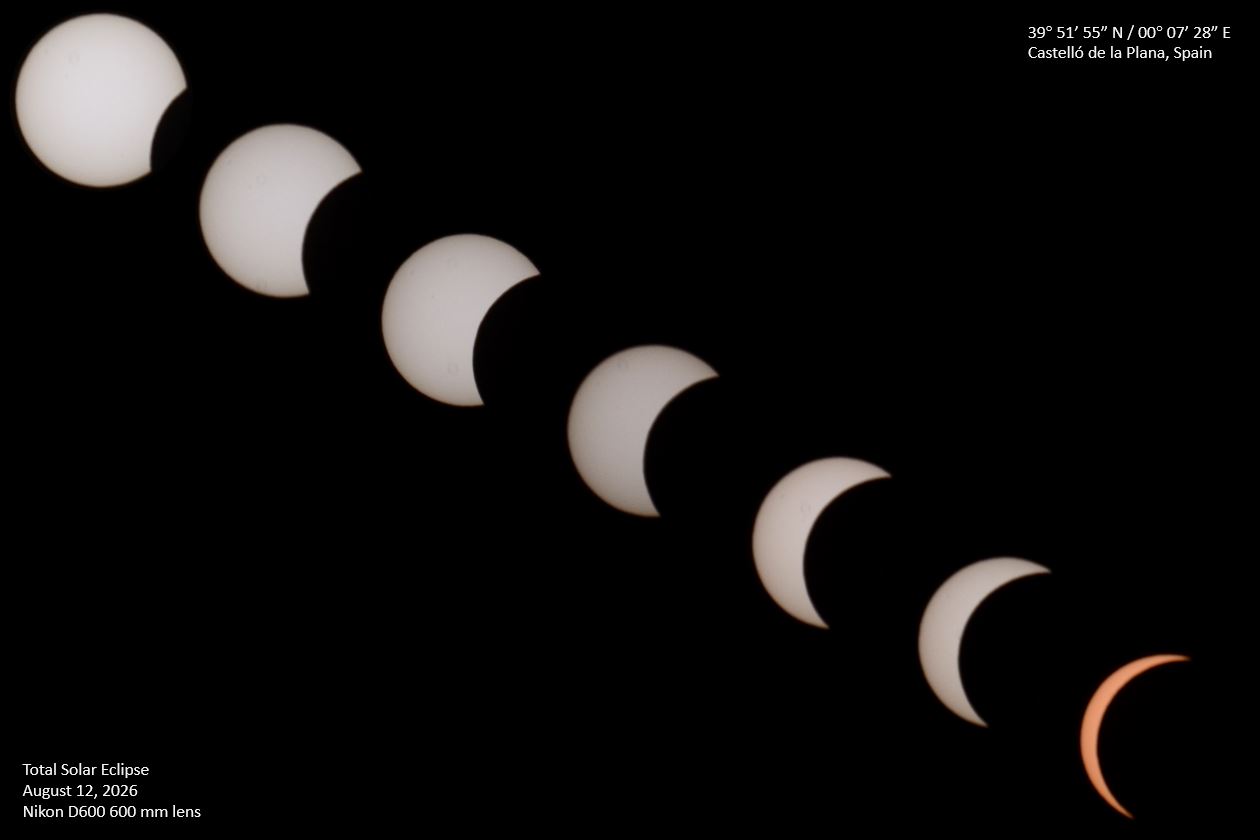
solar filter and (ii) a Nikon D5000 with 35 mm lens and white light solar
filter for capturing a wide angle view of the eclipse sequence. Laura
used her iPhone 13 handheld and her pictures turned out better than mine!!
First contact at our location was approximately at 19:37 local time (which
even though almost exactly at Greenwich's longitude is 2 hours ahead of
GMT in the summer), second contact occurred around 20:31, and the eclipse
duration was 1 minute 31 seconds.
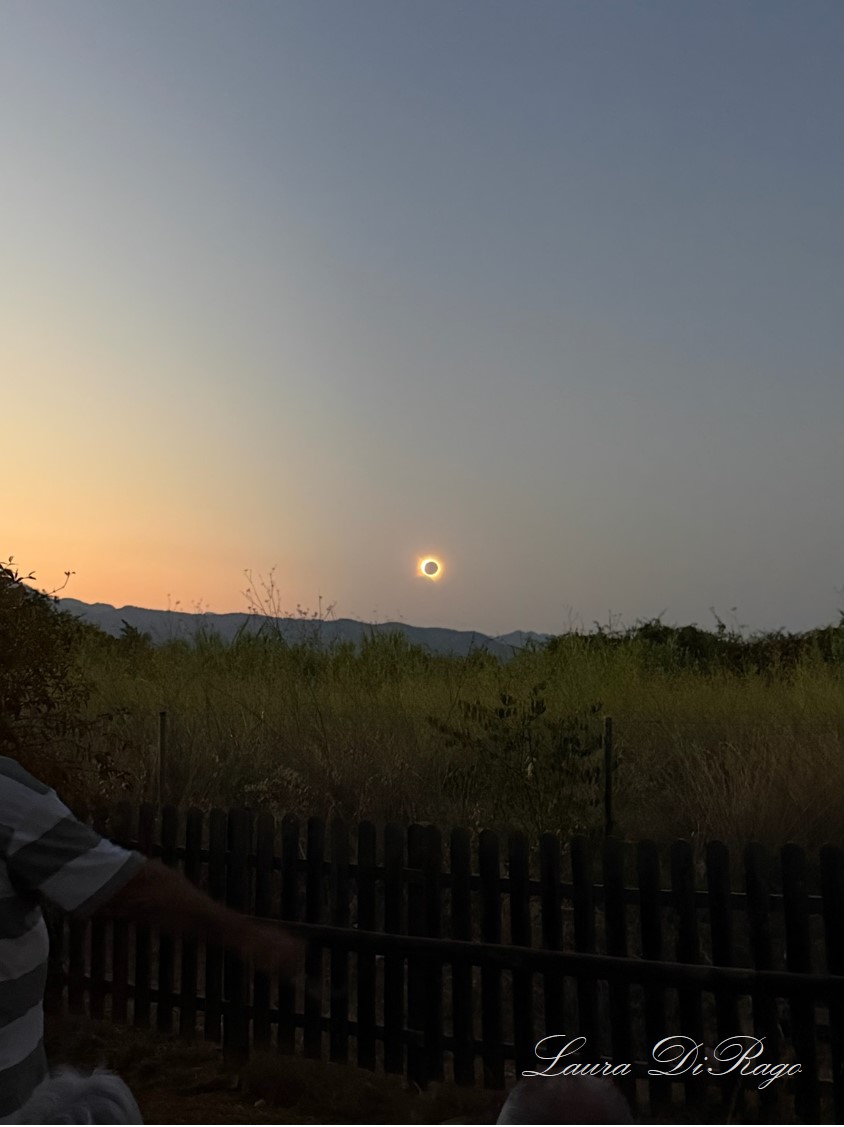
Laura took this great wide angle shot of the scene of totality with her iPhone, for which
I am very grateful because I didn't LOL! You can see the twilight color
on the left in her picture, while the right side is darker; this is an effect
related to our location, which was near the southern edge of the path of
totality, so south of the Sun (left), the sky is brighter in the direction
of non-eclipsed sky. Despite hauling two tripods and DSLR's to Spain,
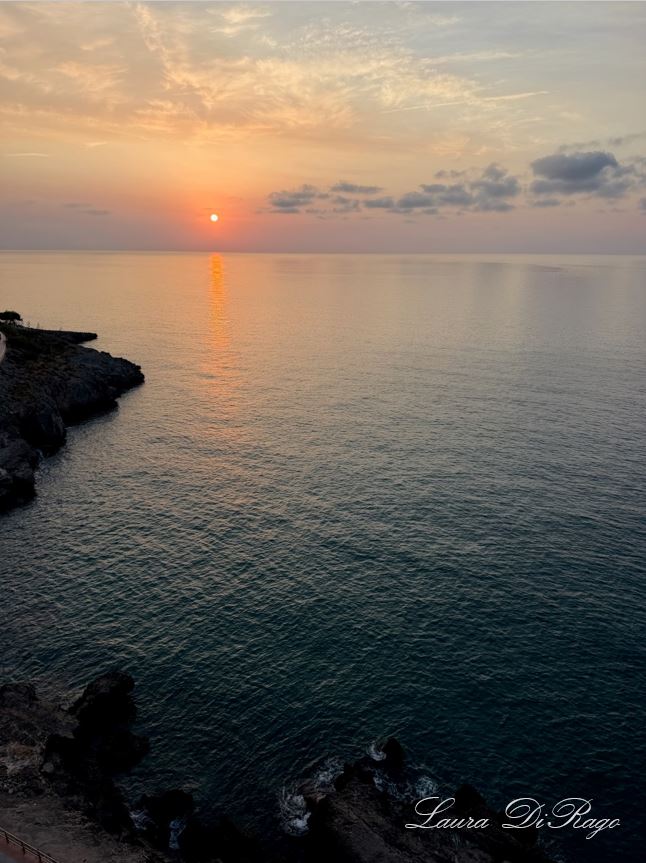
my pictures were very sub-par. Finally, as a coda to the eclipse near
sunset, Laura got this great picture of next morning's sunrise from the balcony
of our apartment in Oropesa del Mar.
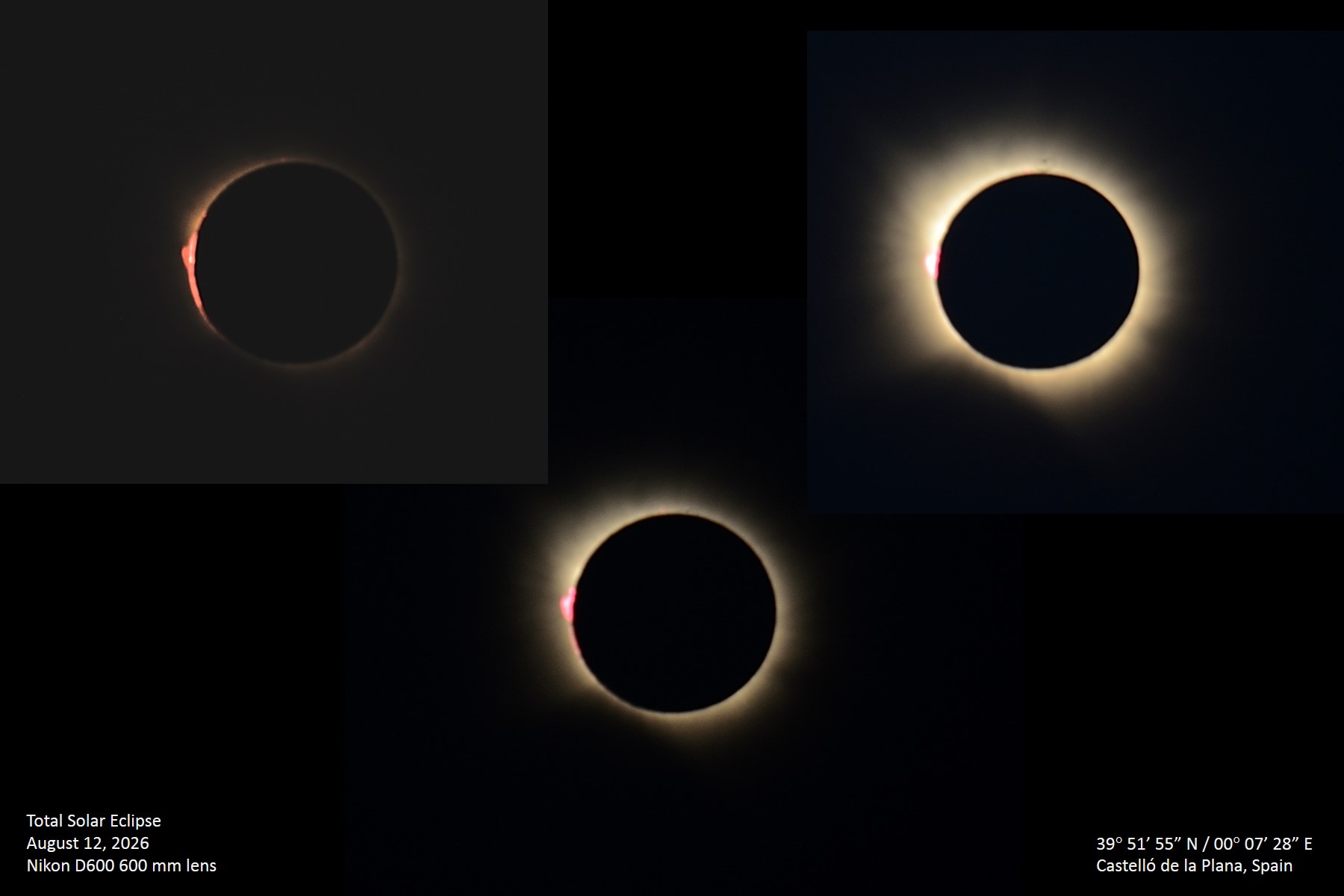
This montage of three images shows the point very close to second contact and two other longer exposure views of the early stages of totality. One feature that stands out is the huge prominence on the left side of the Sun, which was the final portion to be covered by the Moon's disk. The thinnest part of the corona is near the Sun's south pole at the lower left of the disk.
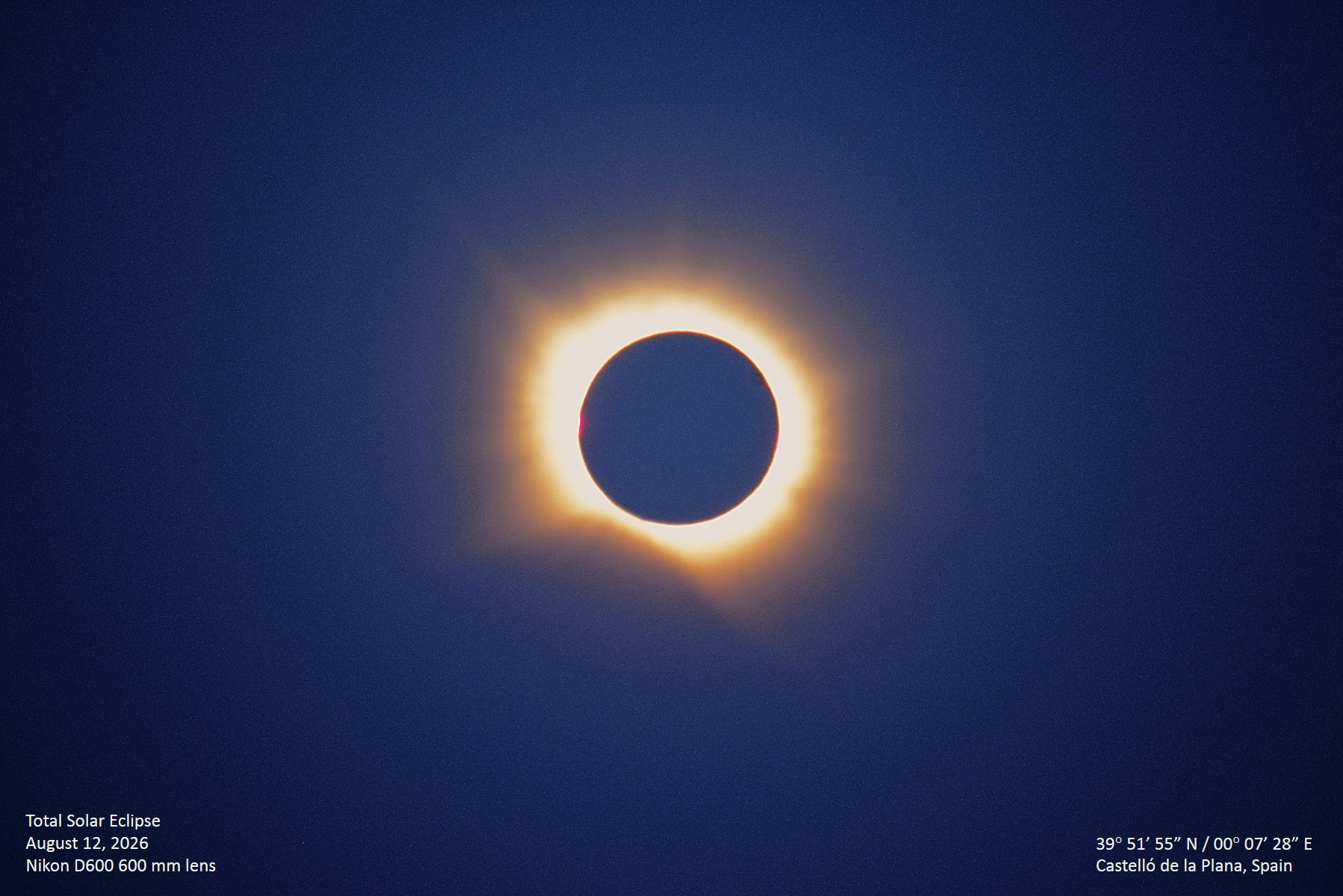
Near the middle of totality, I snapped this picture using the longest shutter speed in order to highlight details of the outer corona. Unfortunately, as a result, I overexposed the inner corona and even worse I don't have the skills to edit the two regions separately for a high dynamic range type of effect.
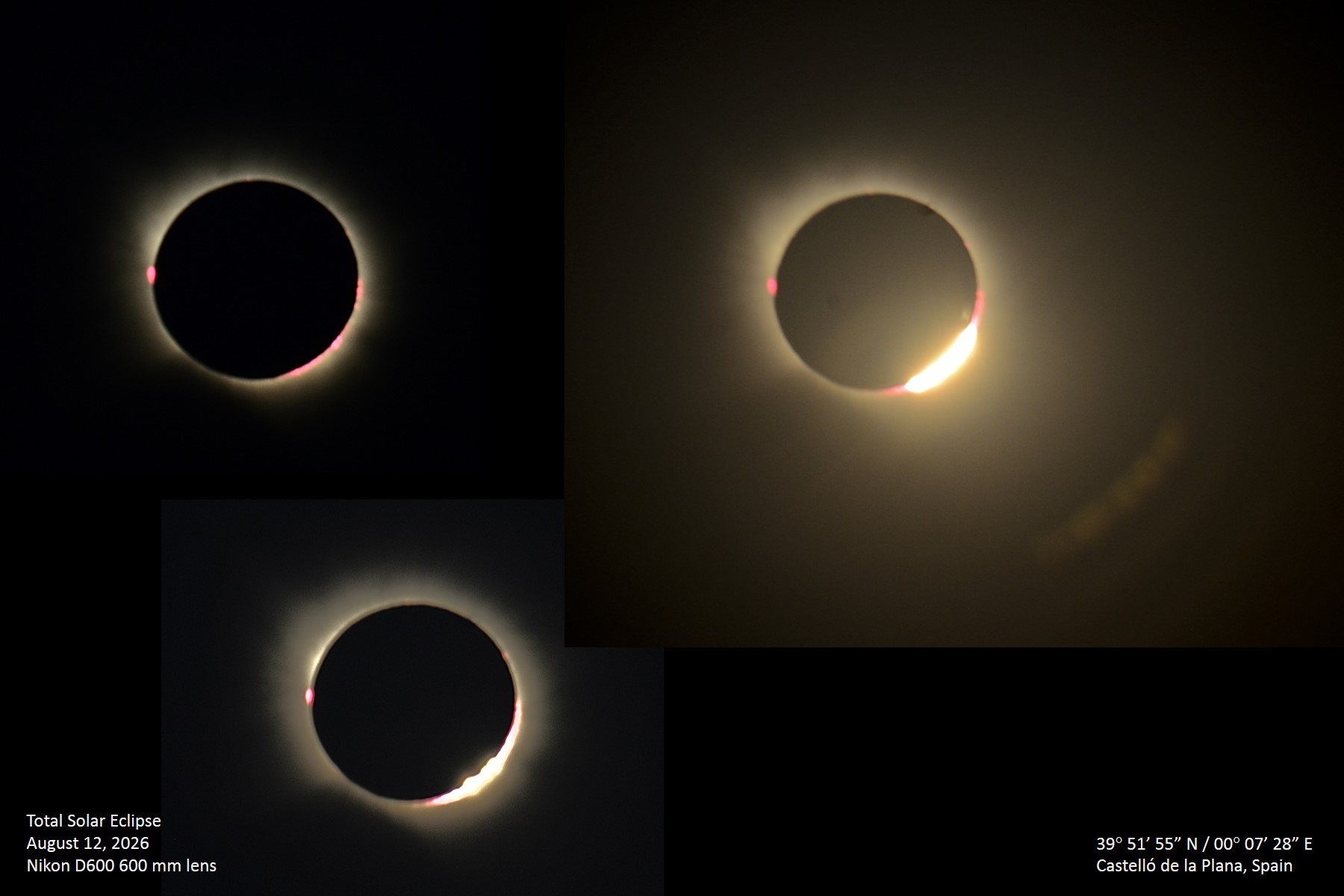
The final montage includes scenes that highlight the various prominences seen on the edge of the Sun which will in a moment be uncovered by the Moon's disk at third contact. I tried to catch the diamond ring effect but as can be seen I slightly mis-timed the shots LOL.